
The wives of Philip II of Macedon
Although most people are likely to recognise the name Olympias, the Epirote princess and Alexander the Great’s mother, very few people realise that Philip II, despite dying at the young age of forty-six, is believed to have entered into no less than seven marriages in the effort to strengthen the kingdom of Macedon through political alliances.

Phila
Phila, whose name is Greek for “friendship”, is generally regarded as Philip’s first wife, although the exact order of his marriages remains unknown. She was either the sister or the daughter of Derdas II, ruler of the Elimiotes, and their marriage sealed Philip’s alliance with the Elimiotes, a Macedonian tribe inhabiting the region of present-day Kozani and Ptolemaida, renowned for its bravery. Phila is believed to have died without bearing any children.
Audata
Philip’s marriage to Audata, who was later renamed Eurydice – a common practice for royal brides at the time – sealed his peace treaty with Bardylis, the Illyrian king of Dardania. After Bardylis was defeated in 358 BC, he ceded his territory to Philip and gave him Audata’s hand in marriage, who was either his daughter or his niece. Audata bore Philip a daughter, Cynane, and possibly died after childbirth.
Olympias bore Philip a son, the future Alexander the Great, and a daughter, Cleopatra. Clever, ambitious and fully determined to secure her son the Macedonian throne, she did everything in her power to eliminate anyone who stood in his way.
Philinna
In 358 BC, Philip entered his third marriage to Philinna of Thessaly, who was probably a member of the powerful Aleuadae family of Larissa. In antiquity, Thessalian women enjoyed a reputation as witches, and Philinna is said to have been among Philip’s favourite wives. She gave birth to Philip III Arrhidaeus, who was mentally impaired. He later married Cynane’s daughter and succeeded Alexander the Great as king of Macedon following his death in Babylon.

Polyxena (Olympias)
In the autumn of the following year (357 BC), Philip married the strong-willed Polyxena, princess of the royal Molossian dynasty of Epirus and daughter of King Neoptolemus III. It is believed they first met on the island of Samothrace, where the young princess served as a priestess of the Cabeirian Mysteries. After their marriage she was renamed Myrtale, but when Philip’s chariot won the 356 BC Olympic Games, she became known as Olympias – her most popular moniker. Olympias bore Philip a son, the future Alexander the Great, and a daughter, Cleopatra. Clever, ambitious and fully determined to secure her son the Macedonian throne, she did everything in her power to eliminate anyone who stood in his way.
Nicesipolis
Philip’s fifth marriage was to Nicesipolis in 352 BC, a great beauty he was deeply infatuated with. She was the niece of Jason, the tyrant of Pherae, and gave birth to a daughter, Thessalonike. Nicesipolis died of puerperal fever three weeks later and the infant was raised by Olympias, who refused to leave the newborn unprotected. Thessalonike later married Cassander, the man responsible for Olympias’ execution in 316 BC.


Meda
Little is known about the barbarian princess Meda, sometimes referred to as Medope, who came from the lands of the Lower Danube in northern Thrace. Their marriage took place in 341 BC and sealed Philip’s alliance with her father, King Cothelas, ruler of the Getae. Following Philip’s assassination in 336 BC, Meda took her own life, in accordance with the customs of her homeland, by joining her husband on his funeral pyre. In recognition of her devotion, Alexander the Great had her buried beside Philip in the Royal Tombs of Aigai. Many scholars believe that the second golden larnax discovered in the antechamber of Tomb II belonged to Meda and contained her cremated remains, wrapped in a purple cloth embroidered with gold and accompanied by an exquisite golden diadem.
Cleopatra
Philip II’s final wife, Cleopatra, was the niece of general Attalus and came from Macedonian nobility. Whether she played a role in Philip’s assassination remains unknown, although much speculation surrounds the event. Philip was murdered by his bodyguard Pausanias on the day of his daughter’s wedding. Cleopatra – later known as Eurydice – became the mother of a daughter and a son who Olympias believed threatened her own son’s succession. Immediately after Philip’s death, both children were put to death, and Cleopatra herself took her own life.
Philip II and Meda remain united in death at the Royal Tombs of Aigai, one of the most spectacular archaeological sites in northern Greece.
Read also
From Asterix to Prehistoric Greece: A menhir at the Diachronic Museum of Larissa

One of the very few menhirs discovered in Greece is female and represents an exceptionally rare, early attempt to depict the human form on a monumental scale.
A 2,000-year-old mummy at the Archaeological Museum of Thessaloniki
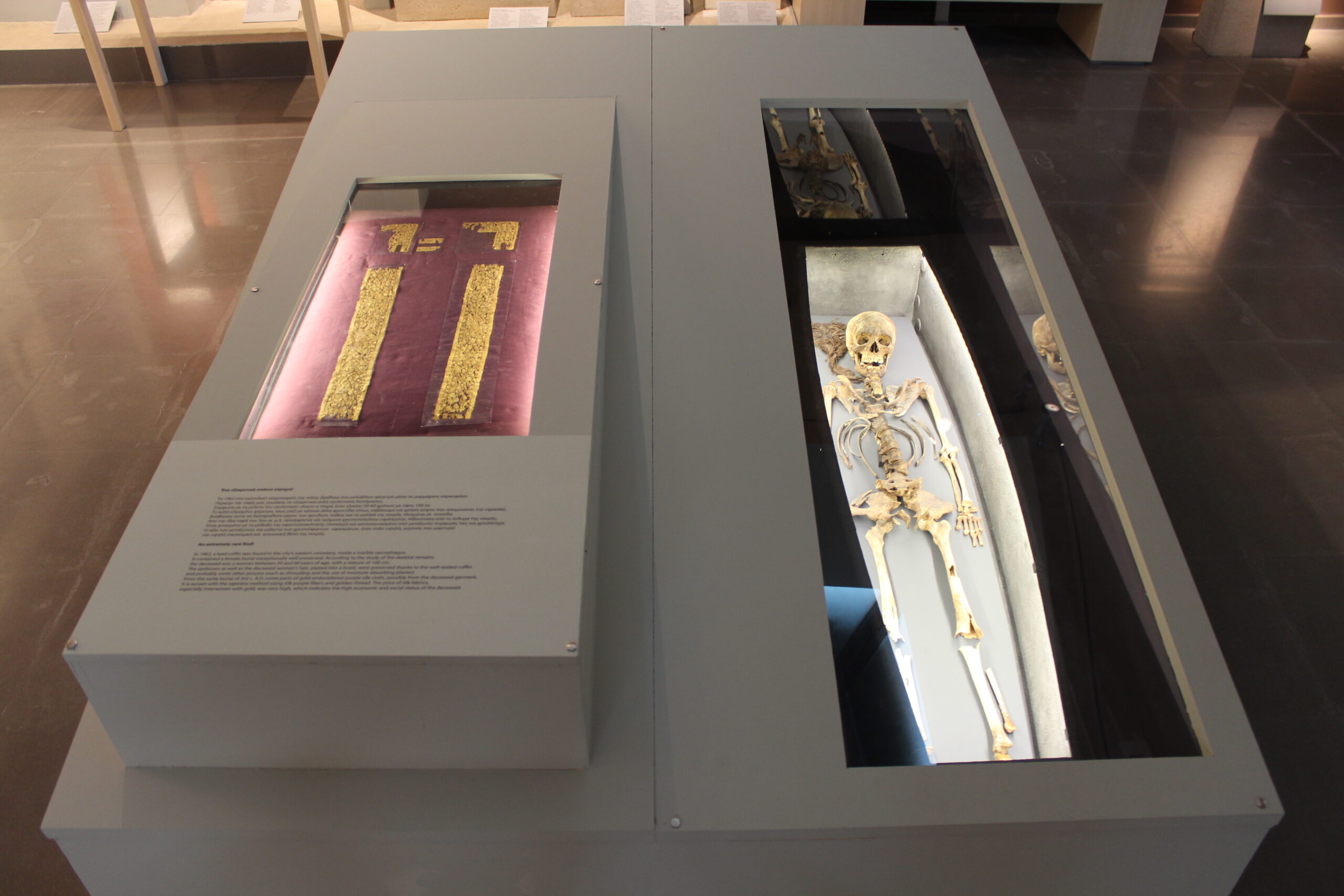
The story of a female mummy from the 4th century AD – with her chestnut braid still intact and a gold-embroidered silk fabric accompanying her on her eternal journey – reveals an exceptionally rare discovery for the Hellenic world.
The unparalleled splendor of the Derveni Crater
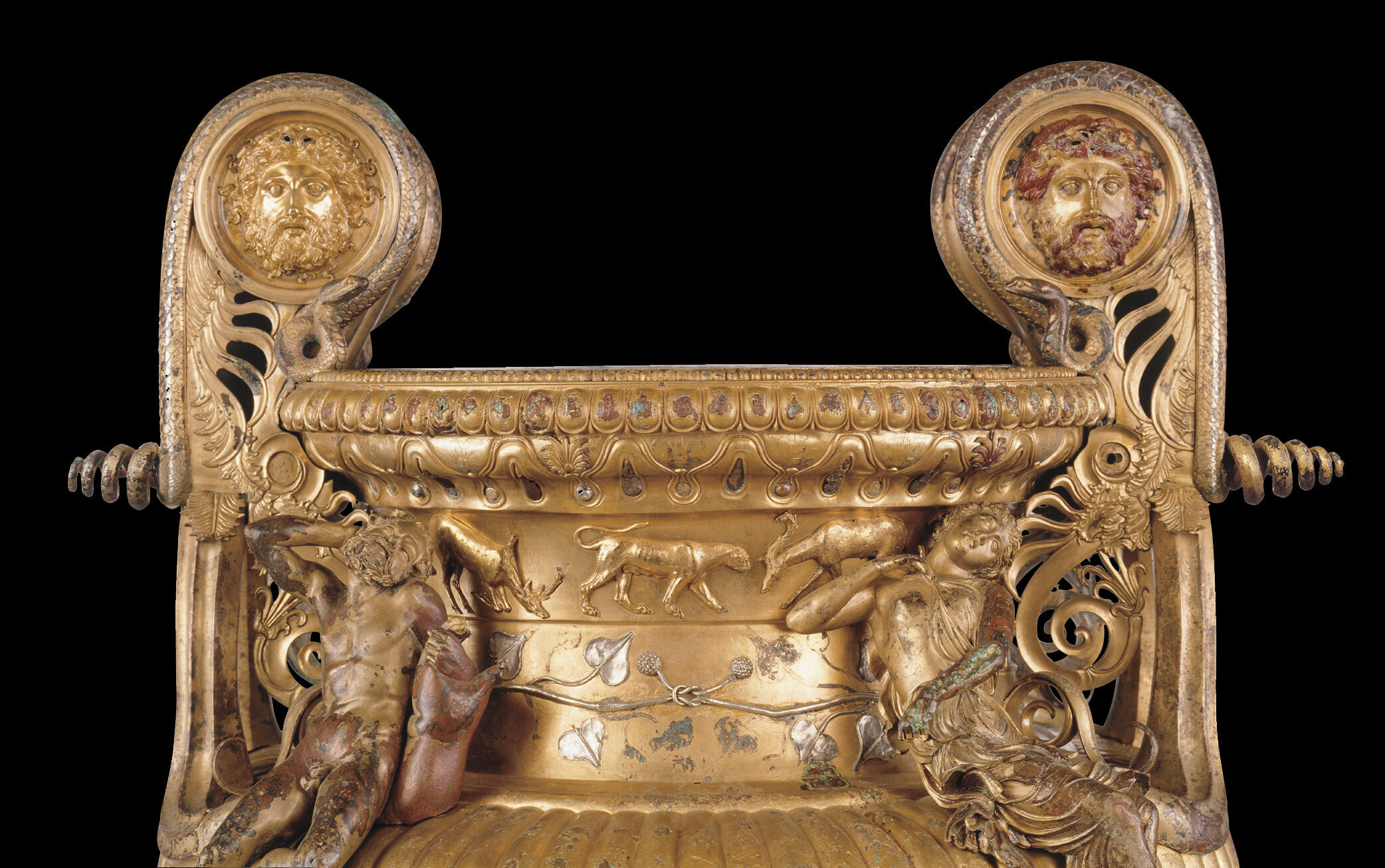
The undisputed masterpiece of the Archaeological Museum of Thessaloniki fully deserves its reputation as one of the most important works of ancient bronze craftsmanship – though nothing compares to the experience of seeing it in person.