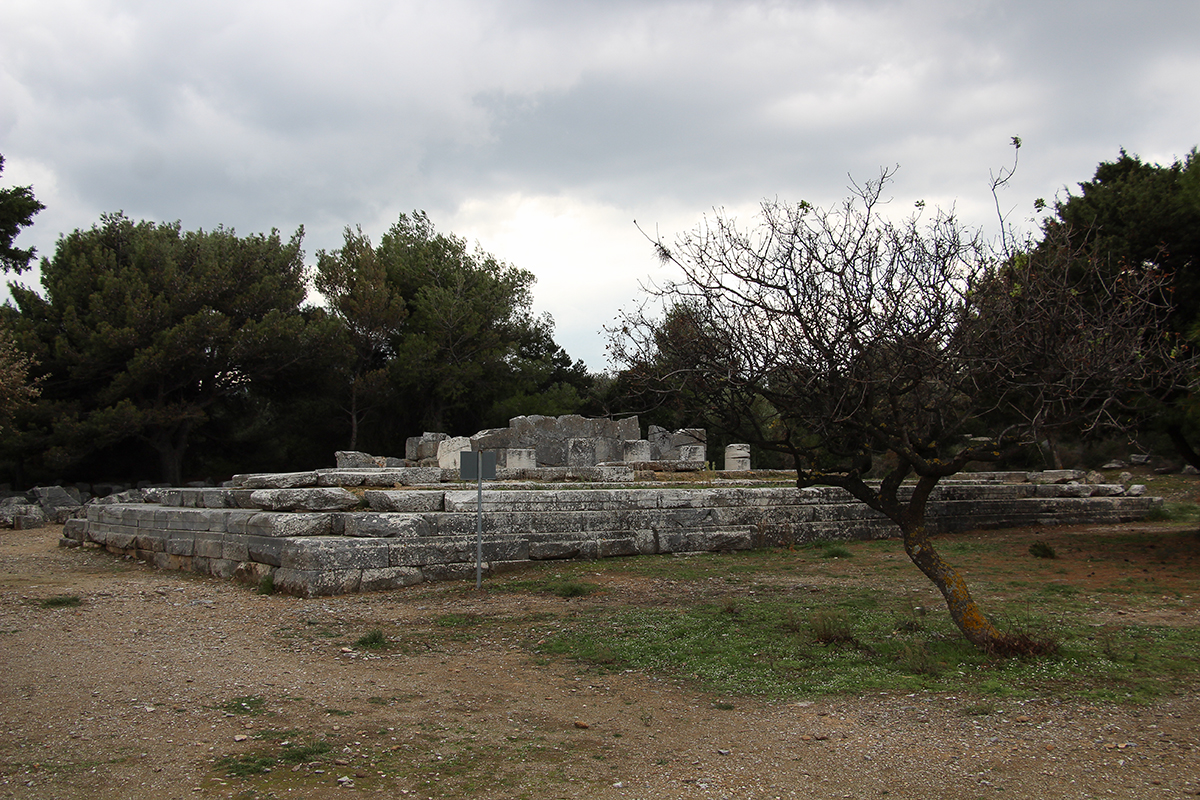


Rhamnous – perhaps the best-preserved municipal state (demos) of the city-state of Athens – lies in the northeastern part of Attica, surrounded by forest and offering magnificent views over the Euboean Gulf.
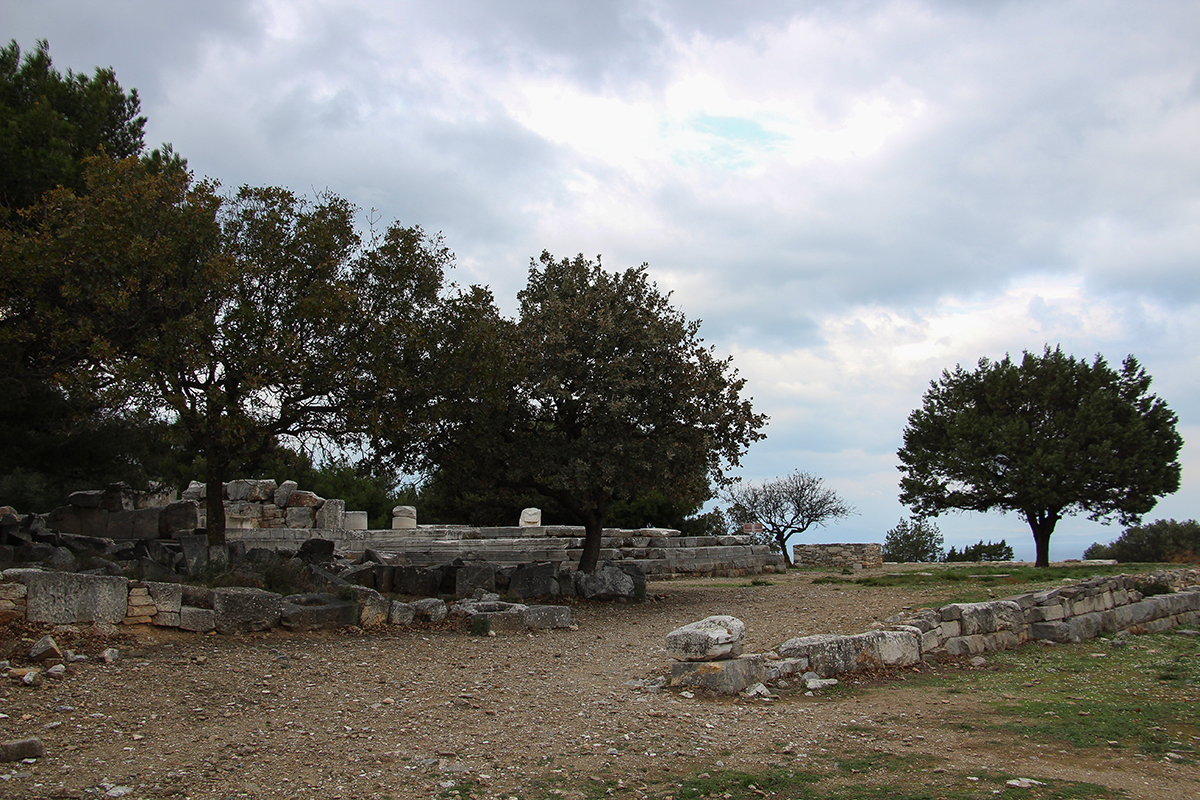
Here once stood the famous Sanctuary of Nemesis, the goddess who punished arrogance. Themis, the goddess of justice, was worshipped by her side. The sanctuary gained great renown after the Persian Wars, as it was believed to have inspired the Athenian army to fight so bravely at Marathon. According to tradition, the Persians had brought a block of marble to Rhamnous to fashion a victory monument celebrating their triumph over the Greeks. After their defeat, this very marble was used to sculpt the statue of Nemesis, the punisher of hubris.
The statue of Nemesis has not survived, unlike that of Themis, which is preserved in the National Archaeological Museum. Both works, however, were by the renowned sculptor Agoracritus, a pupil of Phidias. The relief base of Nemesis’ statue depicted the myth linking her to Rhamnous: the presentation of the beautiful Helen by her foster mother, Leda, to her biological mother, Nemesis. According to the myth, Zeus – disguised as a swan – seduced Nemesis at Rhamnous. She later laid an egg, which she gave to Leda; from this egg emerged Helen.
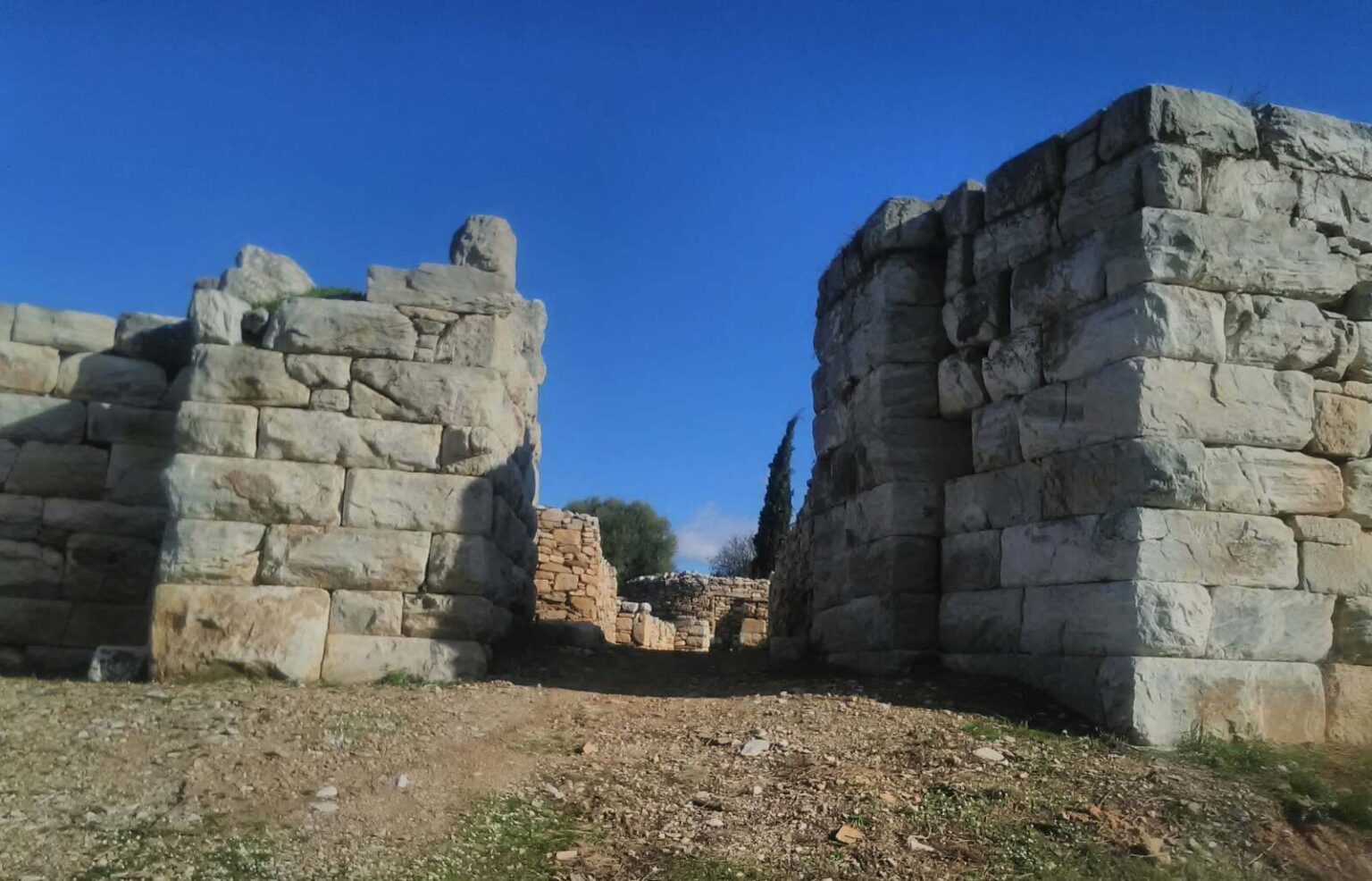
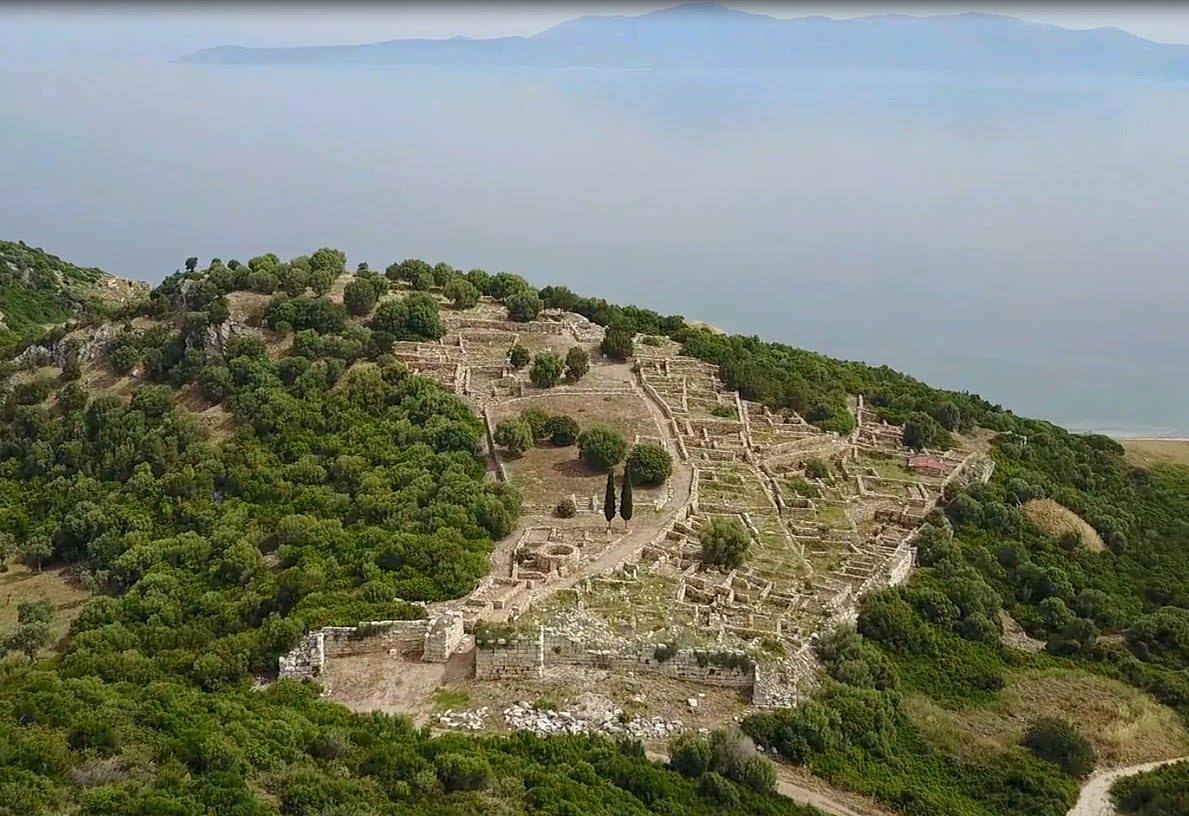
From the terrace of the sanctuary, with its large and small temples, there is a sweeping view of the sea and of the ancient city on the coastal hill in the distance. Rhamnous was of strategic importance, situated on the border of the Athenian city-state and controlling the sea passage between Attica and Euboea.
The walled city enclosed houses and public buildings, while the acropolis contained the military installations. Beneath the steep shoreline lay the two harbors – eastern and western. Along the road connecting the sanctuary to the city are monumental funerary enclosures of prominent Rhamnous families, once adorned with sculpted grave stelae and statues.
Access
Ramnountas
19007, Marathon
Approximately 70 minutes from the center of Athens
Opening hours
April 1 – October 31
Mon: 08:30 – 15:30
Tue: closed
Wed: 08:30 – 15:30
Thu: 08:30 – 15:30
Fri: 08:30 – 15:30
Sat: 08:30 – 15:30
Sun: 08:30 – 15:30
November 1 – March 31
Mon: 08:30 – 15:30
Tue: closed
Wed: 08:30 – 15:30
Thu: 08:30 – 15:30
Fri: 08:30 – 15:30
Sat: 08:30 – 15:30
Sun: 08:30 – 15:30
The site remains closed on the following dates and public holidays: January 1, March 25, May 1, Easter Sunday, December 25 & 26.
Tickets
Full: €5,00
Reduced: €3,00
Amenities
Contact
Archaeological Site of Rhamnous
T: +30 22940 63477
E: archramn@culture.gr