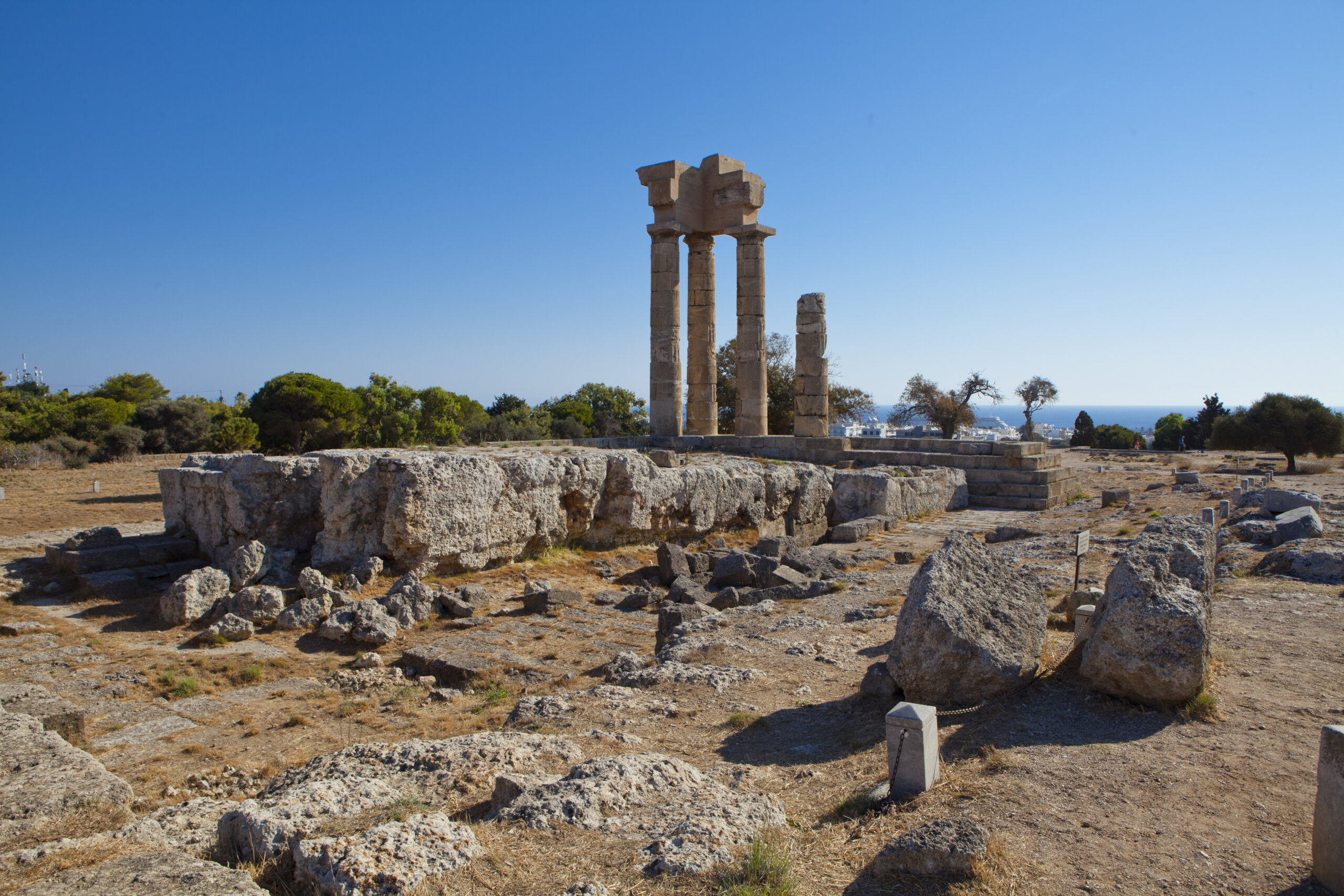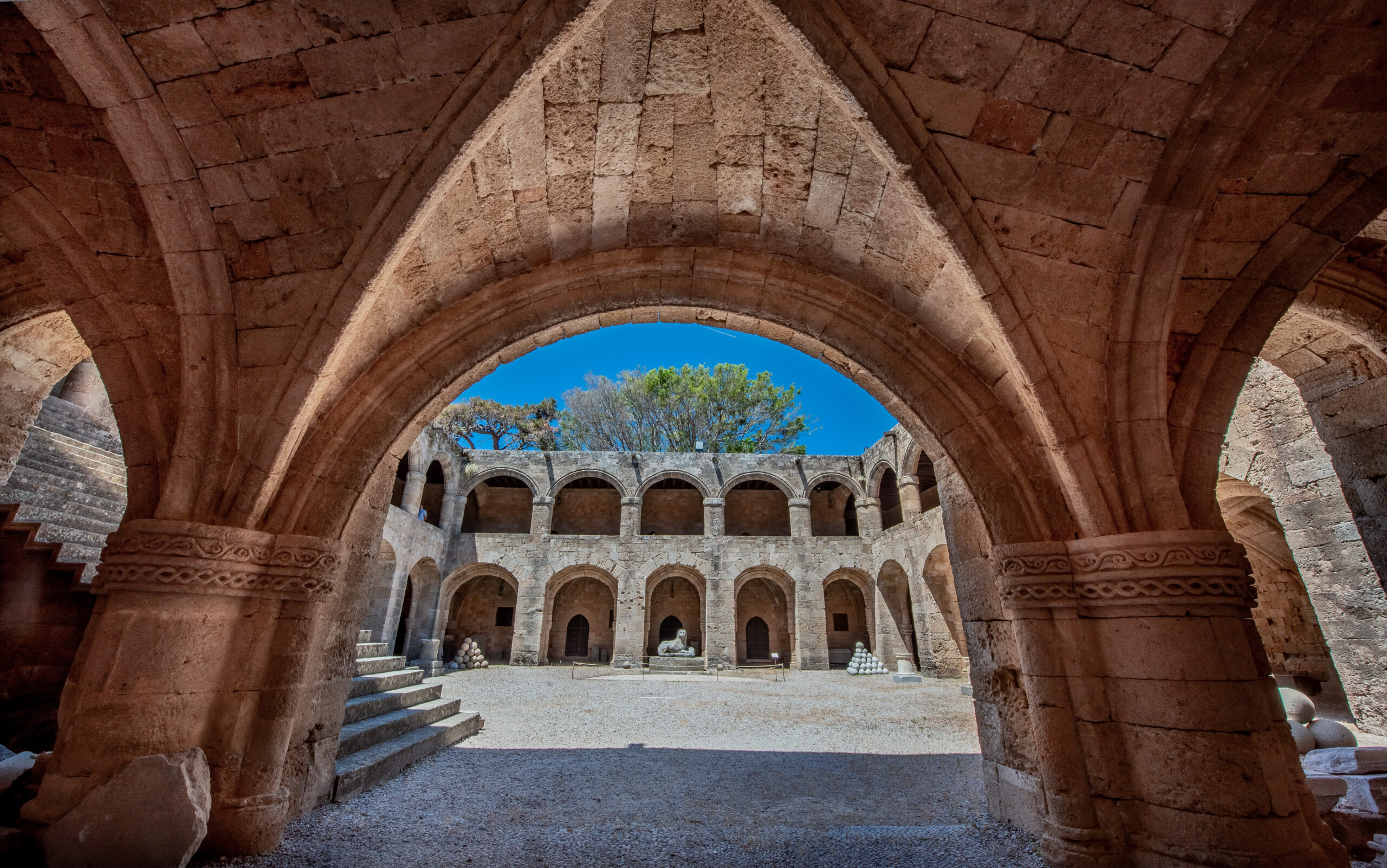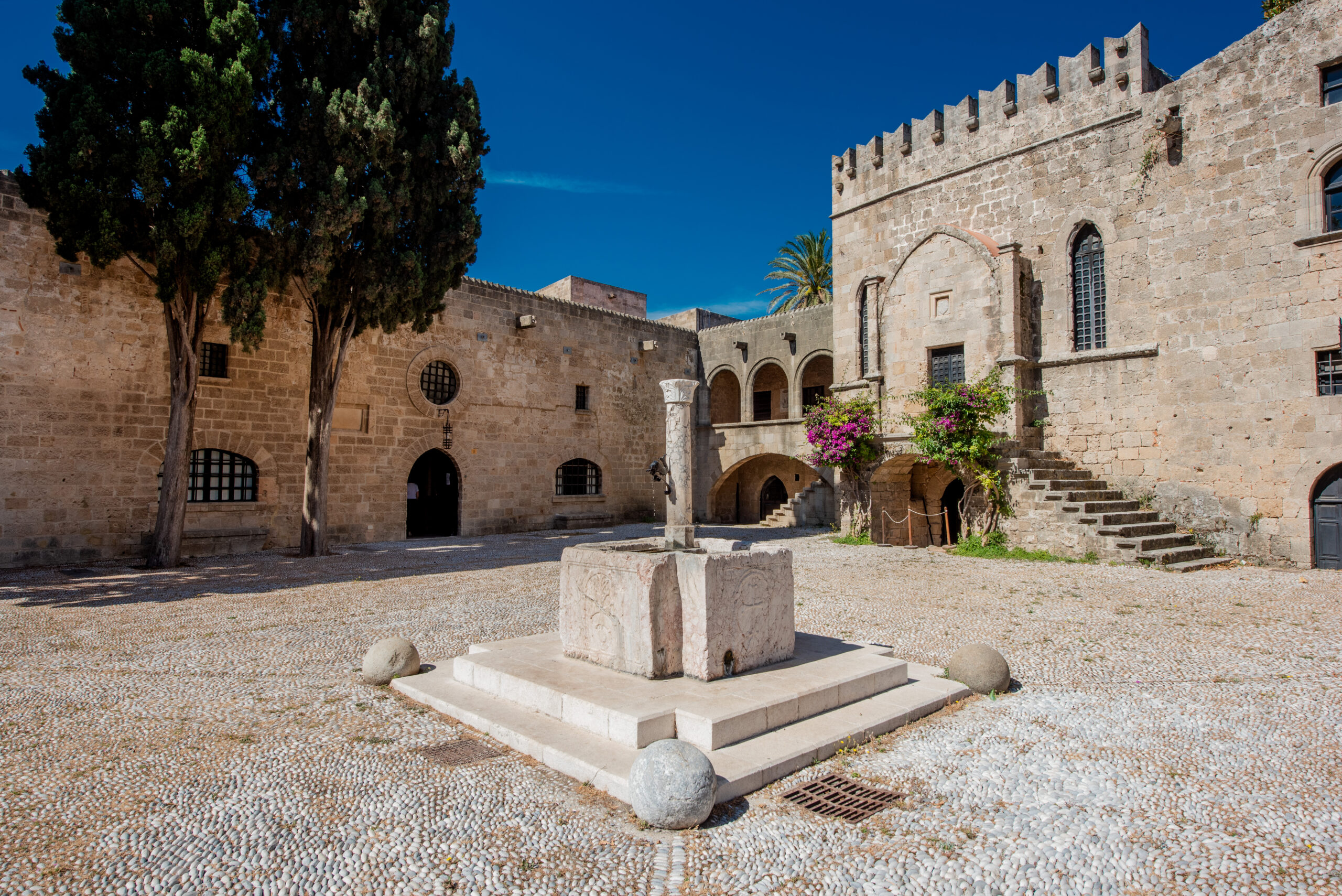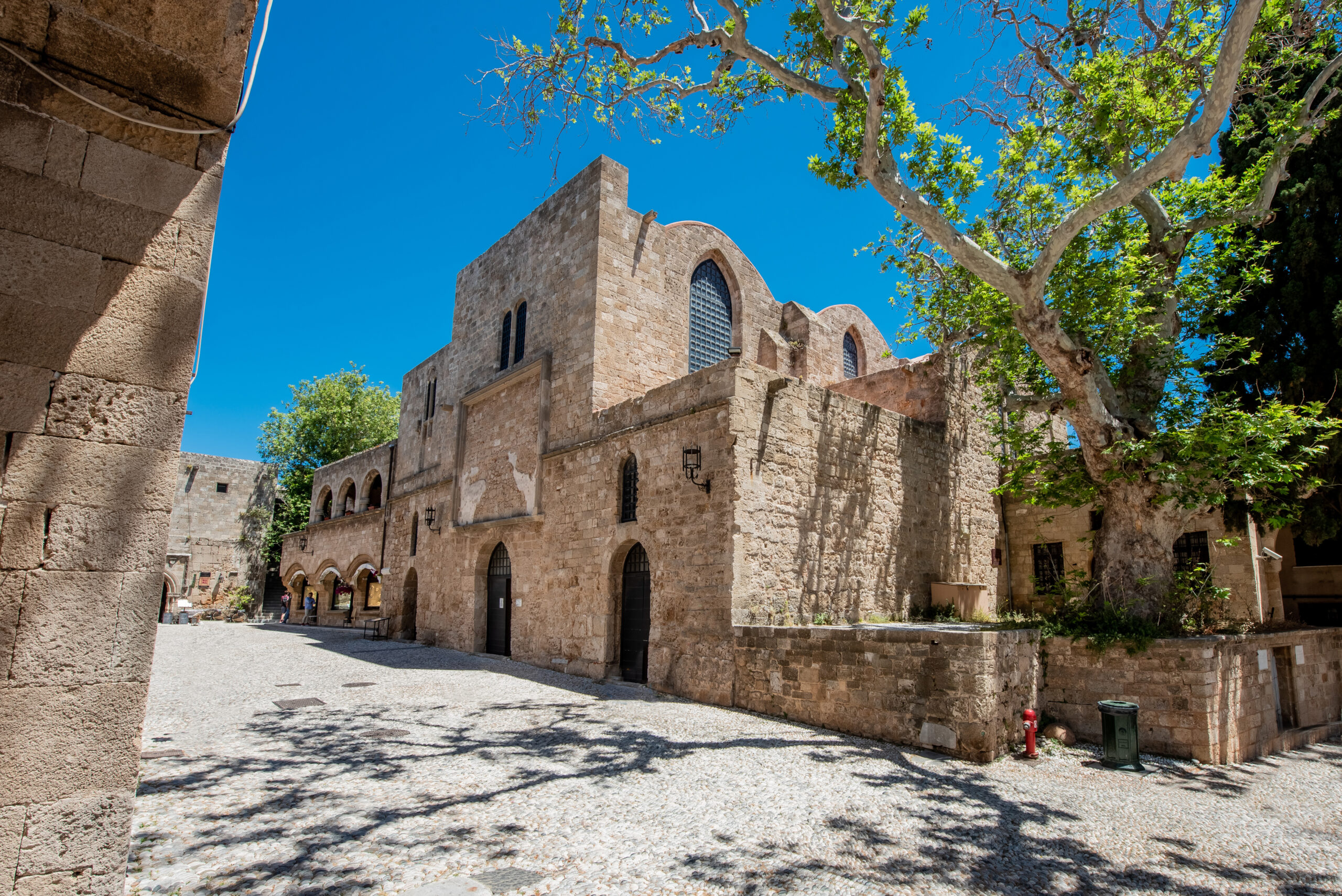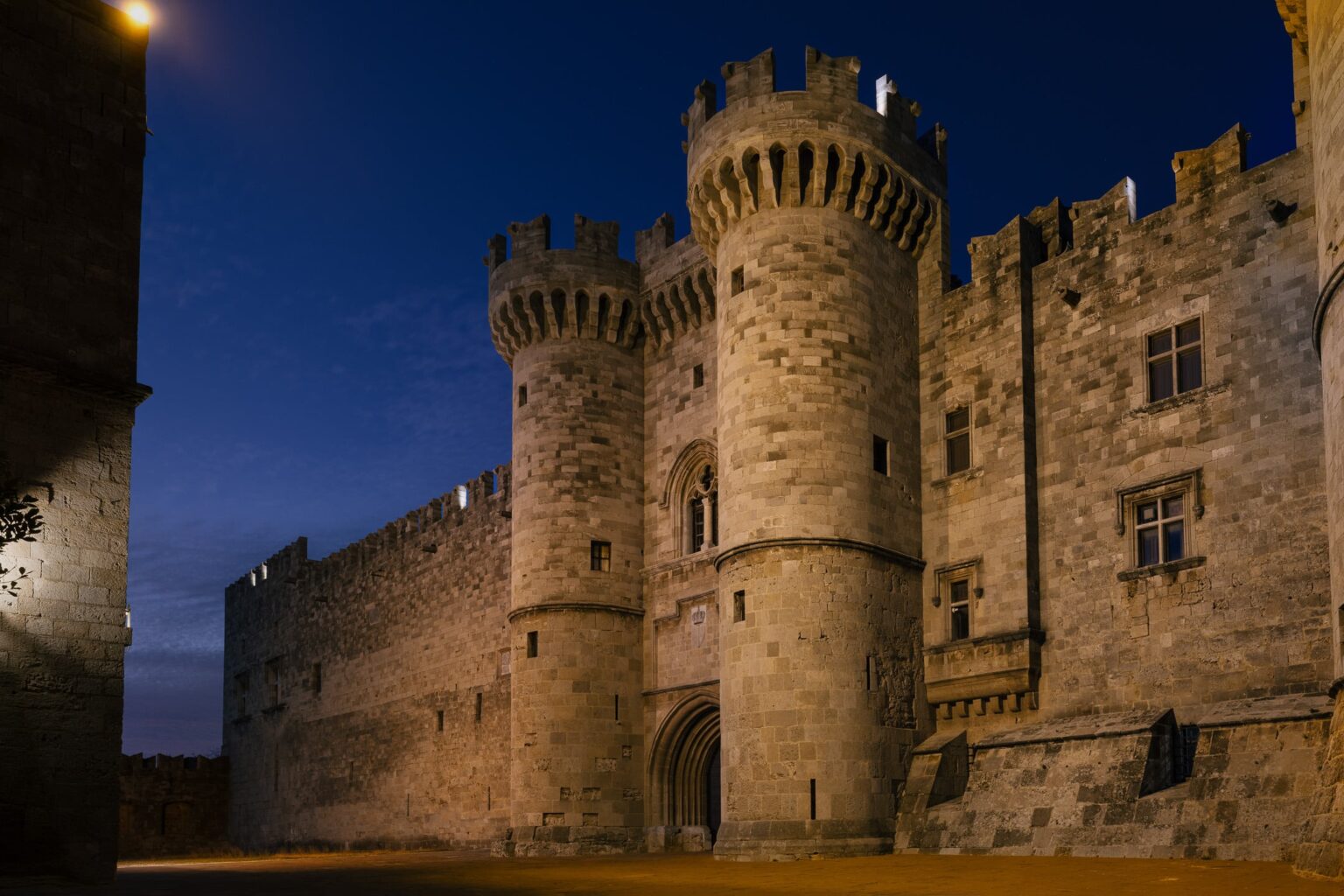
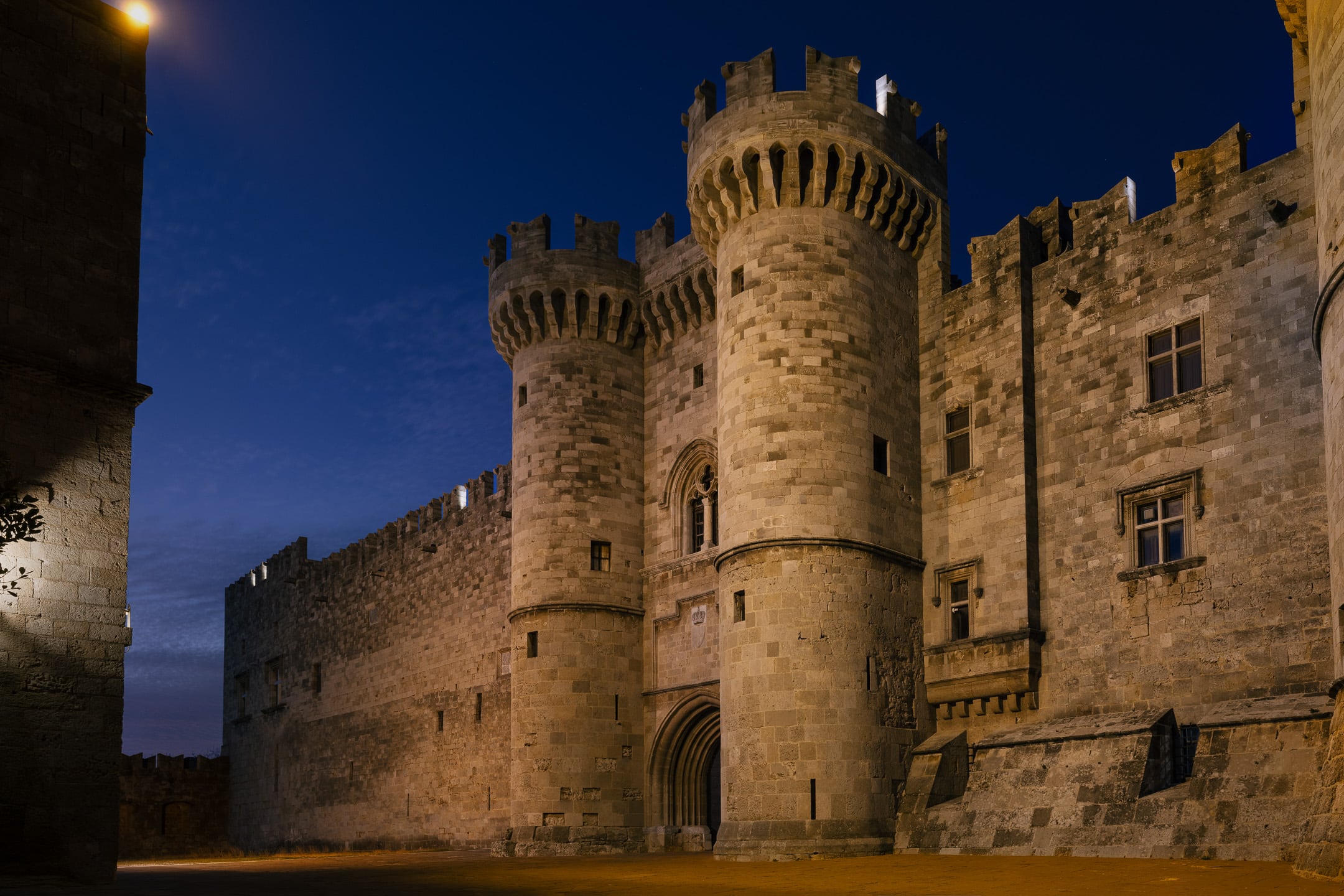


Seemingly impenetrable and utterly cinematic, the Palace of the Grand Master is the most captivating architectural landmark of the Medieval City of Rhodes and a characteristic example of Gothic architecture.
The Palace is considered a symbol of Hospitaller Rhodes and is certainly a vivid testament to the island’s cultural heritage. It formed a key part of the city’s medieval fortifications and is believed to have been built right where the original Byzantine acropolis used to be.
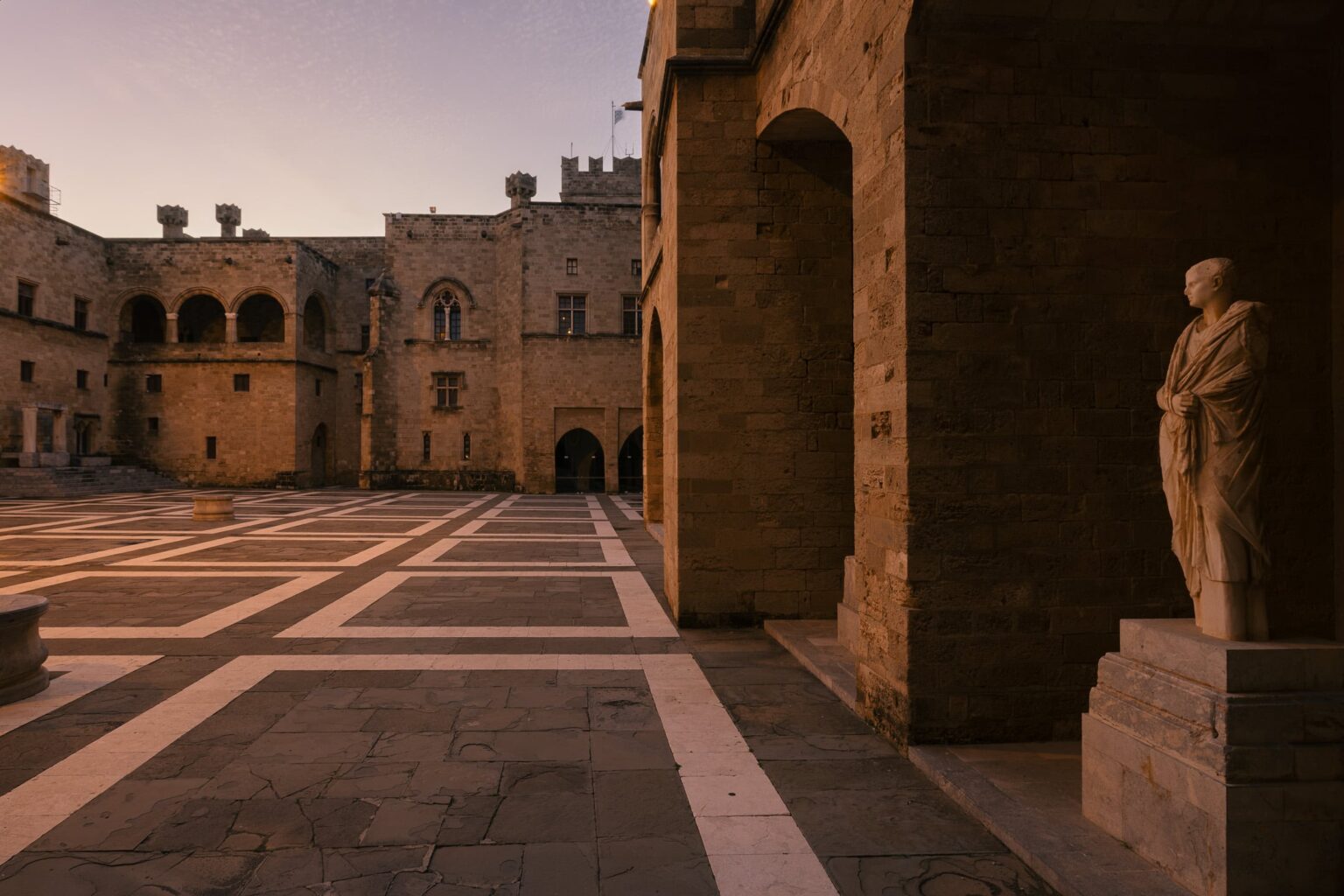
Construction began in the early 14th century, shortly after the Knights of St John settled on Rhodes, and it served both as the residence of the Grand Master (the supreme leader of the Order) and as an administrative center. The building has a rectangular plan arranged around a central open courtyard, and its imposing towers and high walls make a powerful impression.
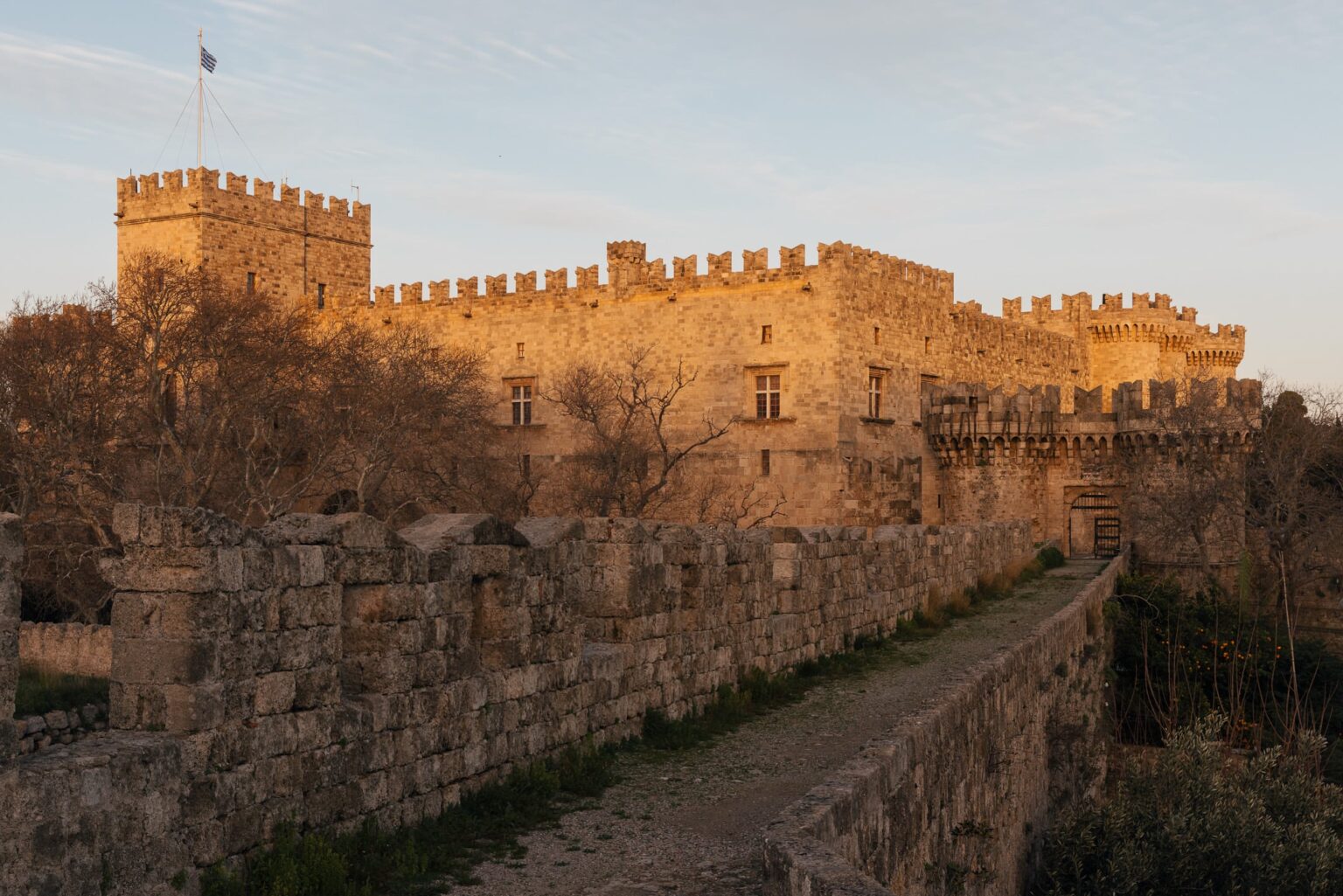
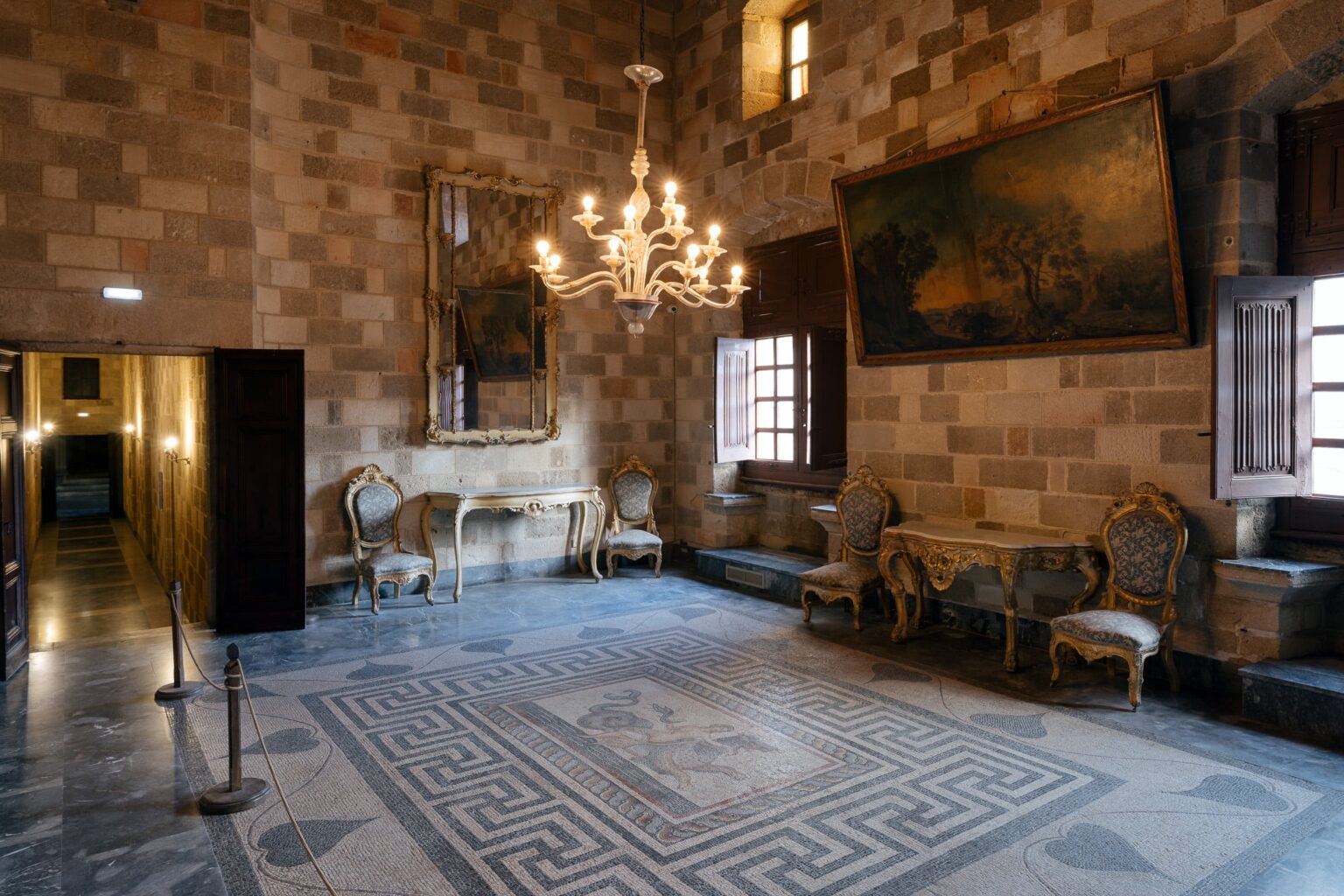
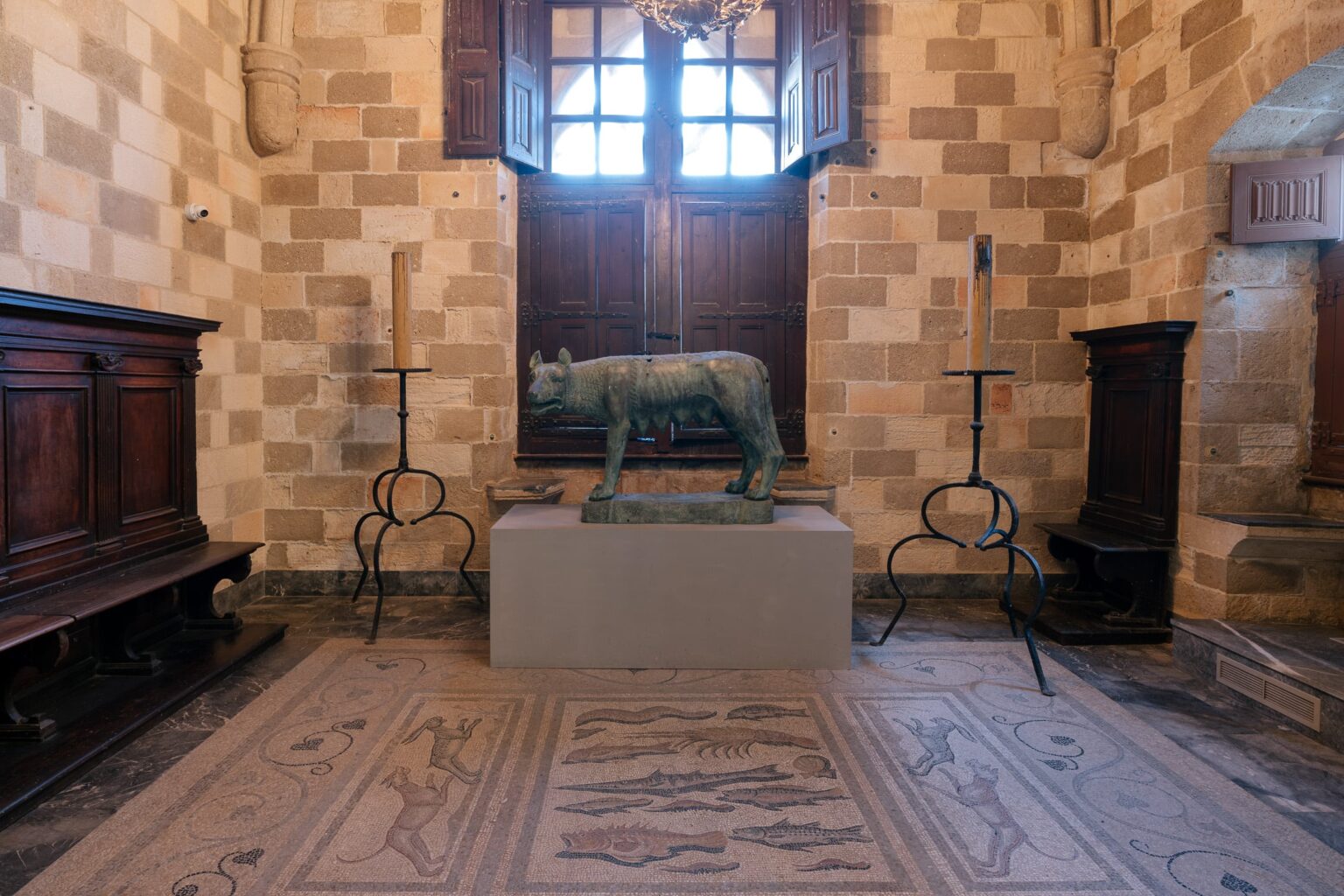
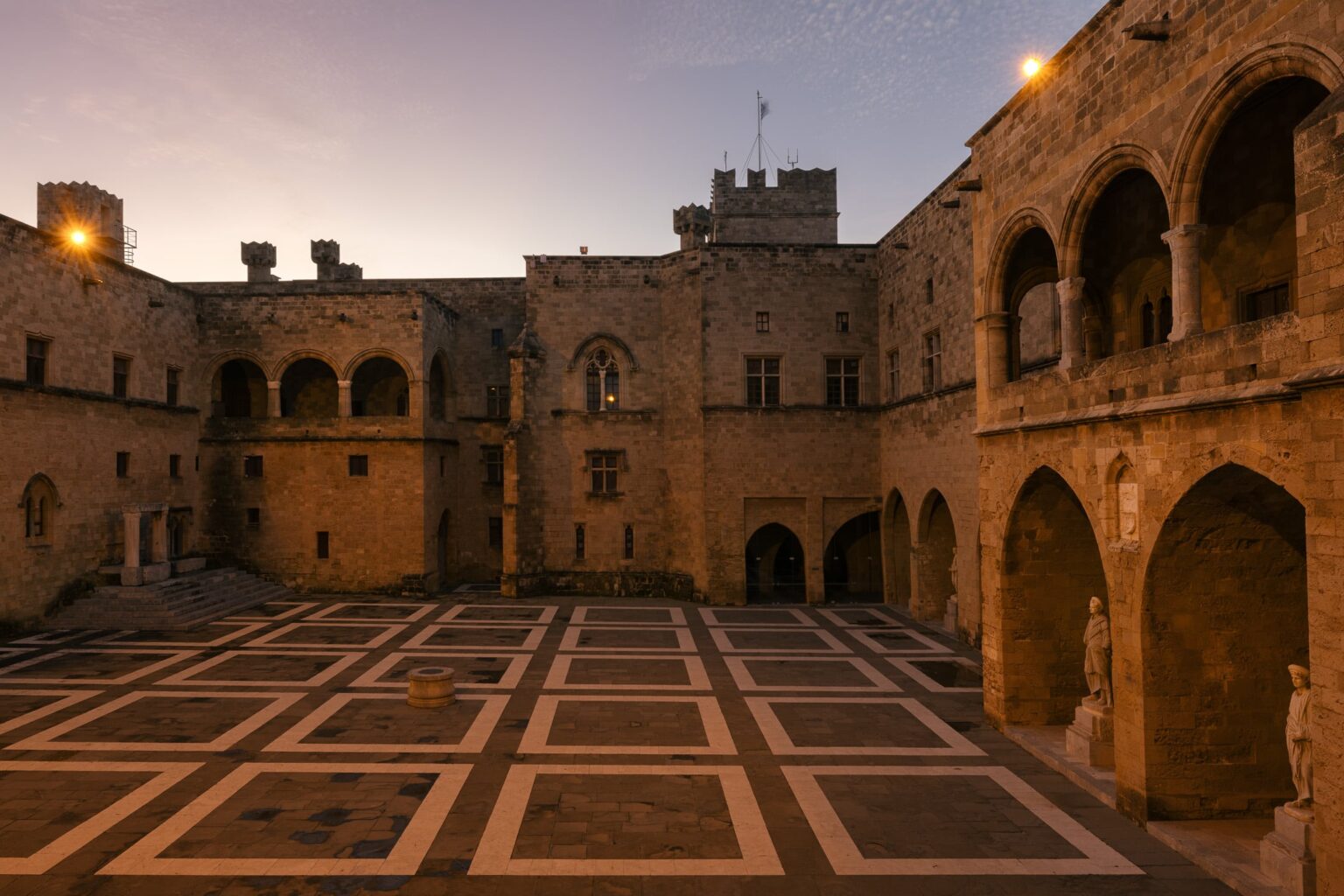
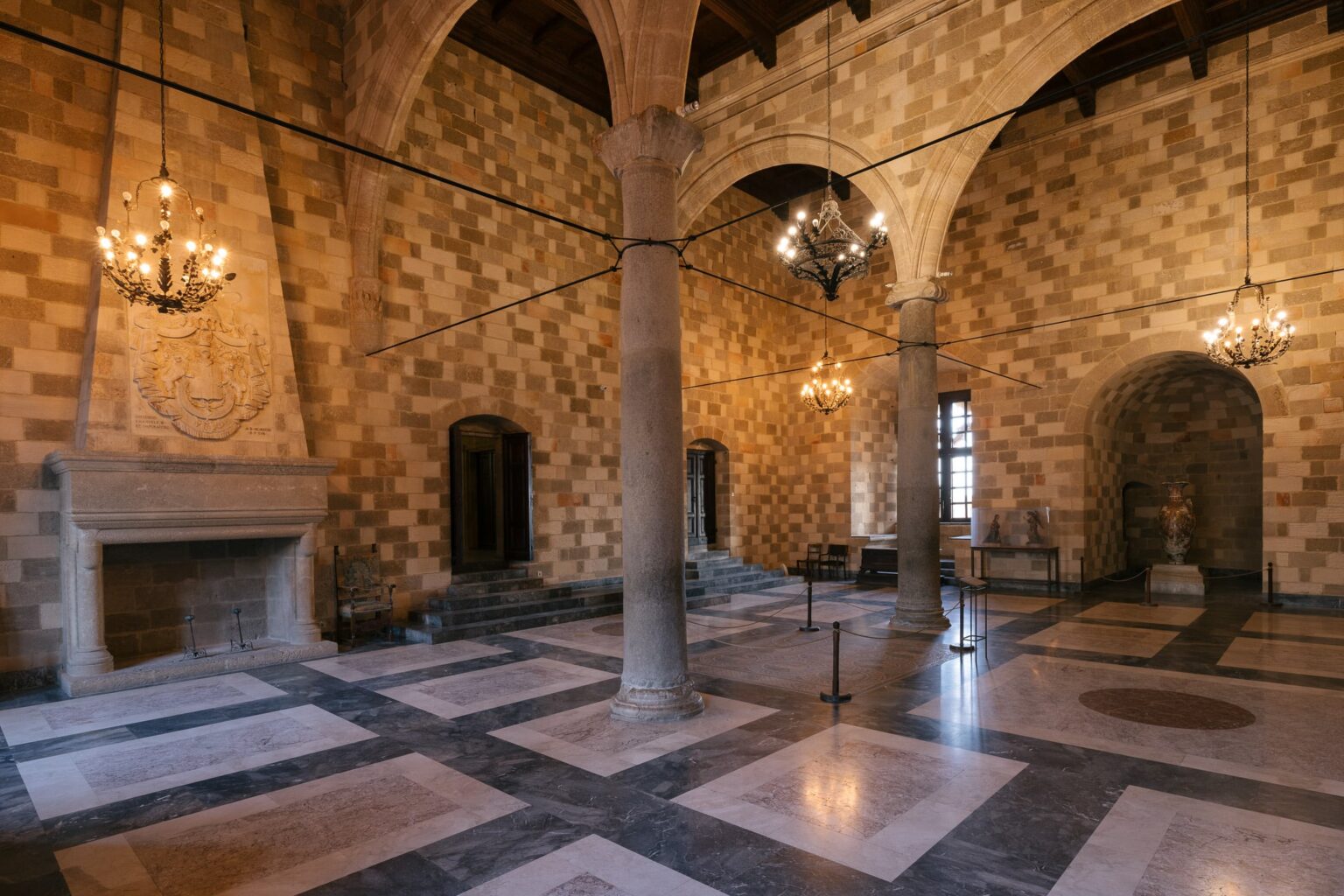
Partially destroyed by an explosion in 1856, it was restored by the Italians in the early 20th century, along with all the major monuments of the Medieval City, after the Dodecanese was conquered by the Italians. The Italians proved eager to revive the grandeur of the Knights’ era, but only the interior could be faithfully reconstructed, as the original plans for the rest of the building had been lost in the depths of time.
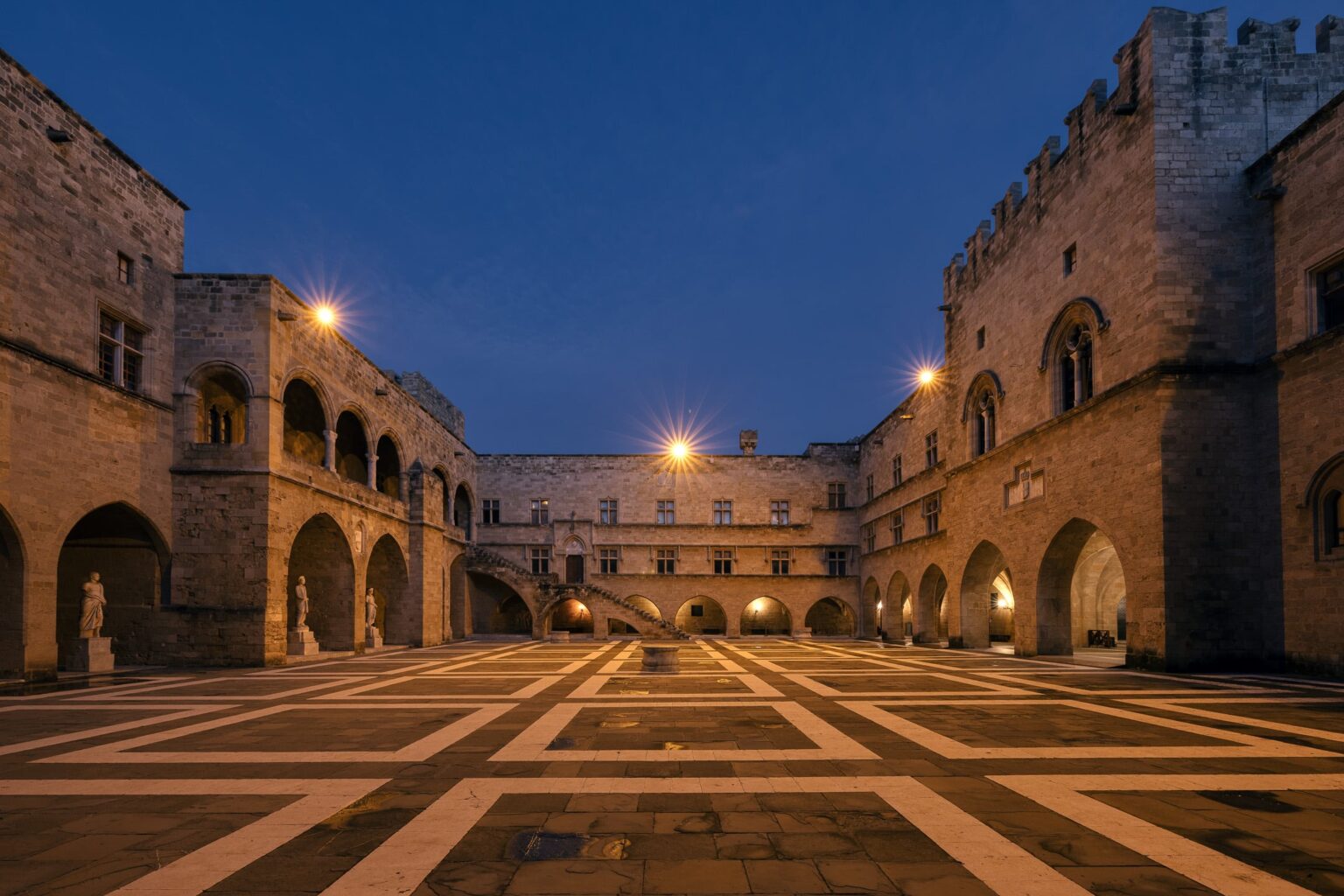
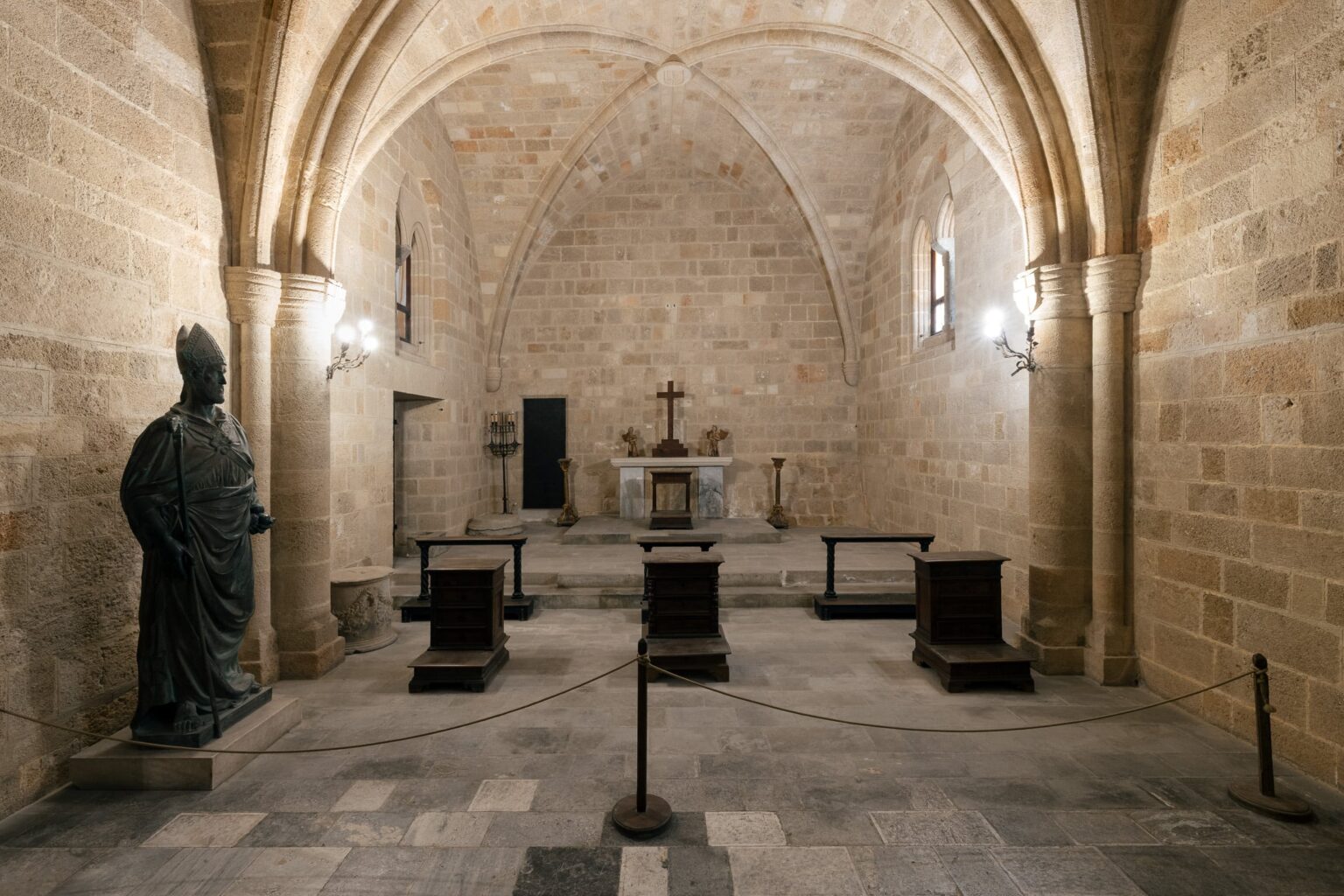
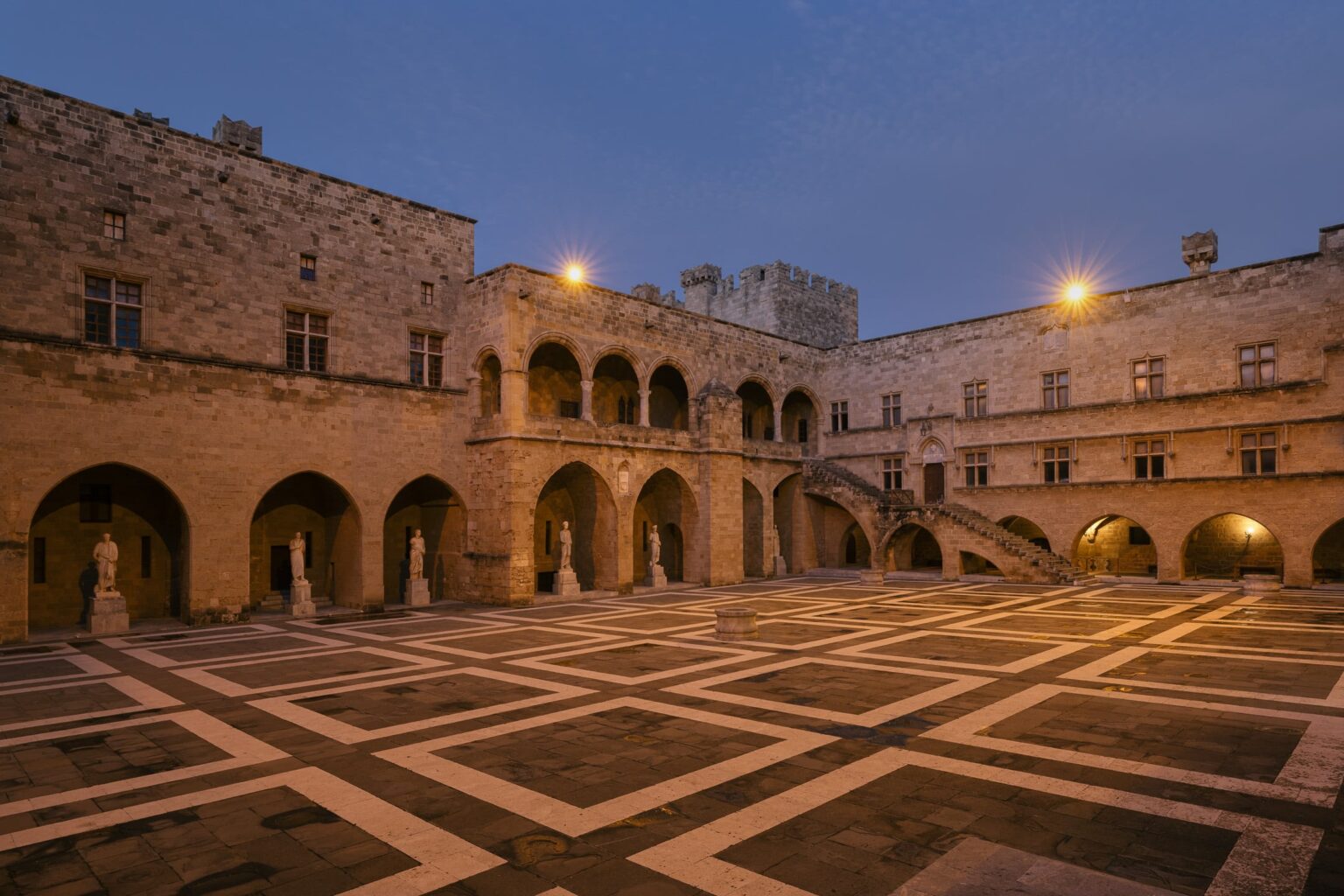
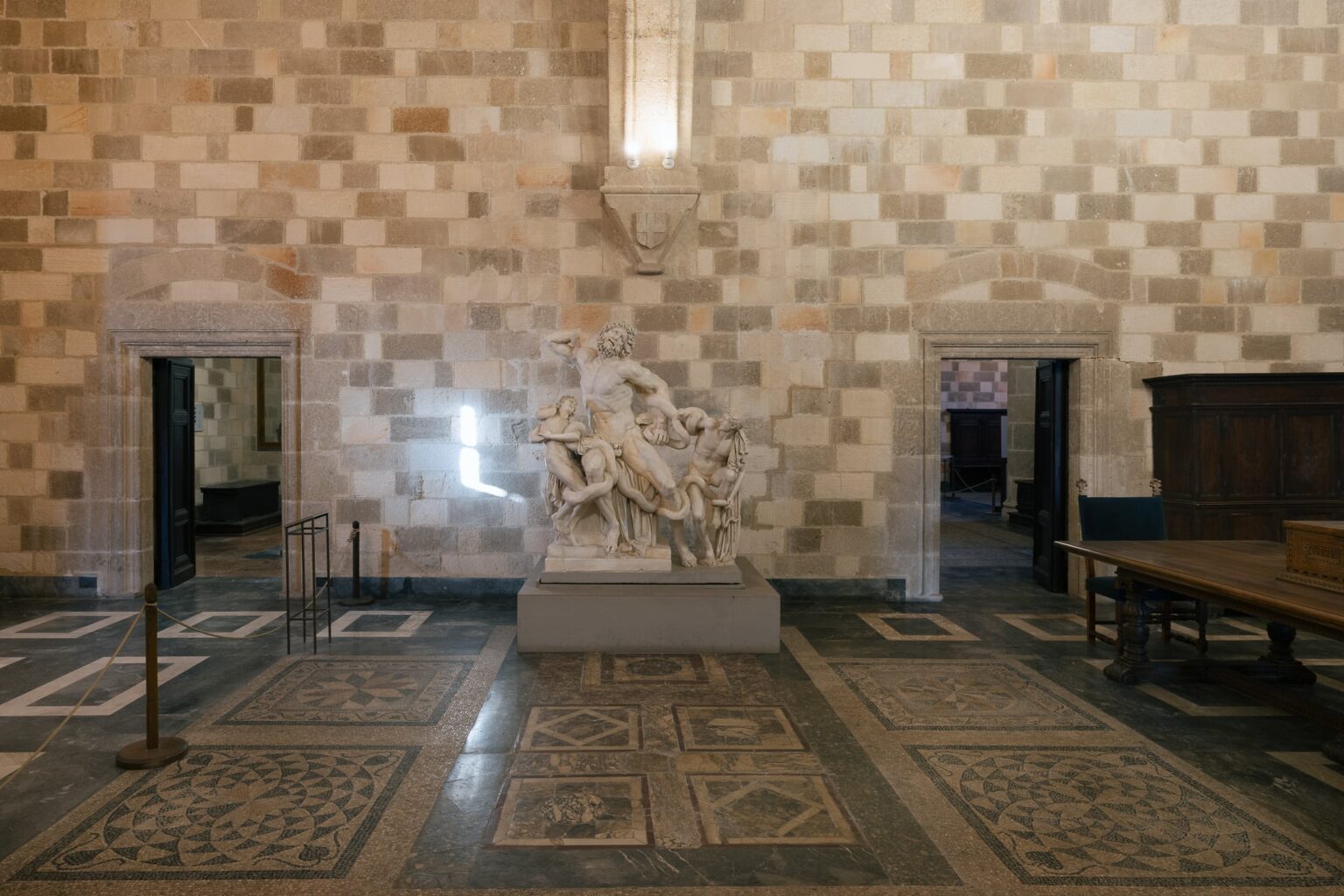
Today, the ground floor houses two permanent exhibitions devoted to ancient and medieval Rhodes, while the upper floor showcases mosaic floors transported by the Italians in order to decorate the Palace, mainly from secular and ecclesiastical buildings on Kos. Capitals, medieval furniture, mirrors, paintings, candelabras and other objects complement the décor of the imposing structure as restored in the 1930s. The Palace of the Grand Master is perhaps the most significant monument to have survived since the Knights’ period and is currently functioning as a museum, attracting thousands of visitors each year.
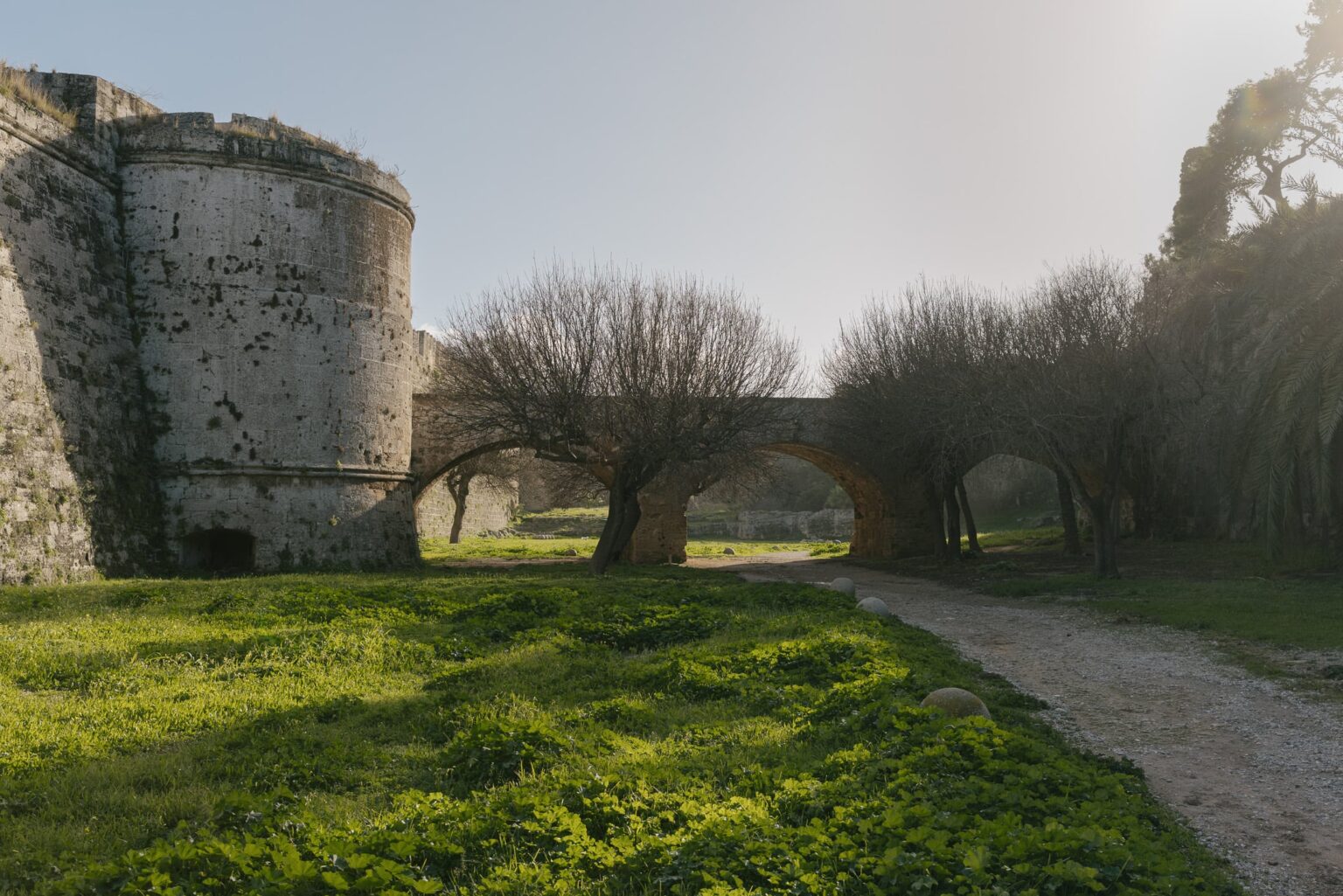
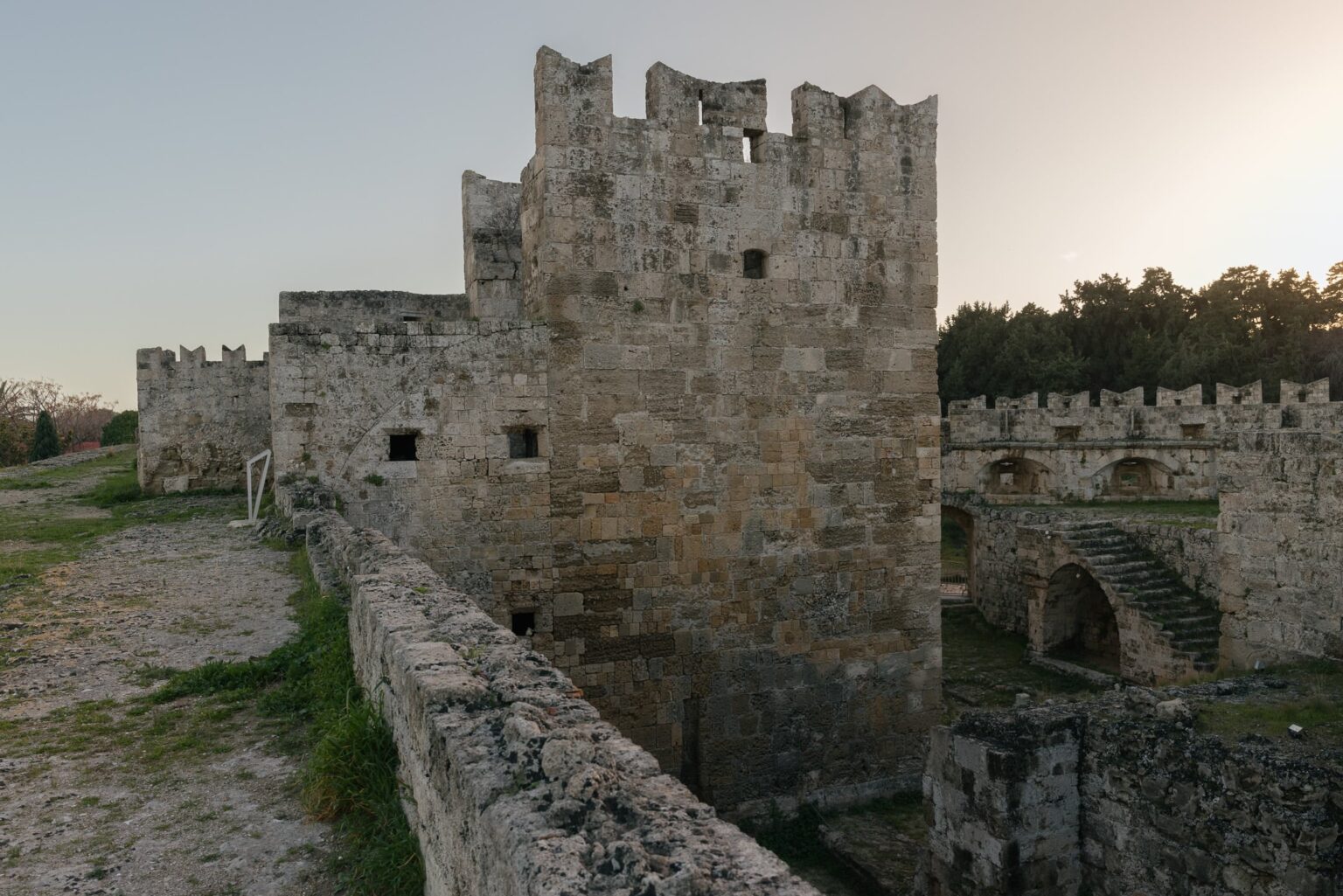
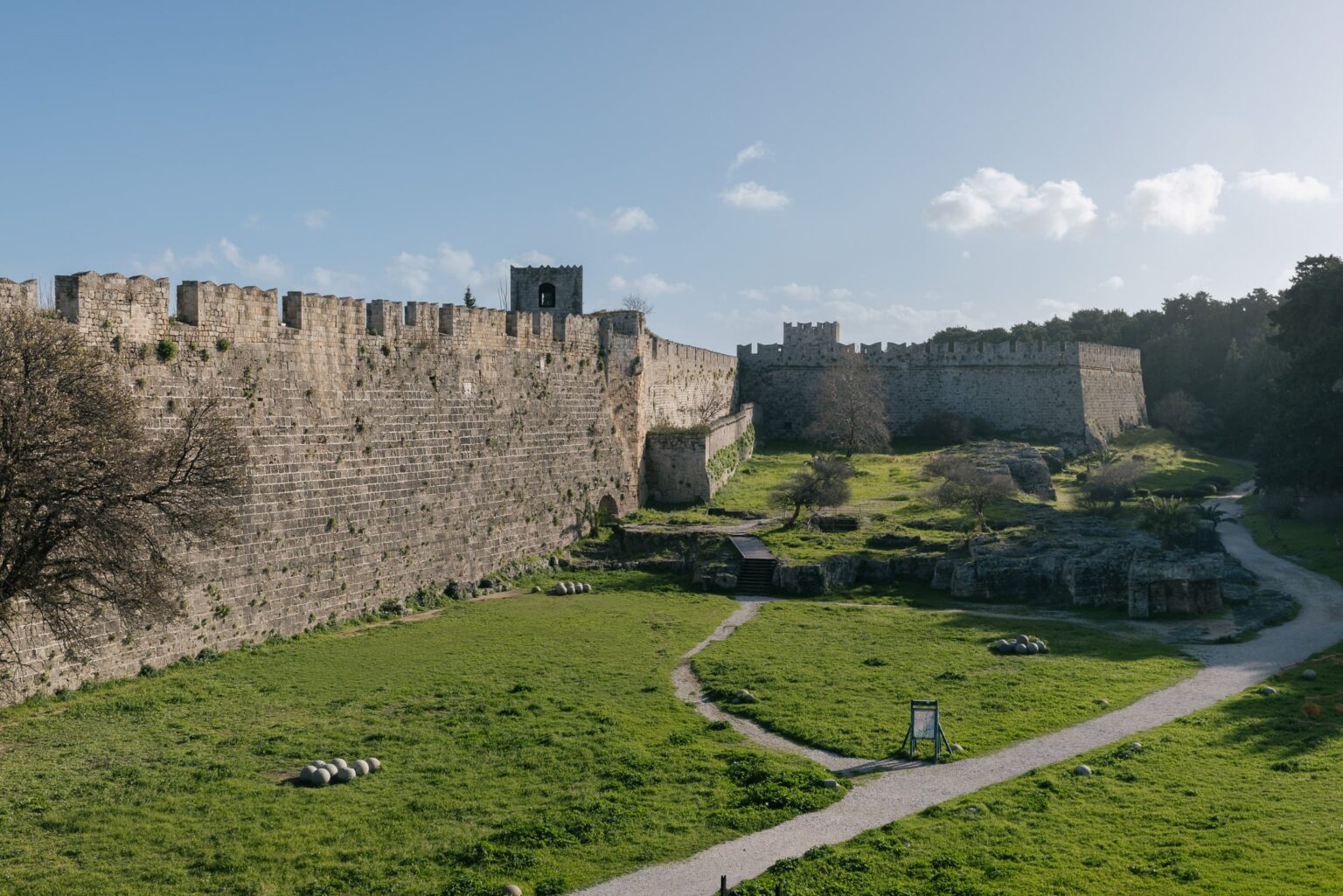
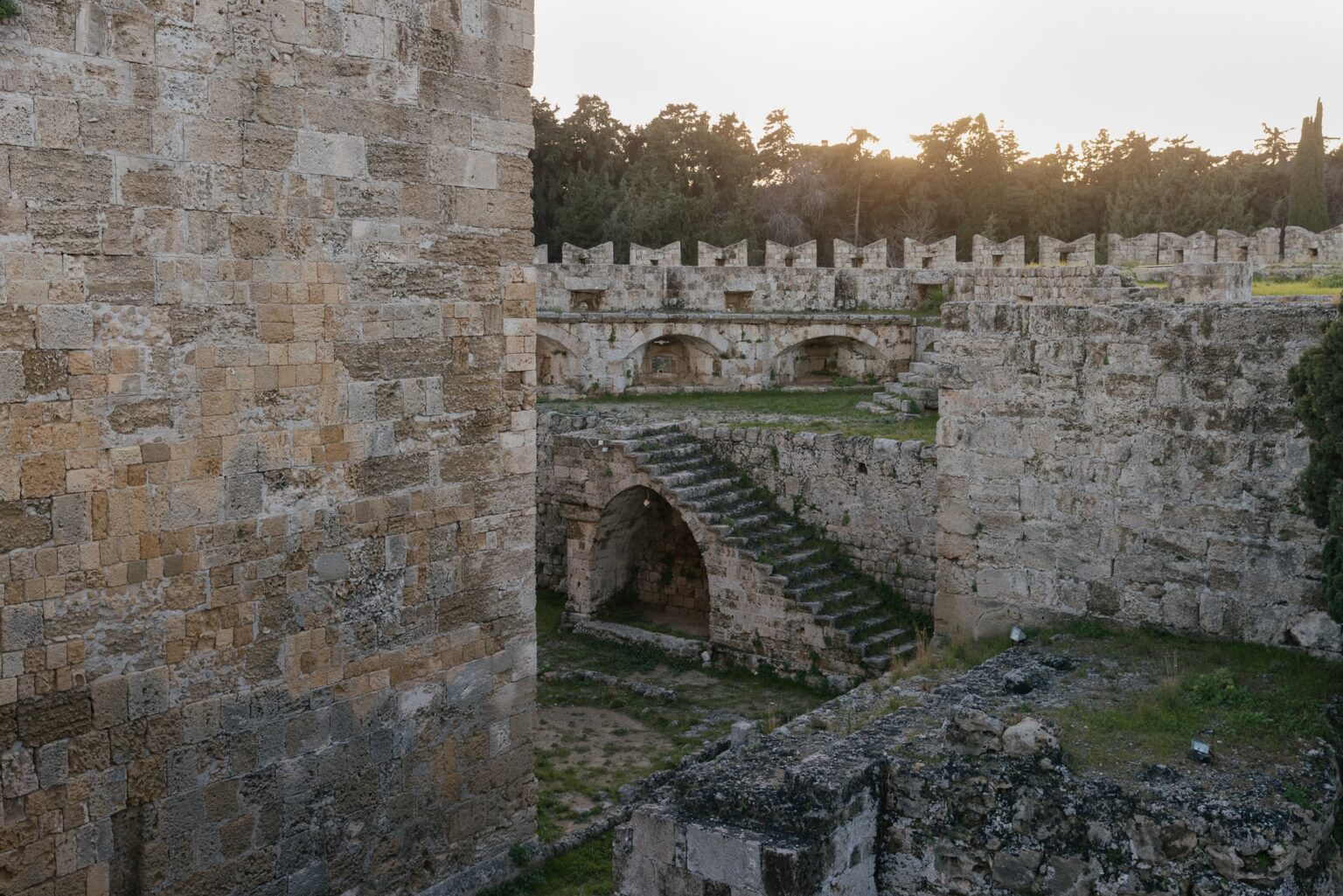
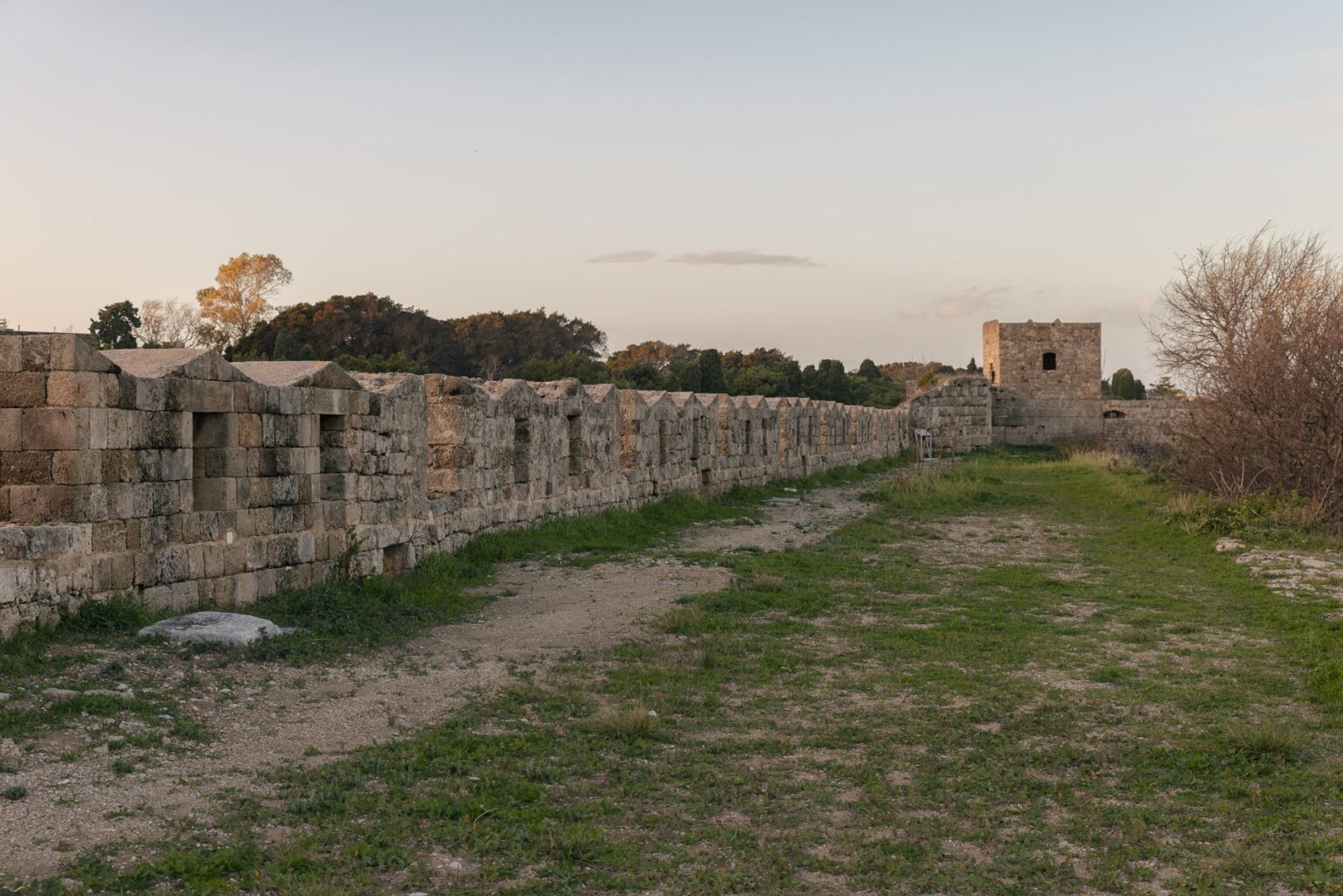
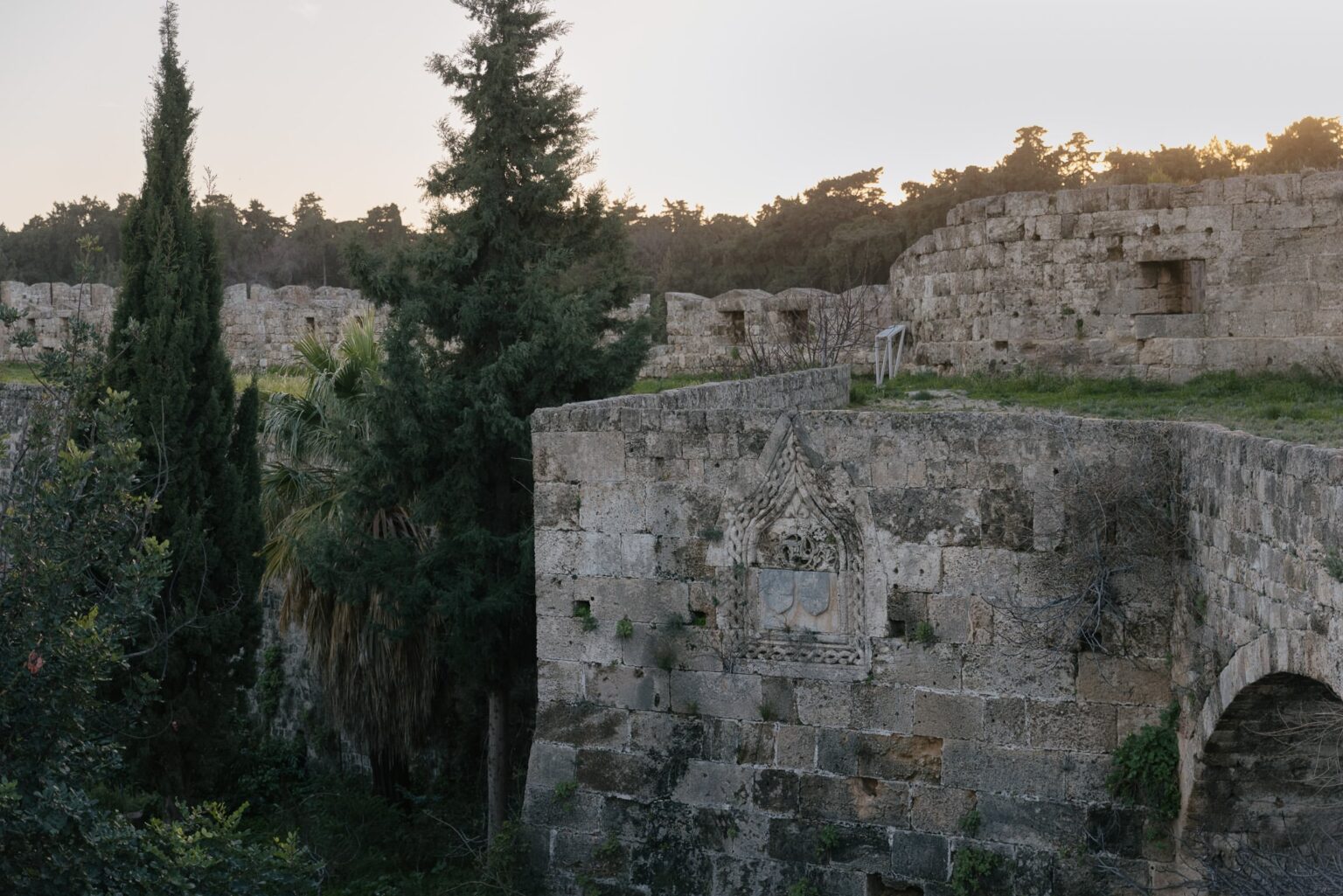
The impressive walls of Rhodes reflect the evolution of fortification architecture from the Byzantine era to the Knights era. The Byzantine walls divided the city into three parts: the acropolis (later to become the Palace of the Grand Master), the Kollakio (upper town), and the burgo (lower town). Gradually, during the Knights’ rule (1309 – 1522), the city expanded, and the Hospitallers’ fortifications enclosed a far larger area, while also reinforcements meant it grew significantly in thickness. They were strengthened further with independent towers, an outer wall and a vast moat. After the Ottomans took over Rhodes, several repairs were made to the walls, though the overall form of the fortifications remained the same.
Directions
Street of The Knights – Medieval City of Rhodes
85100, Rhodes
On foot
10 minutes from the center of Rhodes (Mandraki)
Opening hours
Summer hours
April 1 – October 31
Palace of the Grand Master
Daily: 08:00 – 20:00
Rhodes Fortification Walls
Mon: 12:00 – 15:00
Tue: 12:00 – 15:00
Wed: 12:00 – 15:00
Thu: 12:00 – 15:00
Fri: 12:00 – 15:00
Sat: Closed
Winter hours
November 1 – March 31
Palace of the Grand Master
Mon: 08:30 – 15:30
Tue: Closed
Wed: 08:30 – 15:30
Thu: 08:30 – 15:30
Fri: 08:30 – 15:30
Sat: 08:30 – 15:30
Sun: 08:30 – 15:30
Rhodes Fortification Walls
Closed
Last admission: 20 minutes before closing time
The site remains closed on the following dates and public holidays: January 1, March 25, May 1, Easter Sunday, December 25 & 26.
The site remains closed on the following dates and public holidays: January 1, March 25, May 1, Easter Sunday, December 25 & 26.
Tickets
Palace of the Grand Master
Full: €20,00
Reduced: €10,00
Rhodes Fortification Walls
Full: €5.00
Reduced: €3.00
Admission is free on March 6, April 18, May 18, the last weekend of September, on October 28, as well as on the first and third Sunday of each month between November 1 and March 31.
Amenities
Café / Restaurant
Shop
WC
WiFi
Elevator
Accessibility
Contact
Ephorate of Antiquities of the Dodecanese
Τ: +30 22413 65200
Ε: efadod@culture.gr