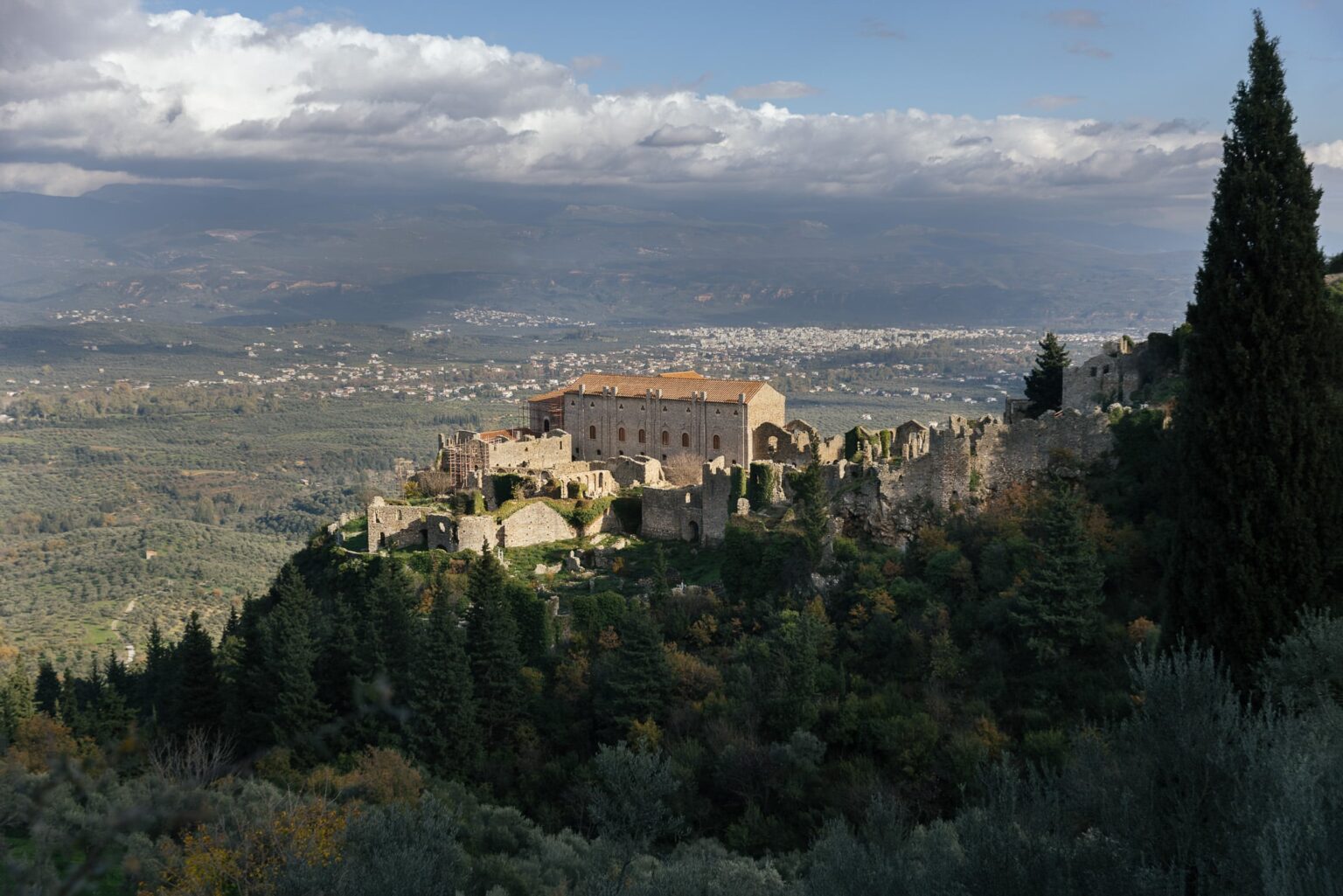
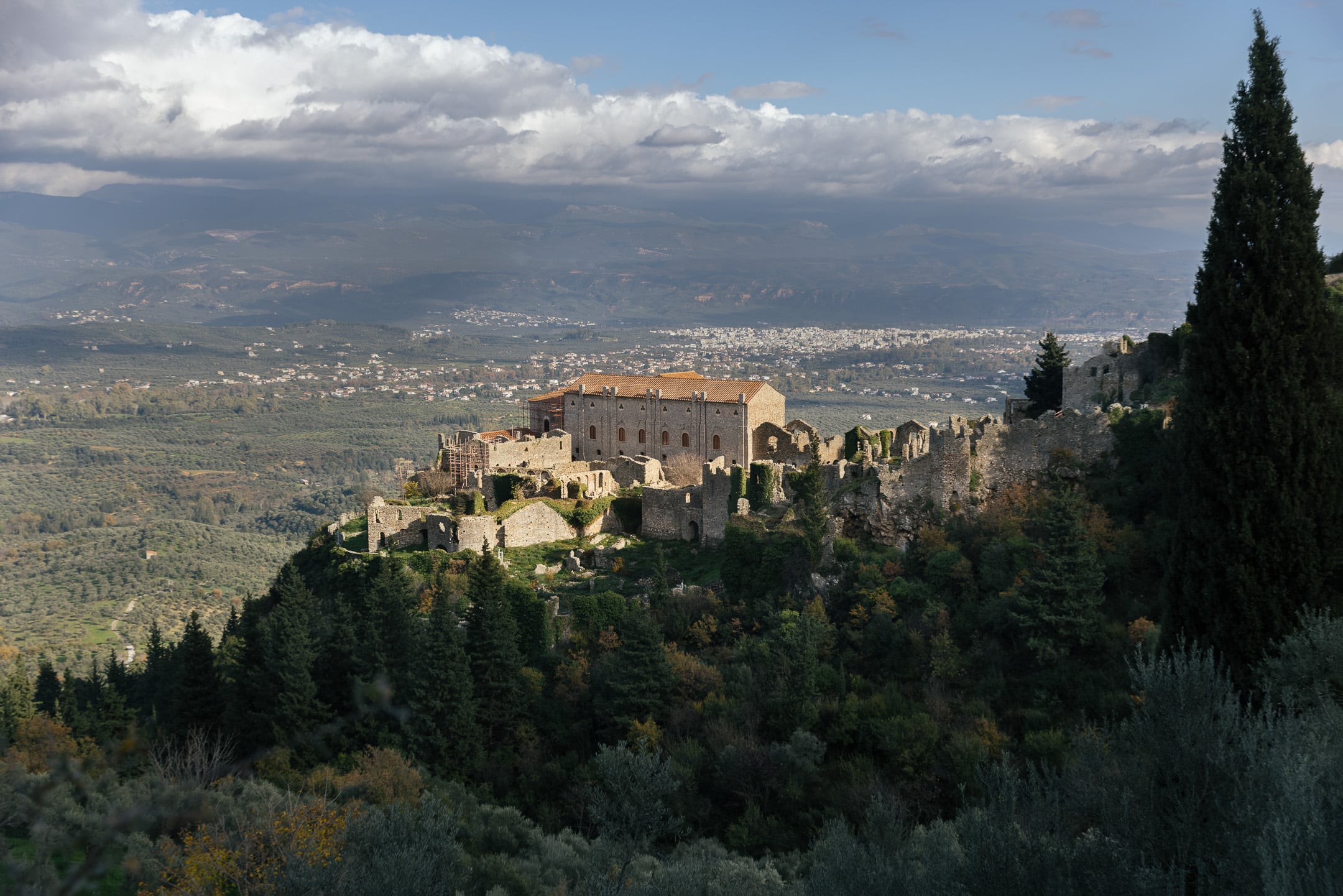


The castle-town of Mystras, founded and erected by dragons, as folk tradition would have it, is one of those places that inspire poetry.
It all began with the fall of Constantinople to the Crusaders in 1204, when the Byzantine Empire lost most of its ground. The Peloponnese ended up in Frankish hands, and the castle of Myzithra – which is what it was originally called before the passing of time shortened it – was established by prince William II Villehardouin on the summit of a naturally fortified hill. The location offered many advantages, the main ones being security and excellent control of the fertile Eurotas valley; however, there was another, more essential reason: prestige, since possessing a castle was a mark of supremacy for the Franks.
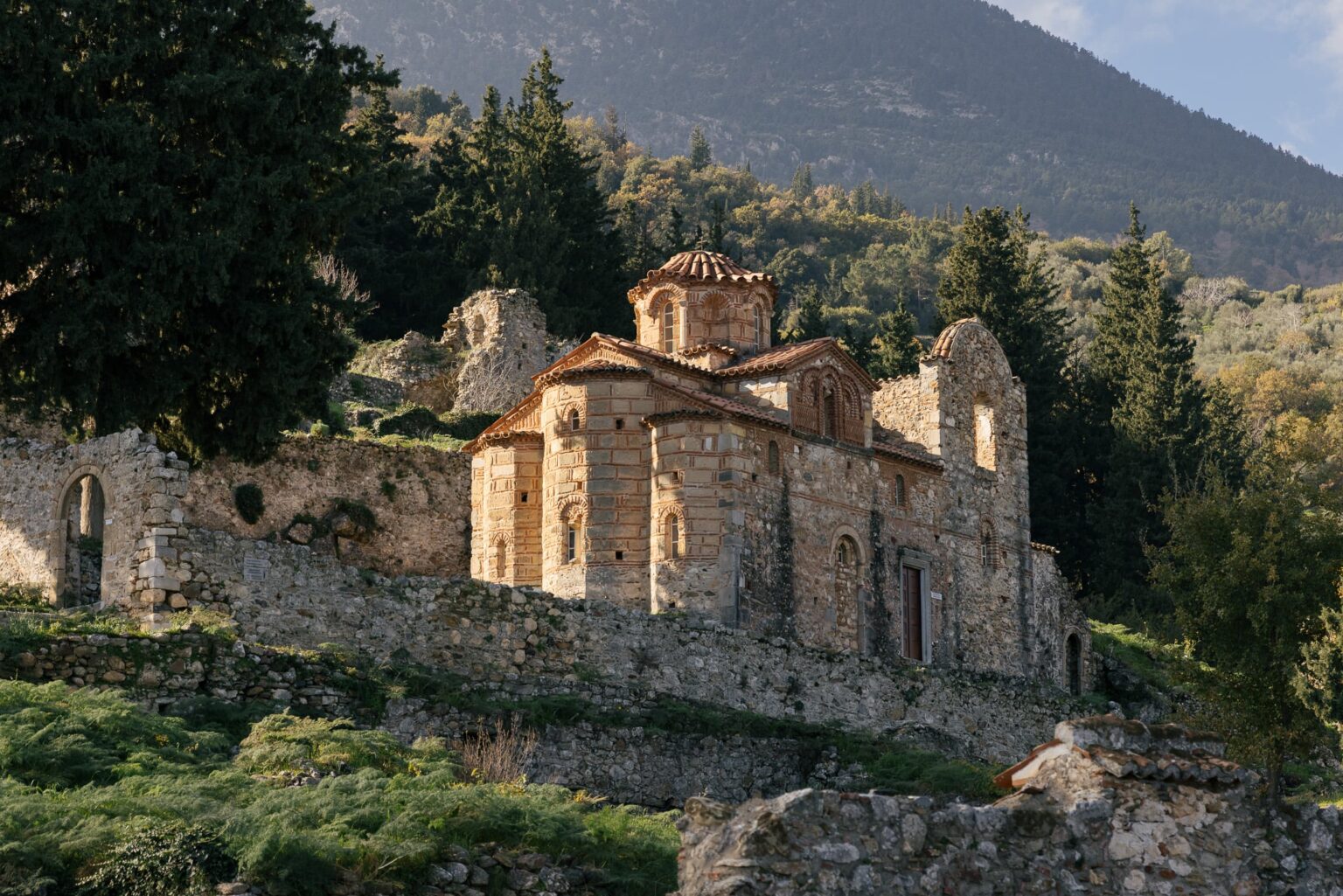
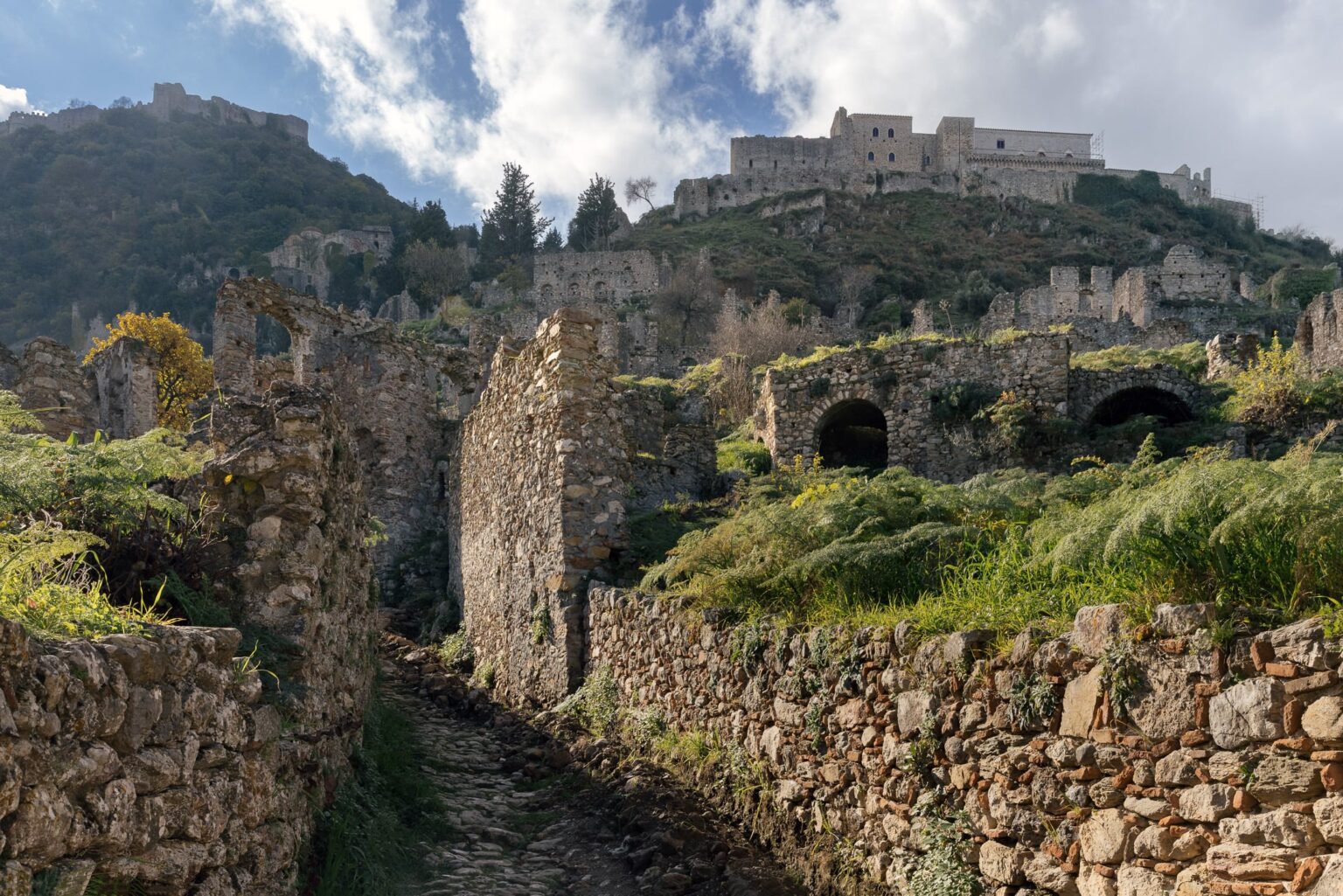
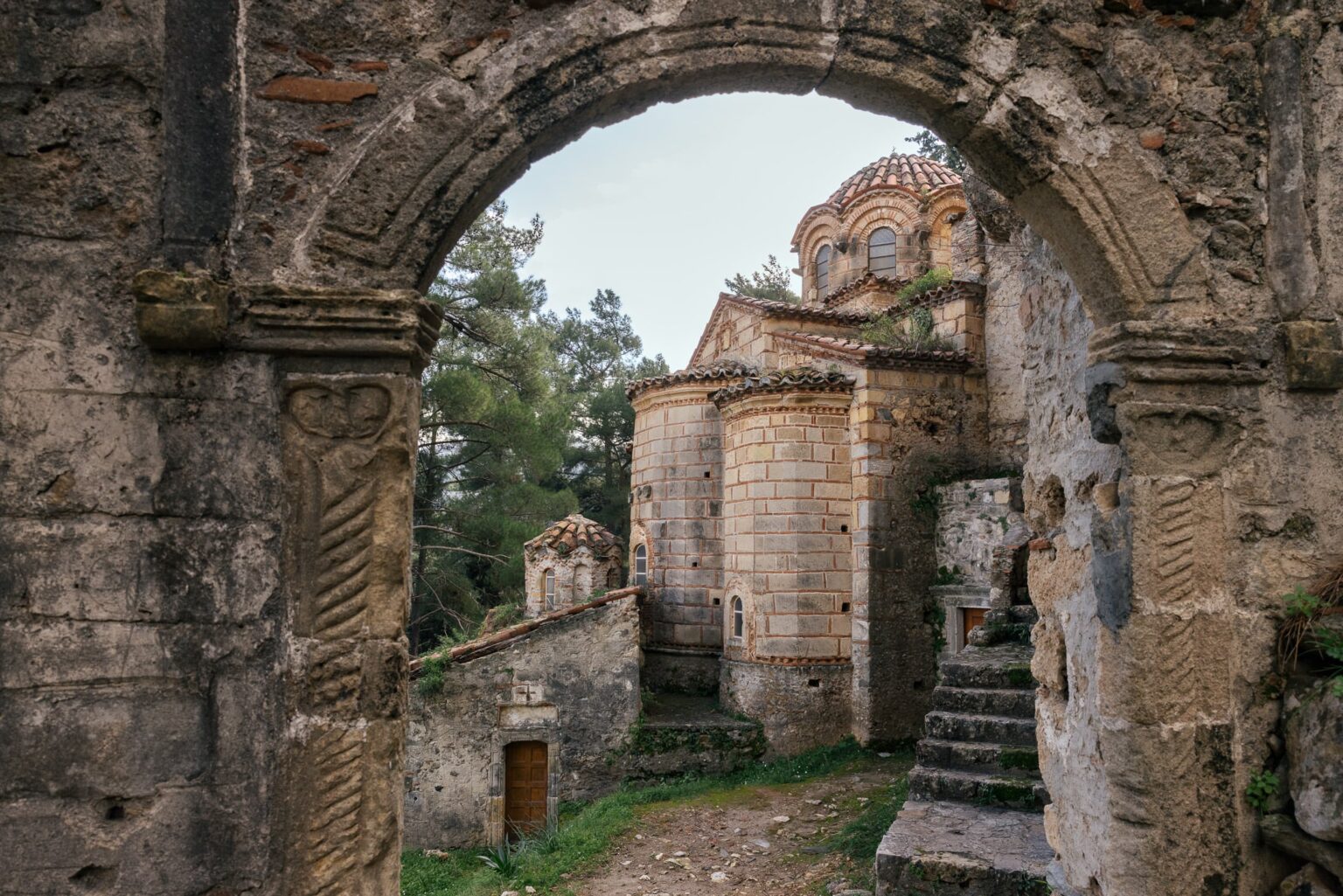
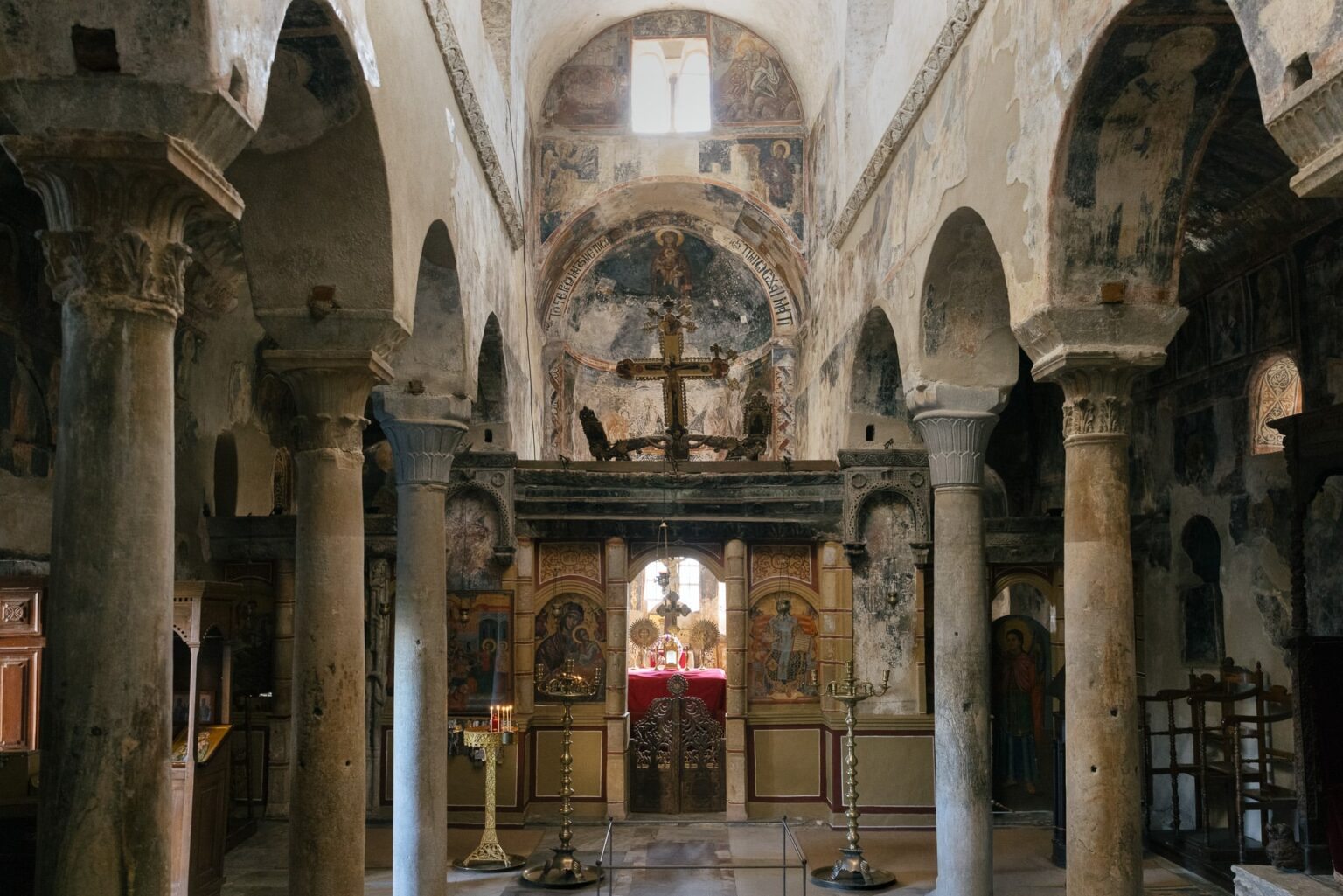
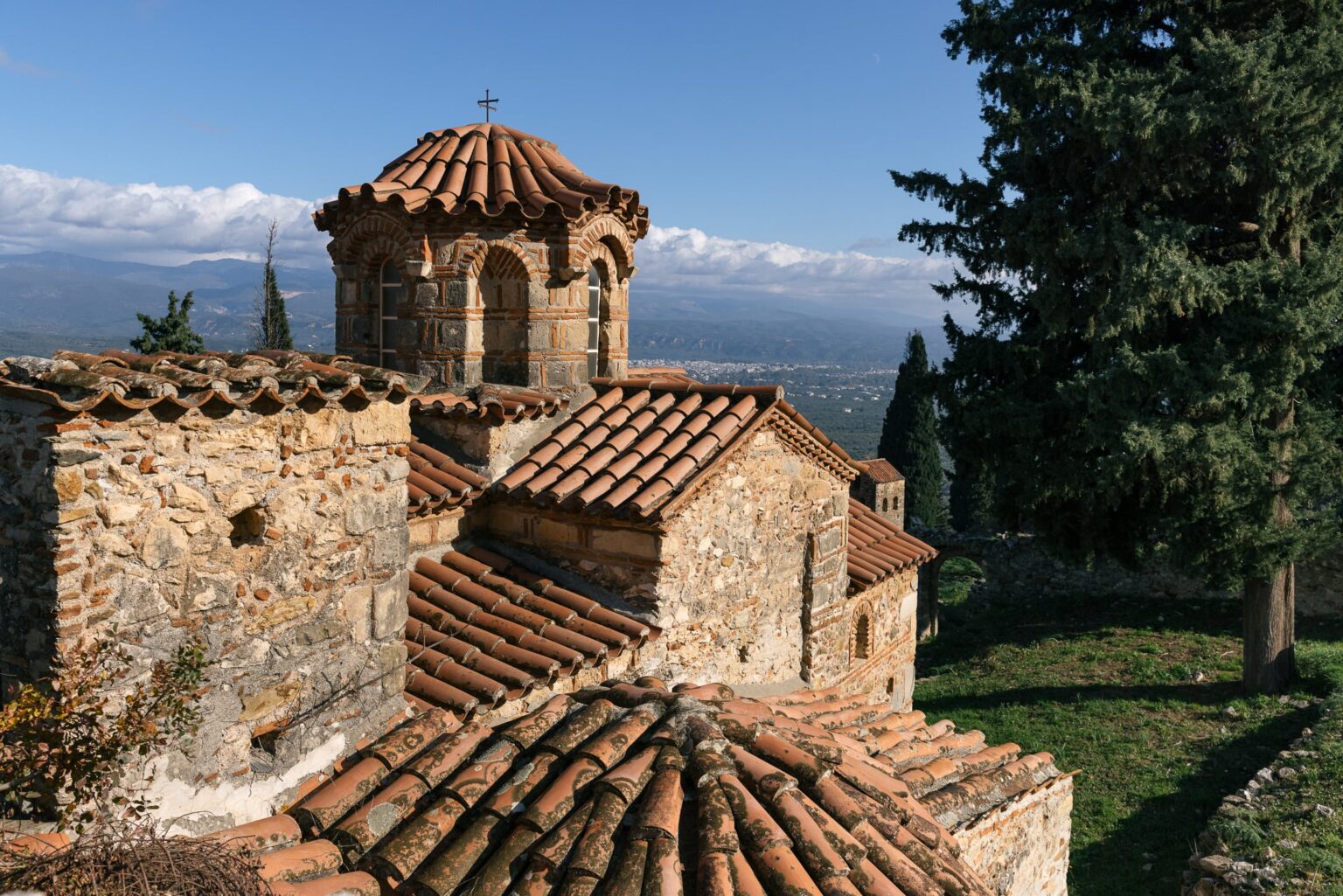
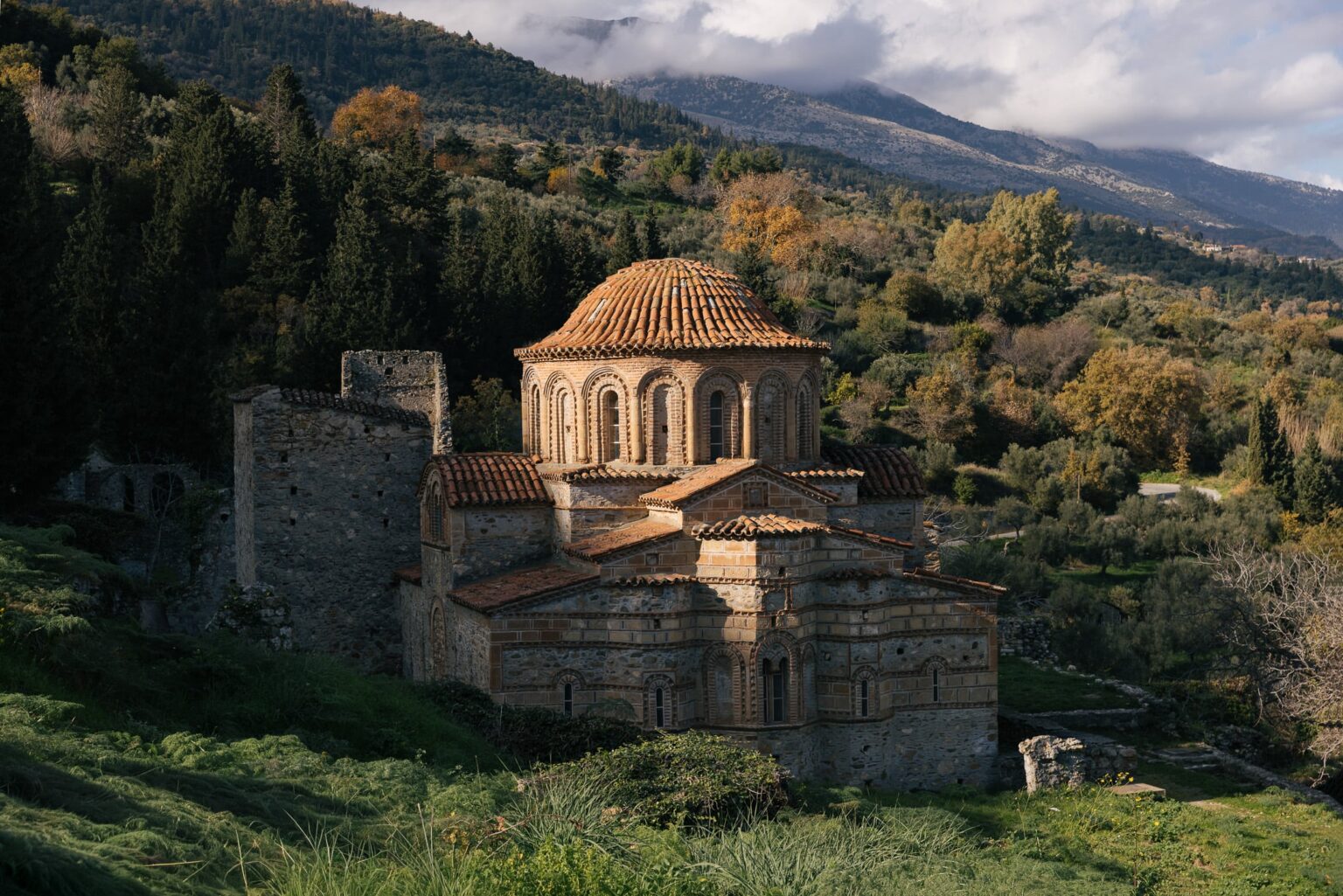
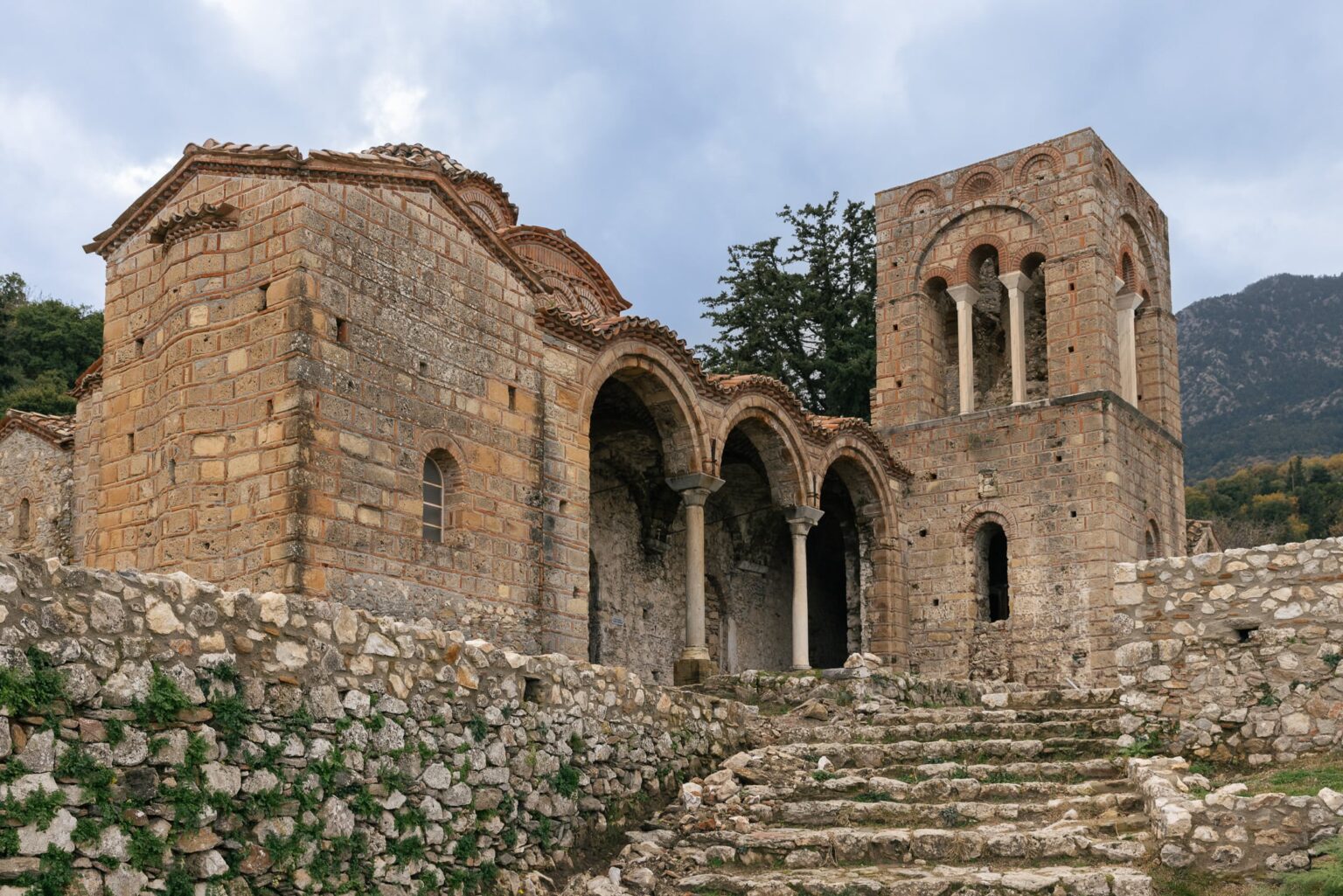
This did not last long, since in 1262 they were forced to surrender this and many other castles to the Byzantines, marking the beginning of a period of great prosperity that would last for two centuries. The Lacedaemonians, recognizing the advantageous location of the site, settled along the foot of the hill, turning Myzithras into the region’s most prominent urban centre. Around the castle looms an uphill settlement surrounded by imposing walls on two different levels, dividing the castle-town in two. The Lower Chora accommodated soldiers and officials, while the Upper Chora palaces and mansions. The Lower Chora featured typical stone-built churches and monasteries, many of which still survive. Over the heads of its inhabitants, the watch-towers allowed for complete surveillance of the territory, and it is said that the neighbouring castles used to communicate at night through lit torches.
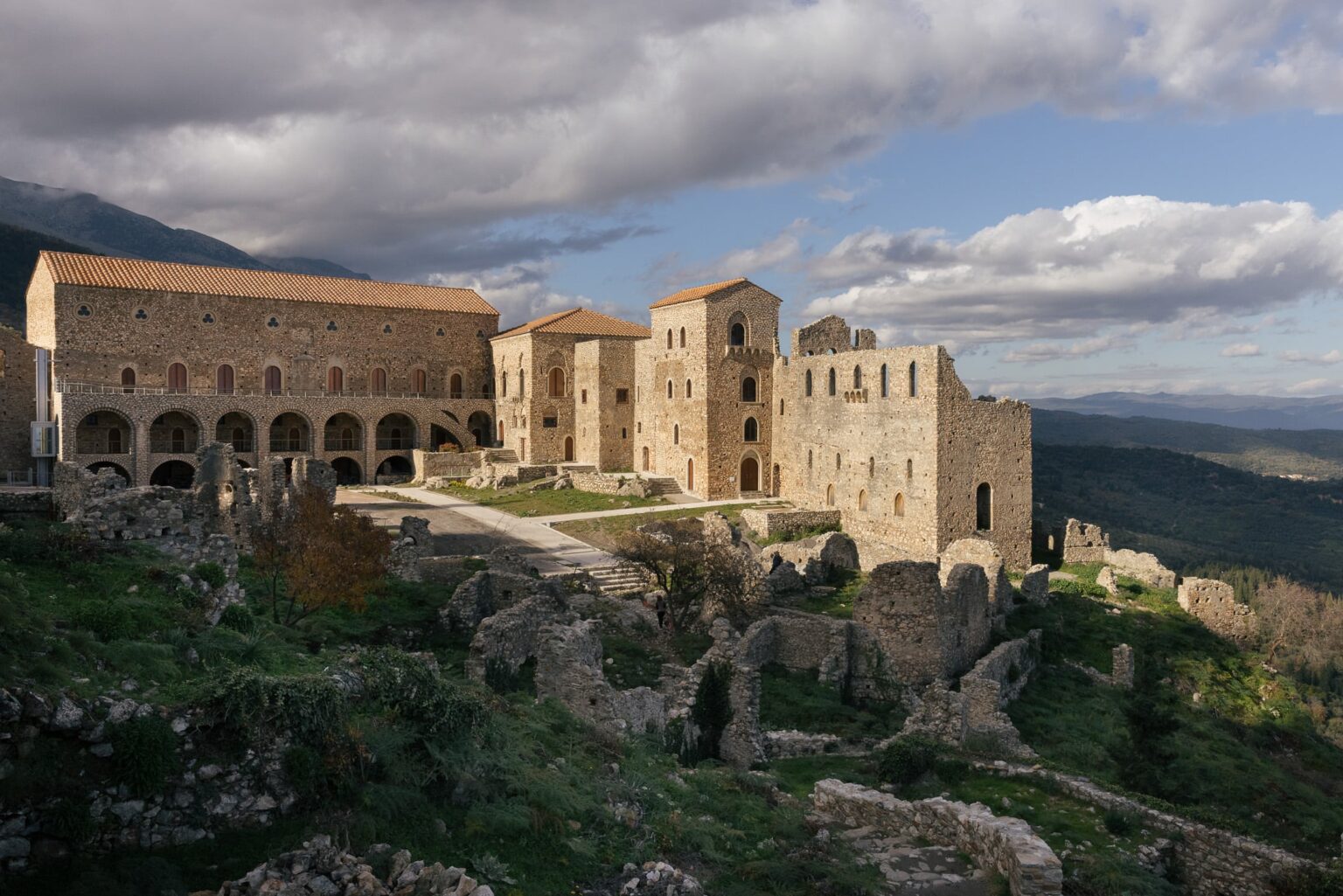
The Byzantine phase of Mystras came to an end in 1460, when it was surrendered to the Ottomans. From 1460 to 1540, Mystras – now the capital of the Ottoman sanjak of the Peloponnese – became one of the most important centers for silk trade and production in the eastern Mediterranean.
With the founding of the modern city of Sparta by King Otto in 1834, the inhabitants of Mystras gradually began to migrate to the new town. Its last residents left the castle-town in 1953, following the expropriation of the site by the Greek state.
In 1989, Mystras was inscribed on the UNESCO World Heritage List.
Directions
Mystras, 23100
On foot
20 minutes from the settlement of Neos Mystras
By bus
By intercity (KTEL) bus from Sparta, bus terminal near the parking lot of the Lower Gate (5 minutes on foot to the site entrance)
By car
8 minutes from Sparta
Opening hours
Summer hours
April 1 – August 31
Daily: 08:00 – 20:00
September 1 – 15
Daily: 08:00 – 19:30
September 16 – 30
Daily: 08:00 – 19:00
October 1 – 15
Daily: 08:00 – 18:30
October 16 – 31
Daily: 08:00 – 18:00
On Tuesdays, the Palace at the Archaeological Site of Mystras is open to visitors from 11:00 until closing time.
Winter hours
1 November – 31 March
Daily: 08:30 – 15:30
Last admission: 20 minutes before closing time
The site remains closed on the following dates and public holidays: January 1, March 25, May 1, Easter Sunday, December 25 & 26.
The site remains closed on the following dates and public holidays: January 1, March 25, May 1, Easter Sunday, December 25 & 26.
Tickets
Admission is free on March 6, April 18, May 18, the last weekend of September, on October 28, as well as on the first and third Sunday of each month between November 1 and March 31.
Amenities
Café
Shop
WC
WiFi
Parking
Contact
Archaeological Site of Mystras
Τ: +30 27310 83377
Ephorate of Antiquities of Laconia
Τ: +30 27310 25363, +30 27310 28503
Ε: efalak@culture.gr