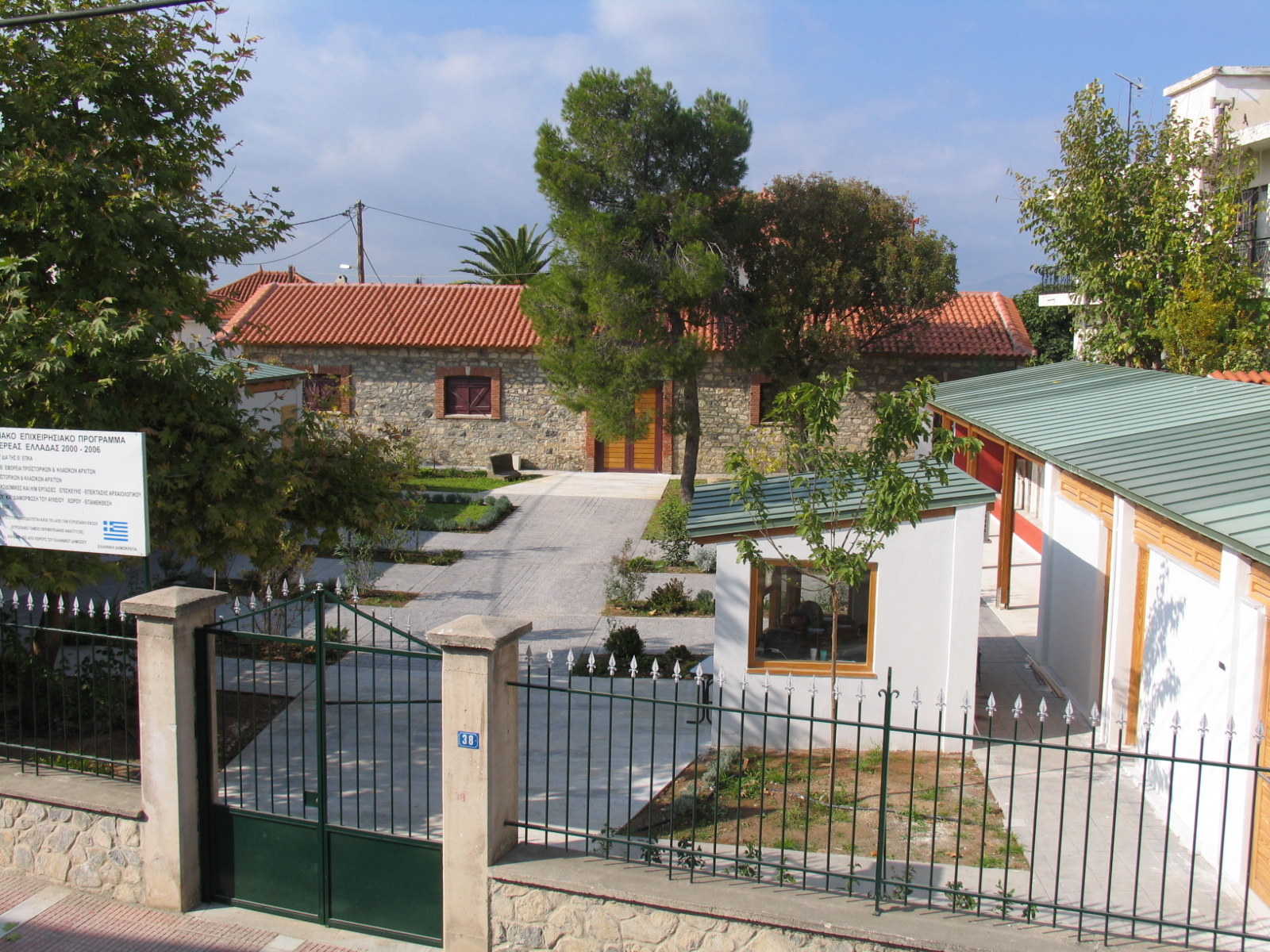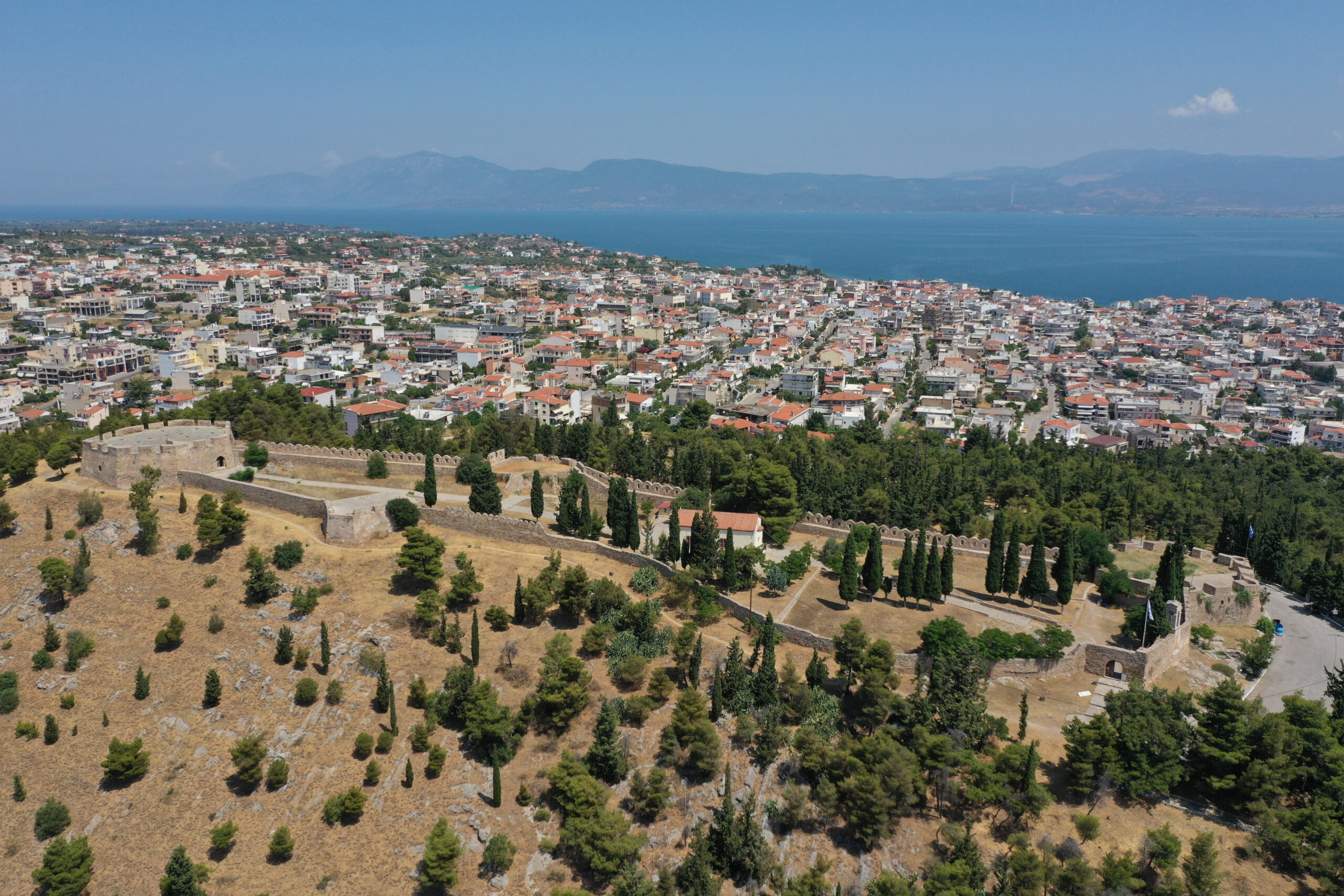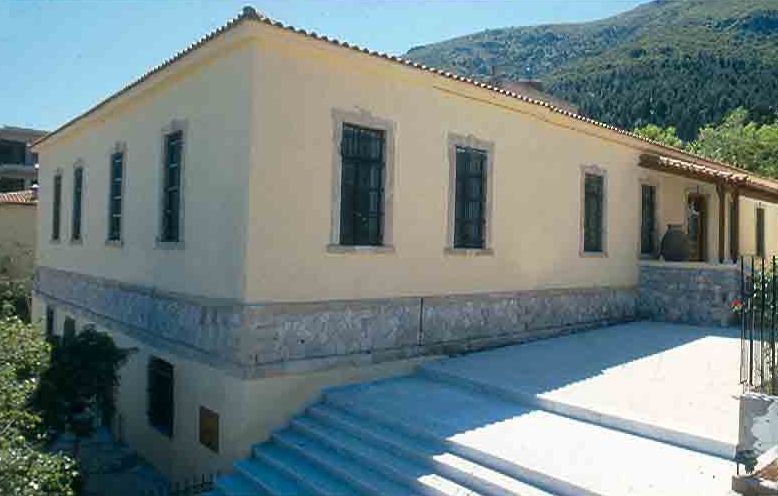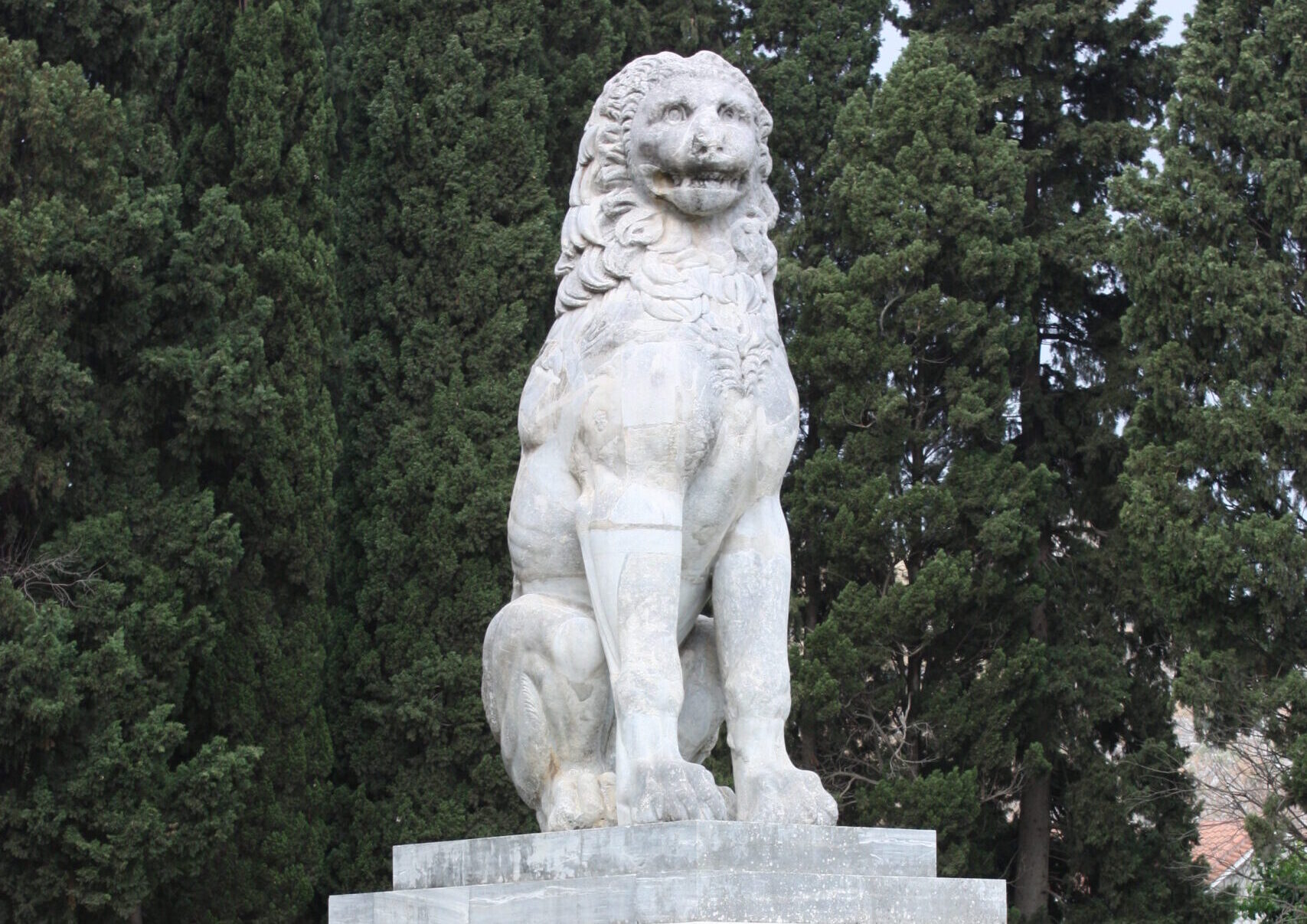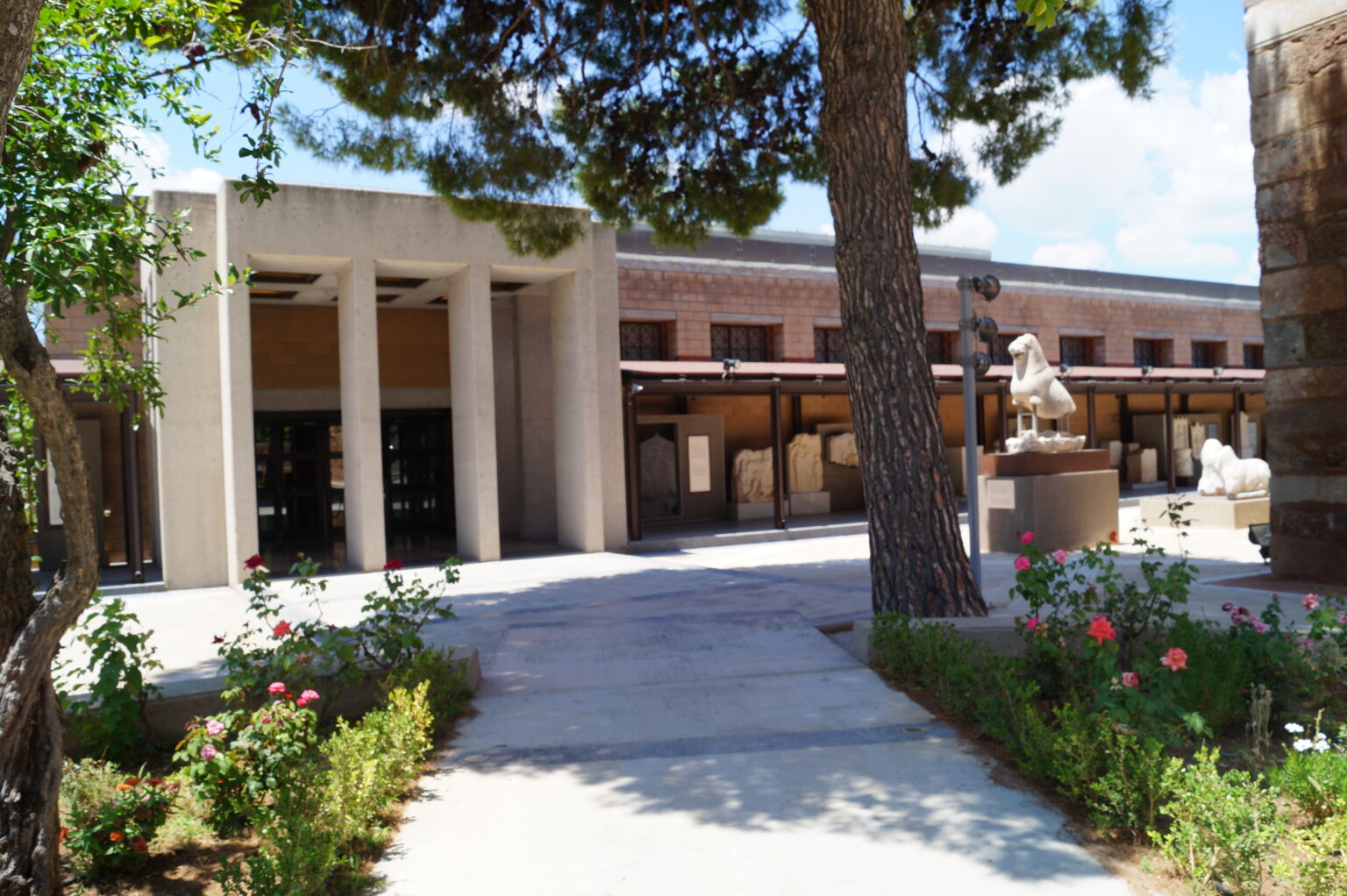
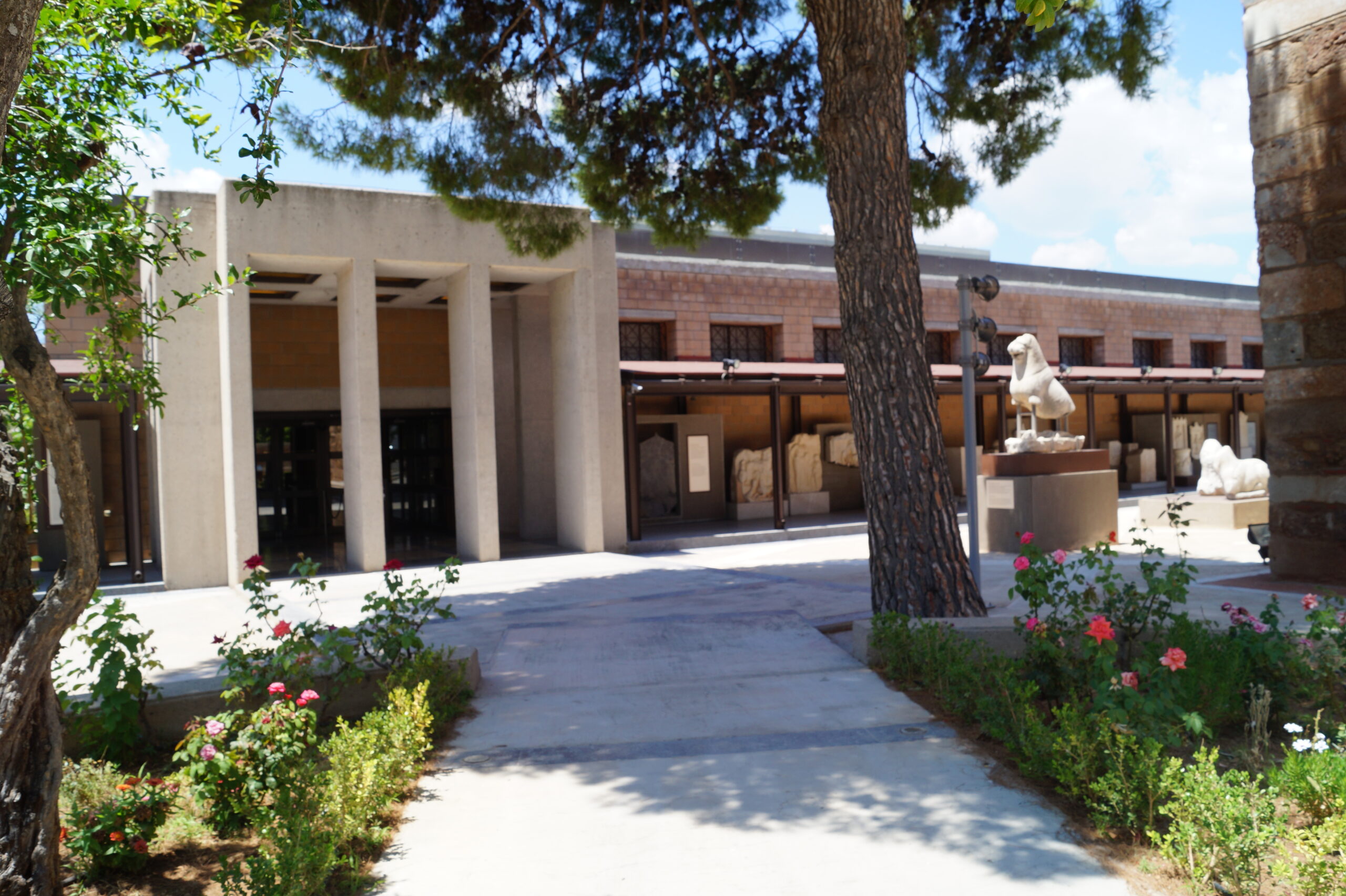


The palatial centres of Thebes and Orchomenos, around which communities were reorganised with the development of Mycenaean civilization, radiate splendor through the displays of the Archaeological Museum of Thebes.
The museum was constructed between 2005 and 2010, on the very site of an earlier building erected at the beginning of the 20th century. Now visitors have the opportunity to explore the long and diverse history of Boeotia through characteristic finds, digital applications, visual material, reconstructions and even the monuments themselves, such as the medieval tower of Saint Omer (1278), which forms an integral part of the museum.
The redesign was completed in 2015 and houses a vast number of artifacts that illustrate millennia of continuous human activity in Boeotia. The museum includes rare and unique collections, such as the “Treasure Room” seal stones from the Mycenaean palace of Thebes, as well as the painted clay larnakes from the chamber tombs of Tanagra – the only examples of their kind in mainland Greece – and the wall paintings from the acropolis of Gla.
Of particular interest is the section dedicated to Boeotia’s most celebrated myths, featuring objects that depict or reference mythological protagonists, since Boeotia happens to be the birthplace of many renowned mythical narratives. A skyphos (drinking cup) with relief decoration illustrates the foundational myth of Thebes by Cadmus, the son of the king of Phoenicia, while depictions of the Sphinx – the legendary winged creature with a woman’s head and a lion’s body – evoke the myth of Oedipus, who defeated her.
The most beloved hero of the Greeks, Hercules, was born and raised in Thebes too. His renowned labors are depicted on artifacts, such as black-figure cups from Boeotian workshops of the 5th century B.C. The god Dionysus, son of Zeus and Semele, daughter of King Cadmus, also originated from Thebes. His companions, the Satyrs, the Maenads (mortal women) and his wife Ariadne, appear alongside Dionysus in vase paintings displayed in the museum.


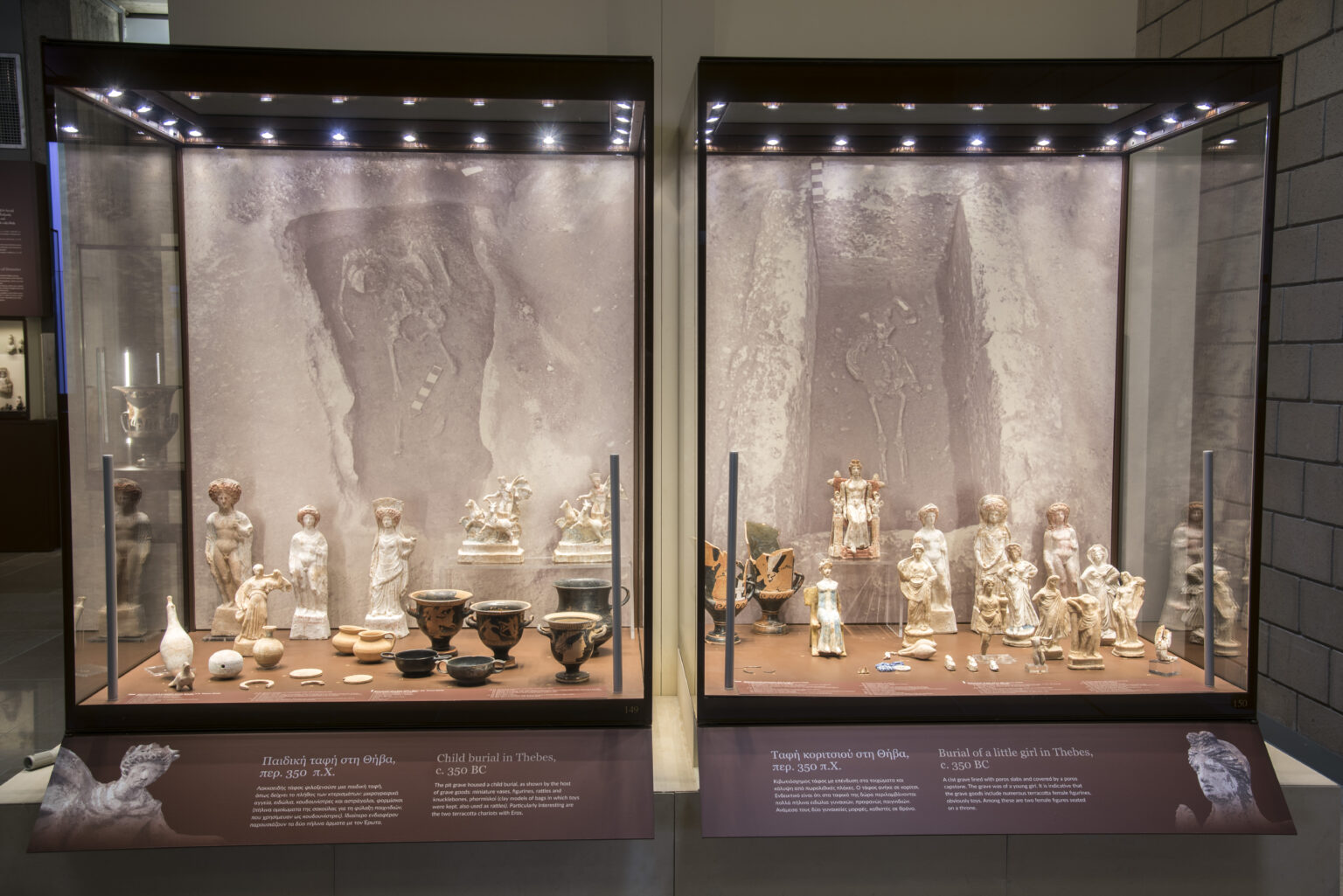
The Classical period was marked by ongoing rivalries between Athens and Sparta, but also Thebes and Athens. Although Thebes emerged weakened from the Persian Wars, it soon recovered, leading the Boeotian League. In 335 B.C., however, the city was razed by Alexander III the Great and left desolate. Despite the turbulence of war, the Classical era was a time of artistic flourishing. Pottery, sculpture, architecture, as well as philosophy, literature and science all thrived in Boeotia. Local ceramic and terracotta workshops distinguished themselves for their exceptional productivity and craftsmanship.
The Boeotian narrative did not end there, as the Middle Byzantine period brought the region a final period of prosperity associated with the silk industry and trade – a tale that the precious exhibits from that period narrate better than any one else ever could.


Directions
Threpsiadou 1 St, Keramopoulou Square
32200, Thebes
On foot
Approximately 1 km from the Thebes railway station
1.5 km from the Thebes intercity bus (KTEL) station
By car
Approximately 80 km from Athens
Opening hours
Summer hours
April 1 – October 31
Mon: 08:30 – 15:30
Tue: closed
Wed: 08:30 – 15:30
Thu: 08:30 – 15:30
Fri: 08:30 – 15:30
Sat: 08:30 – 15:30
Sun: 08:30 – 15:30
Winter hours
November 1 – March 31
Mon: 08:30 – 15:30
Tue: closed
Wed: 08:30 – 15:30
Thu: 08:30 – 15:30
Fri: 08:30 – 15:30
Sat: 08:30 – 15:30
Sun: 08:30 – 15:30
Last admission: 20 minutes before closing time
The site remains closed on the following dates and public holidays: January 1, March 25, May 1, Easter Sunday, December 25 & 26.
The site remains closed on the following dates and public holidays: January 1, March 25, May 1, Easter Sunday, December 25 & 26.
Tickets
Full: €10.00
Reduced: €5.00
Admission is free on March 6, April 18, May 18, the last weekend of September, on October 28, as well as on the first and third Sunday of each month between November 1 and March 31.
Amenities
Shop
WC
WiFi
Elevator
Accessibility
Contact
Archaeological Museum of Thebes
T: +30 22620 27913
Ephorate of Antiquities of Boeotia
T: +30 22620 23559, +30 22620 80945, +30 22620 89359
E: efavio@culture.gr