

Opening hours
View Hours

Chora, Cythera, GR
Get Directions
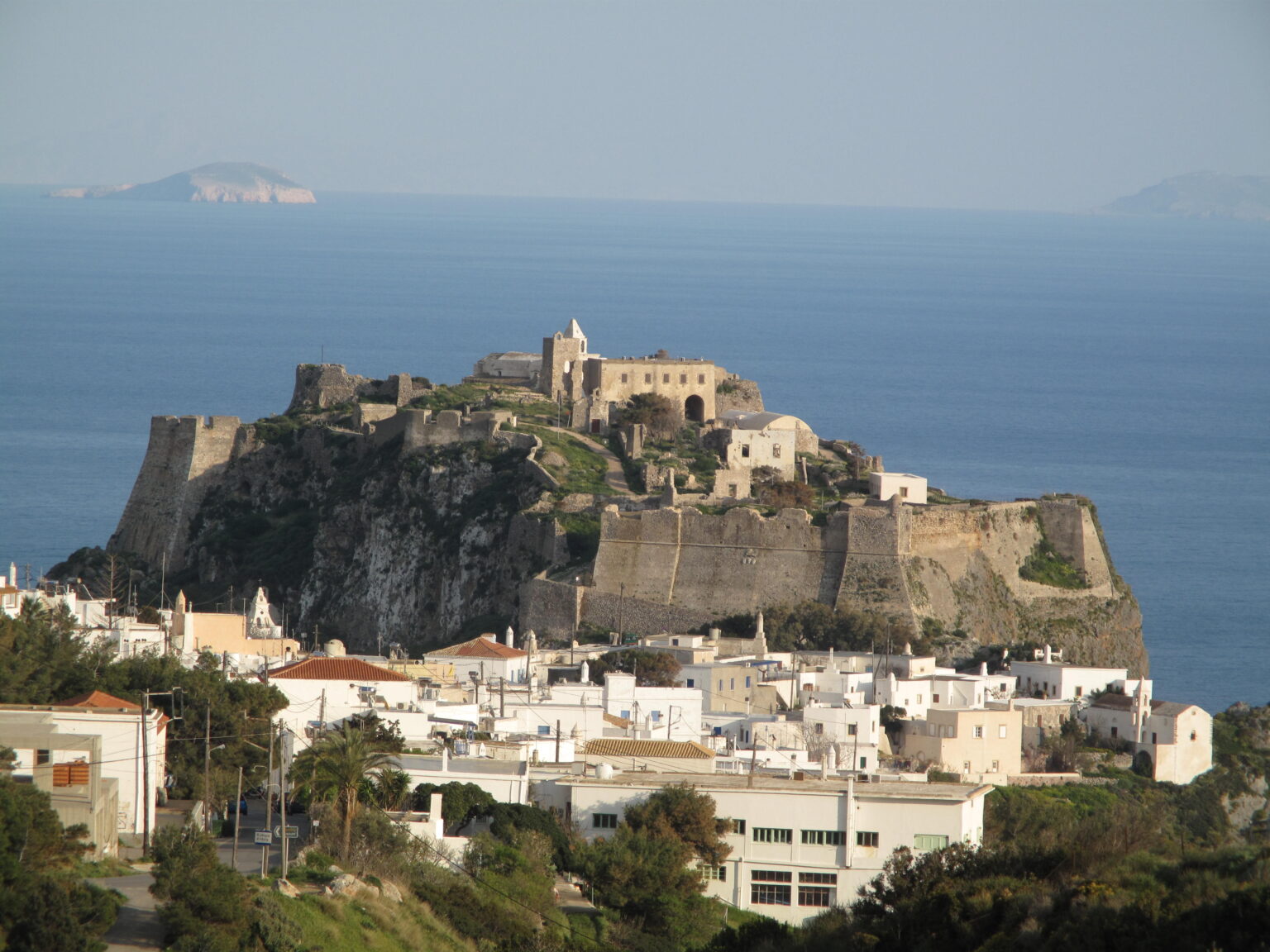
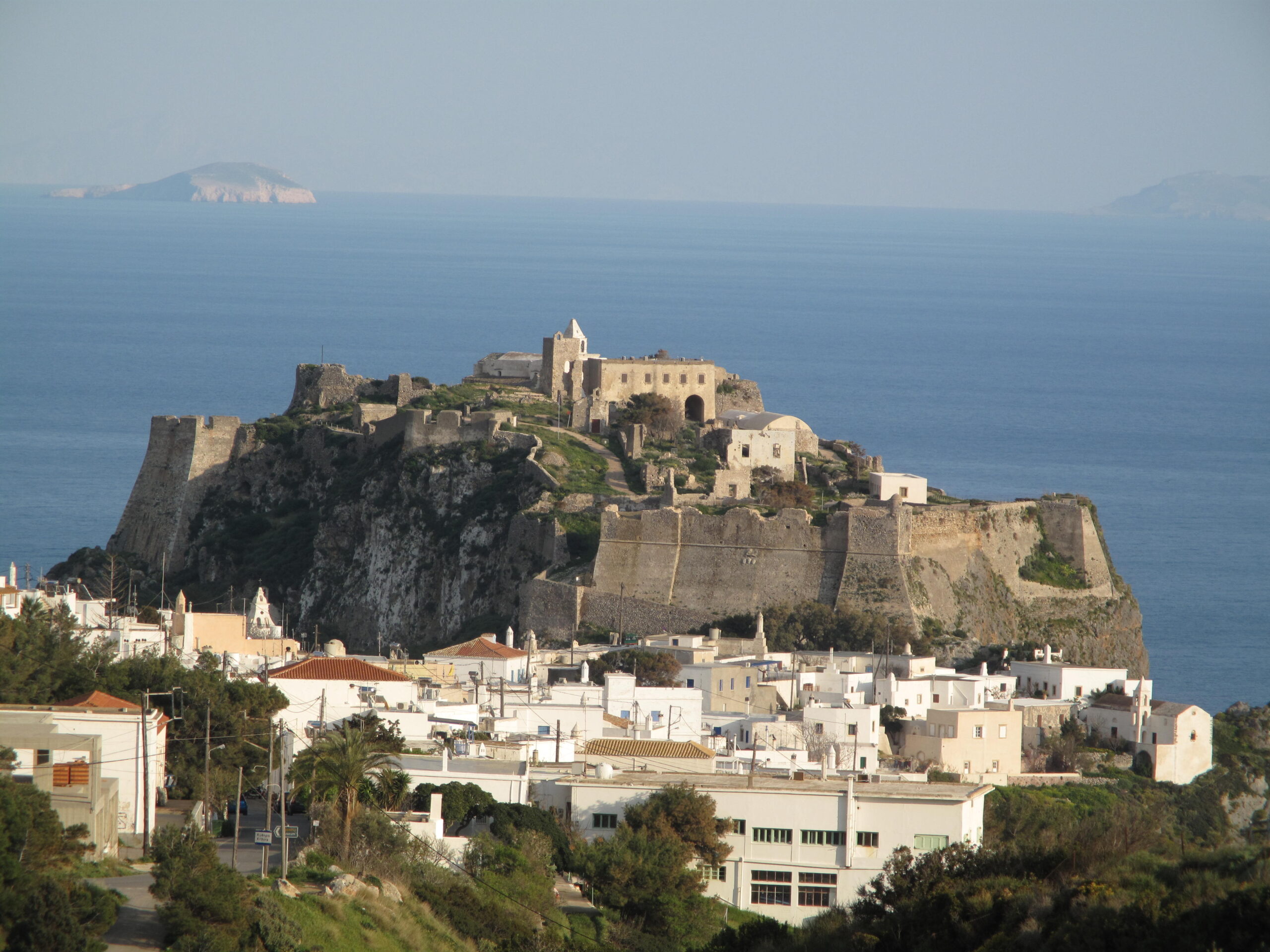
As a magnificent crown topping the steep ridge over Chora, at a height of 200m, the Castle of Cythera did not acquire the title “Eye of Crete” without good reason: its strategic location, with an unobstructed view to the south, allowed the simultaneous monitoring of the Ionian, the Aegean and the Cretan Sea.
The Venetians built the castle after Cythera came under their rule, following the Fourth Crusade. Its current form, however, is due to the extensive reconstruction work carried out by the Venetians in 1503, including the castle’s façade. Its impregnable character and a mighty artillery saved it many times from Turkish sieges – even the notorious pirate Barbarossa, dreaded throughout the Mediterranean, who brutally sacked the island in 1537, did not manage to take the castle.
It was no coincidence that it remained in Venetian hands until the fall of the Venetian Republic, in 1797. Then it would pass into the hands of the French, the Russo-Turks, the Ionian State, the British and the German-Italian conquerors until the liberation of the island, in 1944.
While wandering along its cobbled streets, the visitor is urged to recreate in his imagination life in this glorious castle-town of 16 stremmas, at a time when more than 200 people lived here. The one-time two-storey houses are now derelict, but the huge Venetian cistern, the gunpowder magazine, the seat of the Venetian Provveditore and the castle’s administration building have been preserved; this is where the Historical Archive of Cythera, the second most significant and extensive archive collection in Greece after that of Corfu, is accommodated today.
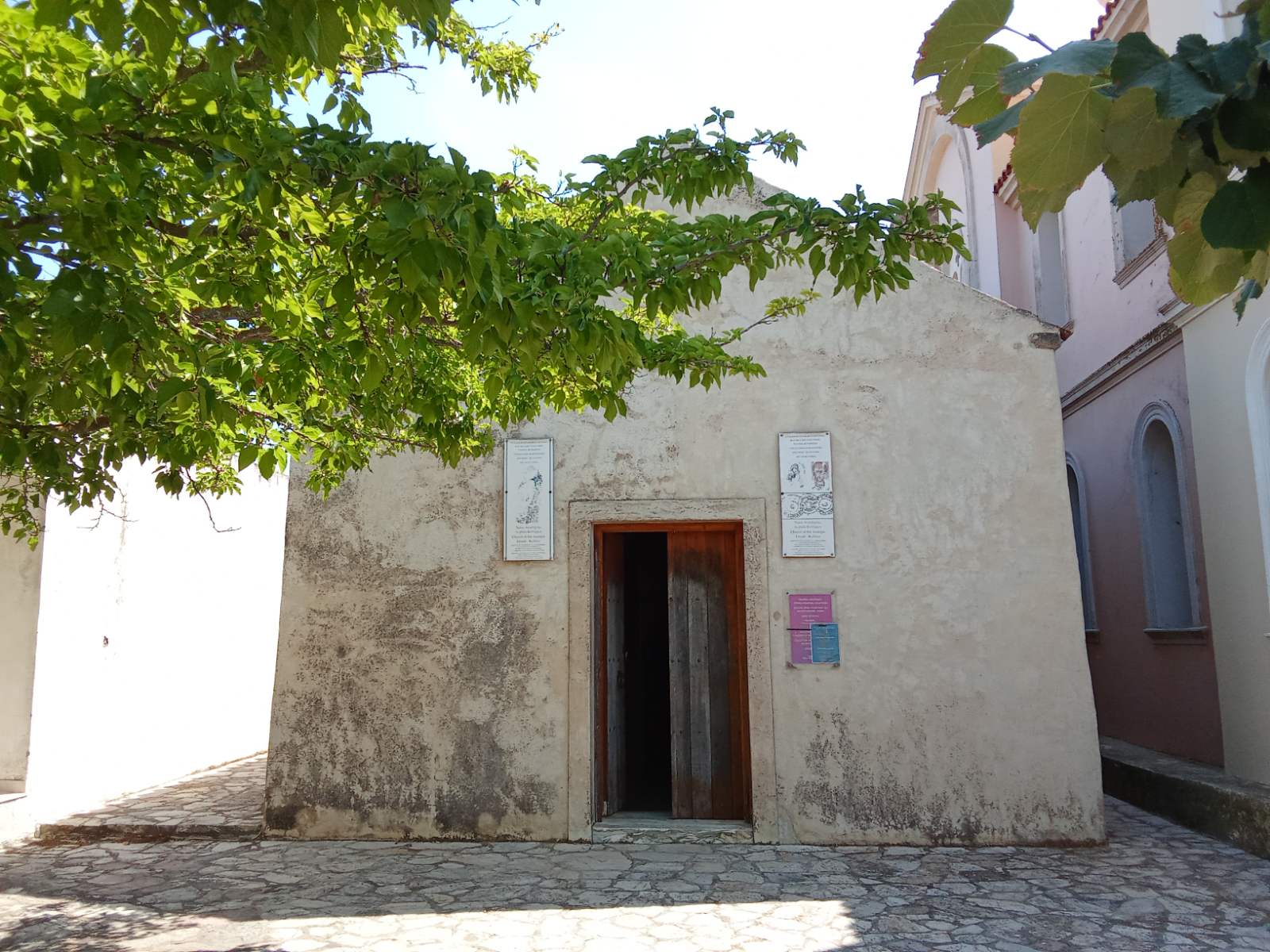
Among the several beautiful listed churches, stand out those of the Virgin Mary Orphani, the Pantocrator, with murals from the 16th and 18th centuries, and, above all, the Virgin Mary Myrtidiotissa, the patron saint of the island, dating from 1580; it used to be a Catholic church until 1806, known as the Virgin Mary of the Latins.
Directions
Provincial Road Chora – Livadi
80100, Chora, Cythera
By car
Approximately 1 km from the main square of Chora, Cythera
Opening hours
Summer hours
April 1 – October 31
Daily: 08:00 – 20:00
Winter hours
November 1 – March 31
Daily: 08:30 – 15:30
Last admission: 20 minutes before closing time
The site remains closed on the following dates and public holidays: January 1, March 25, May 1, Easter Sunday, December 25 & 26.
The site remains closed on the following dates and public holidays: January 1, March 25, May 1, Easter Sunday, December 25 & 26.
Tickets
Full: €5.00
Reduced: €3.00
Admission is free on March 6, April 18, May 18, the last weekend of September, on October 28, as well as on the first and third Sunday of each month between November 1 and March 31.
Amenities
WC
Accessibility
Contact
Archaeological Museum of Cythera
T: +30 27360 39012
Ephorate of Antiquities of Piraeus and Islands
T: +30 210 4590700
E: efapn@culture.gr