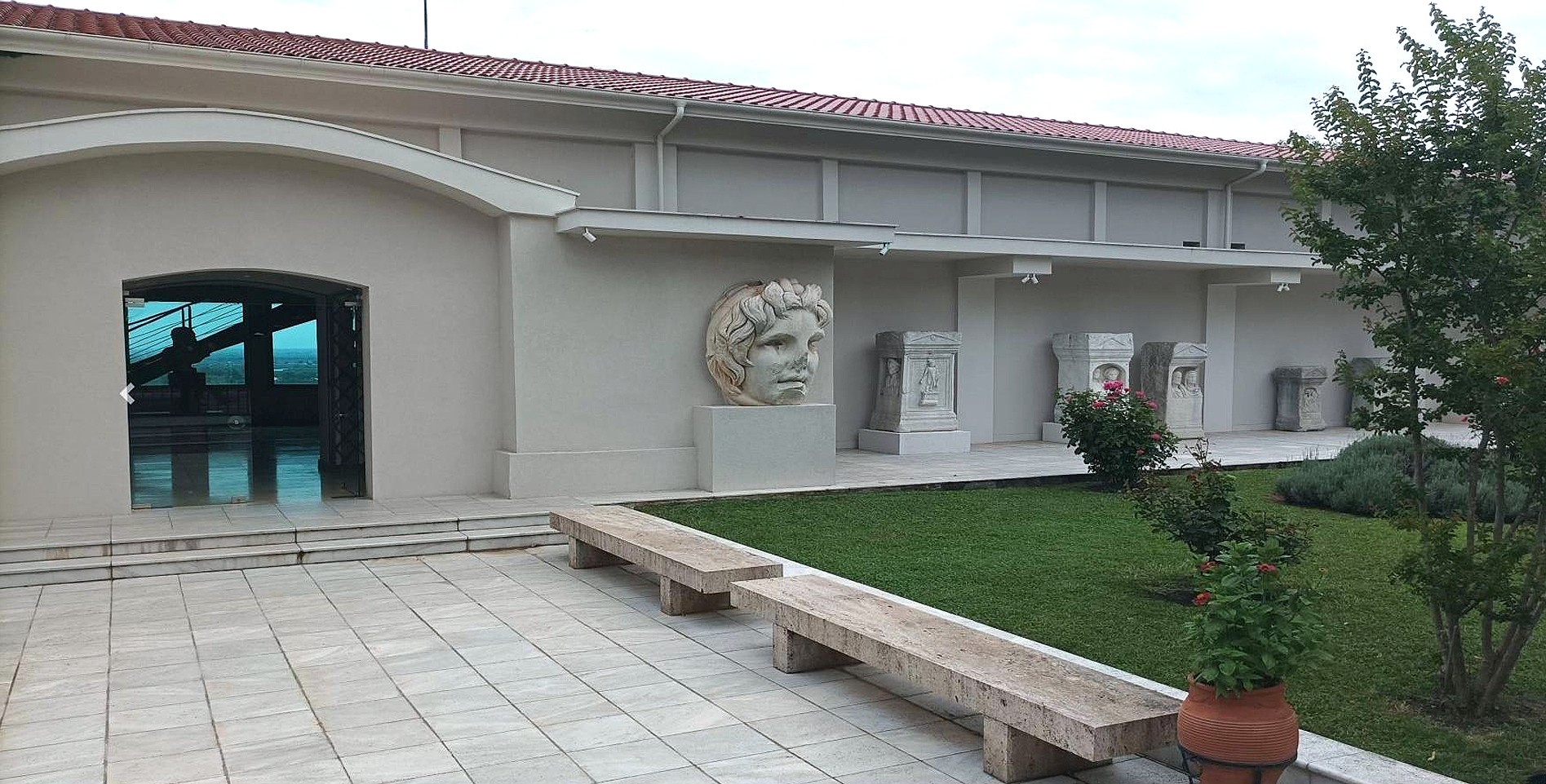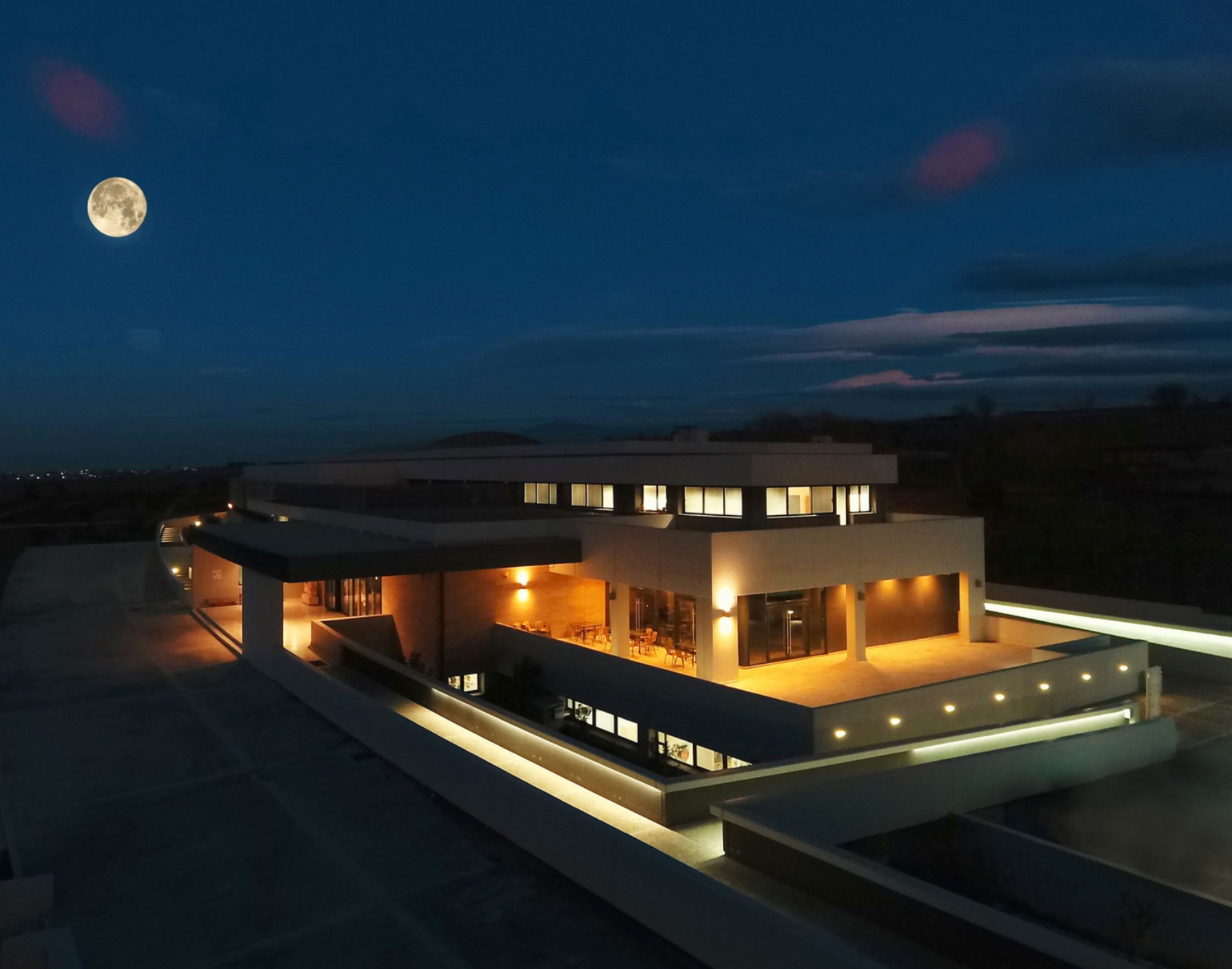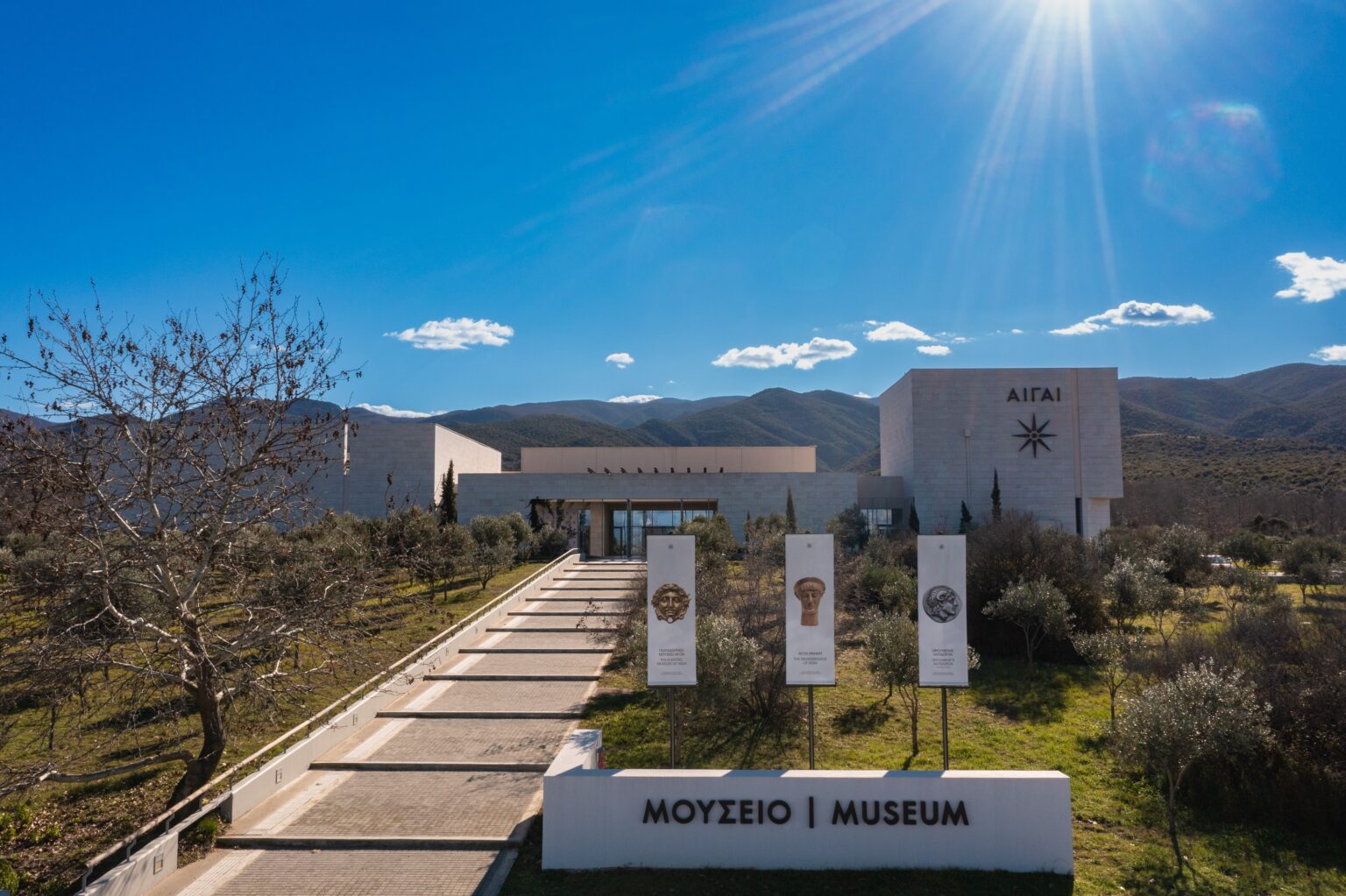
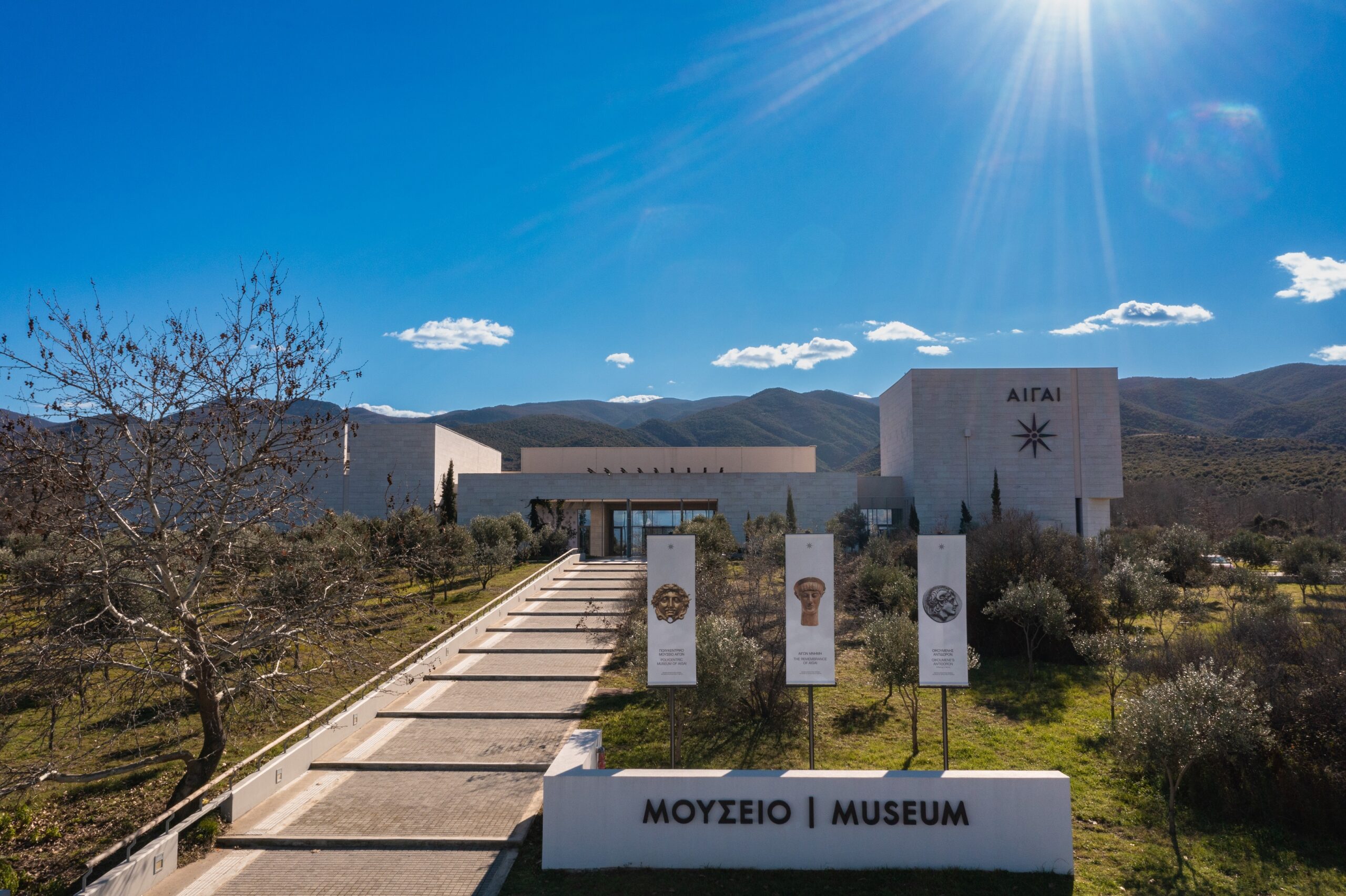


Perfectly integrated into its natural surroundings, the Museum of the Royal Tombs of Aigai resembles an earthen tumulus. The stone passage that leads visitors into its solemn interior evokes a descent into Hades.
In contrast to the uplifting spirit inspired by the nearby Palace of Aigai, the Royal Tombs recount a tale of mortality and valor, centered on the human body.
Darkness gradually gives way to funerary stelae and objects from the graves of ordinary people, while wealth, craftsmanship, and painstaking detail reach their peak as one approaches the royal household.


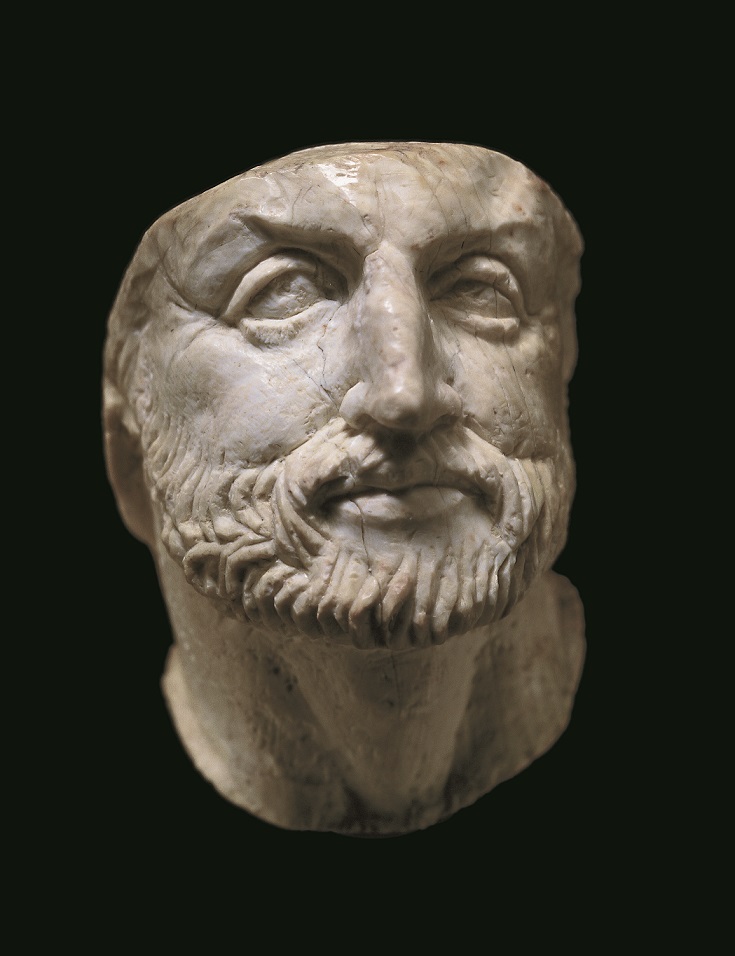
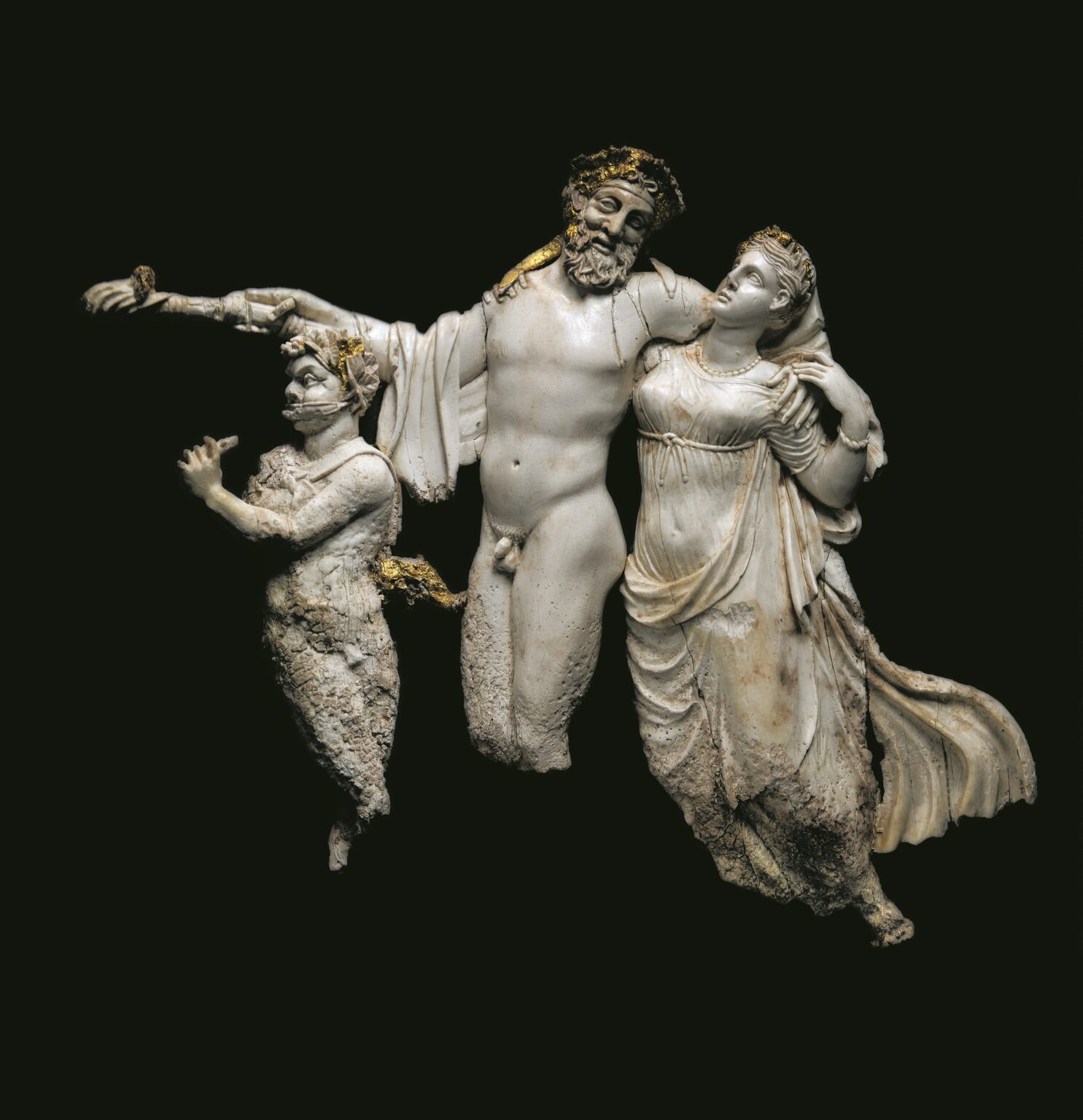

Philip II departed for the underworld with the most magnificent funeral ceremony known in historical Greece. His body was consigned to the flames adorned with a heavy golden wreath of 313 oak leaves and 68 acorns, while the golden larnax that held his bones weighs 11 kilograms. Thracian Meda, likely the youngest of his wives, voluntarily followed him into the pyre and was duly honored by his son Alexander for her sacrifice.
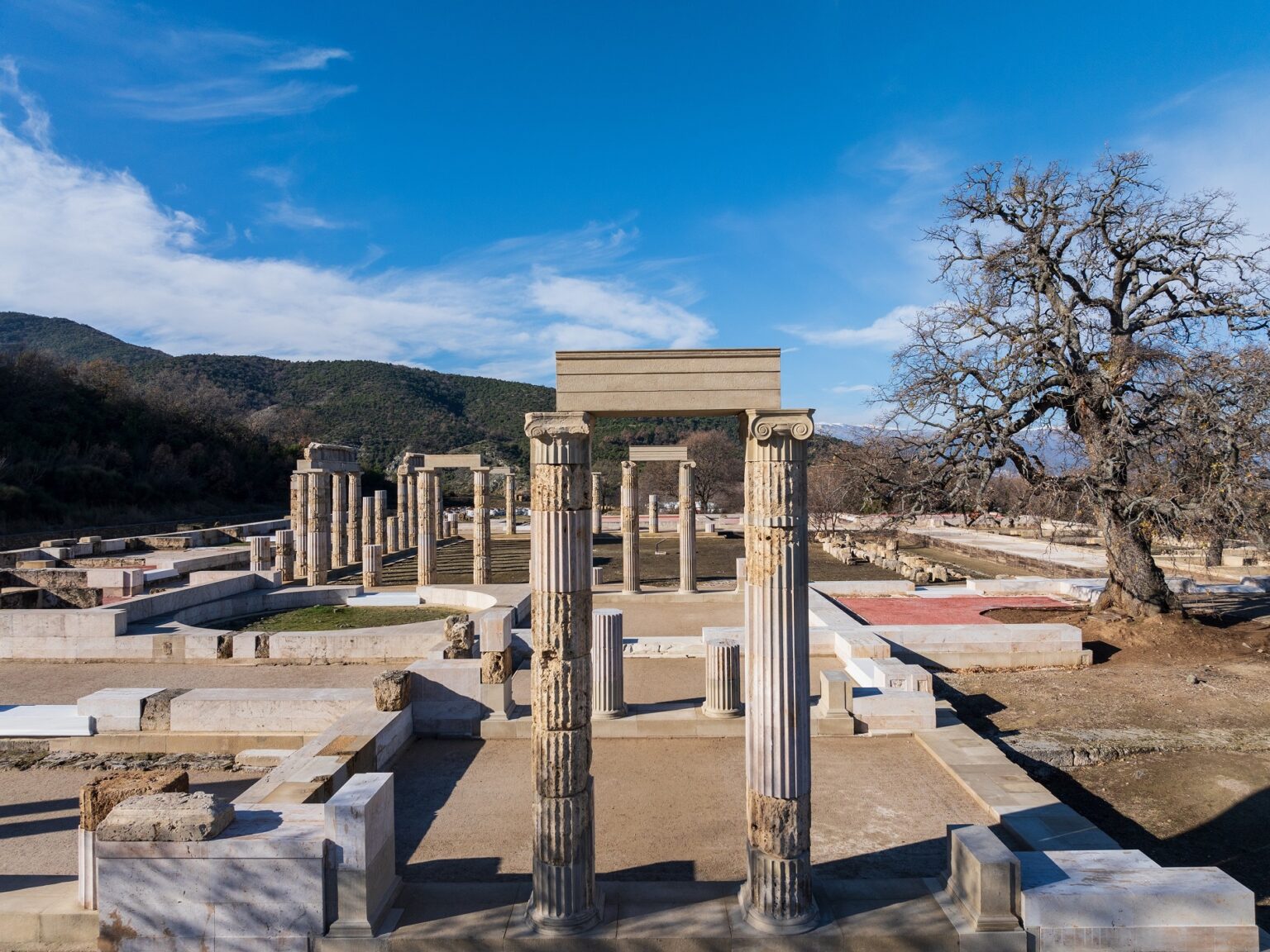


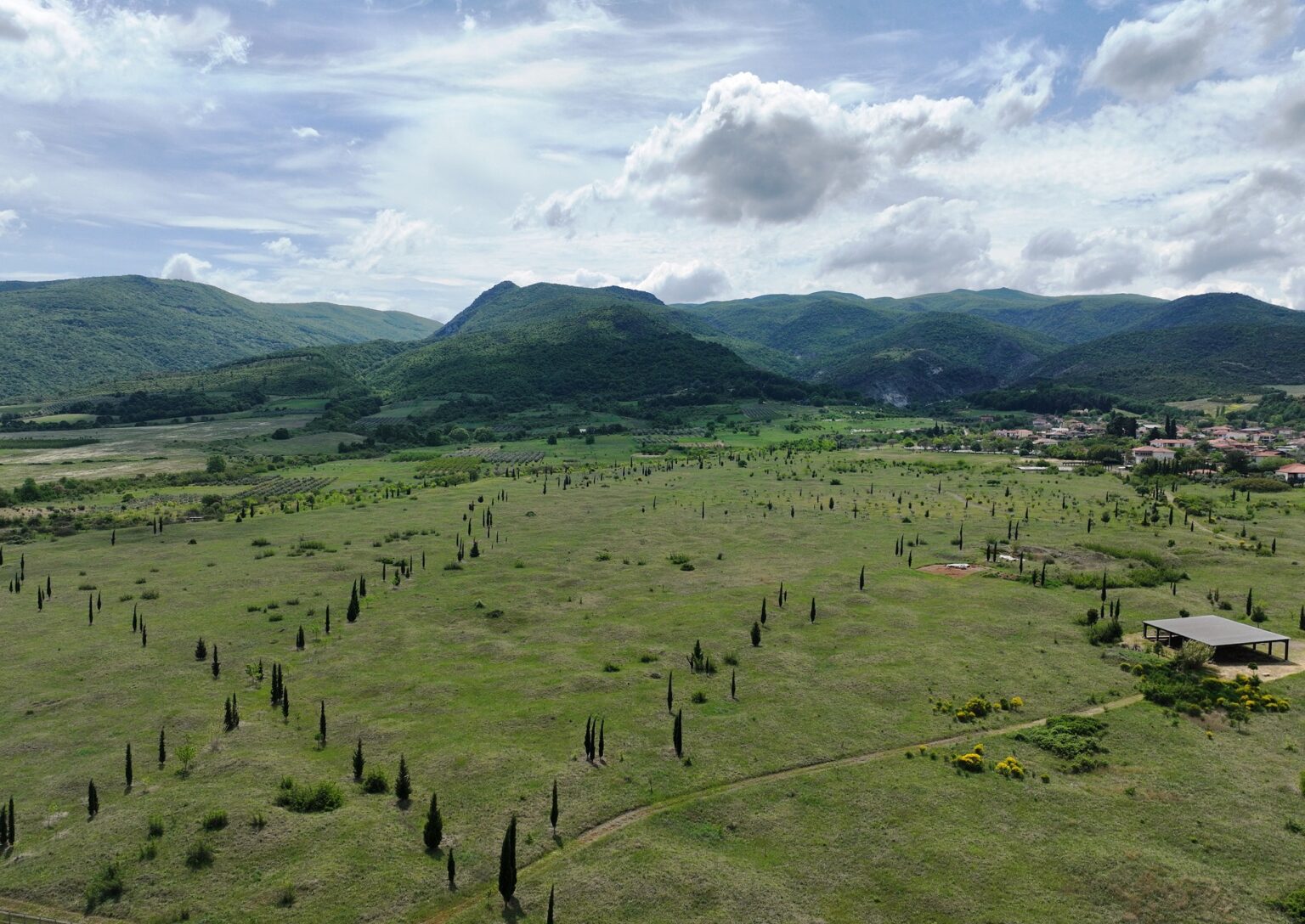
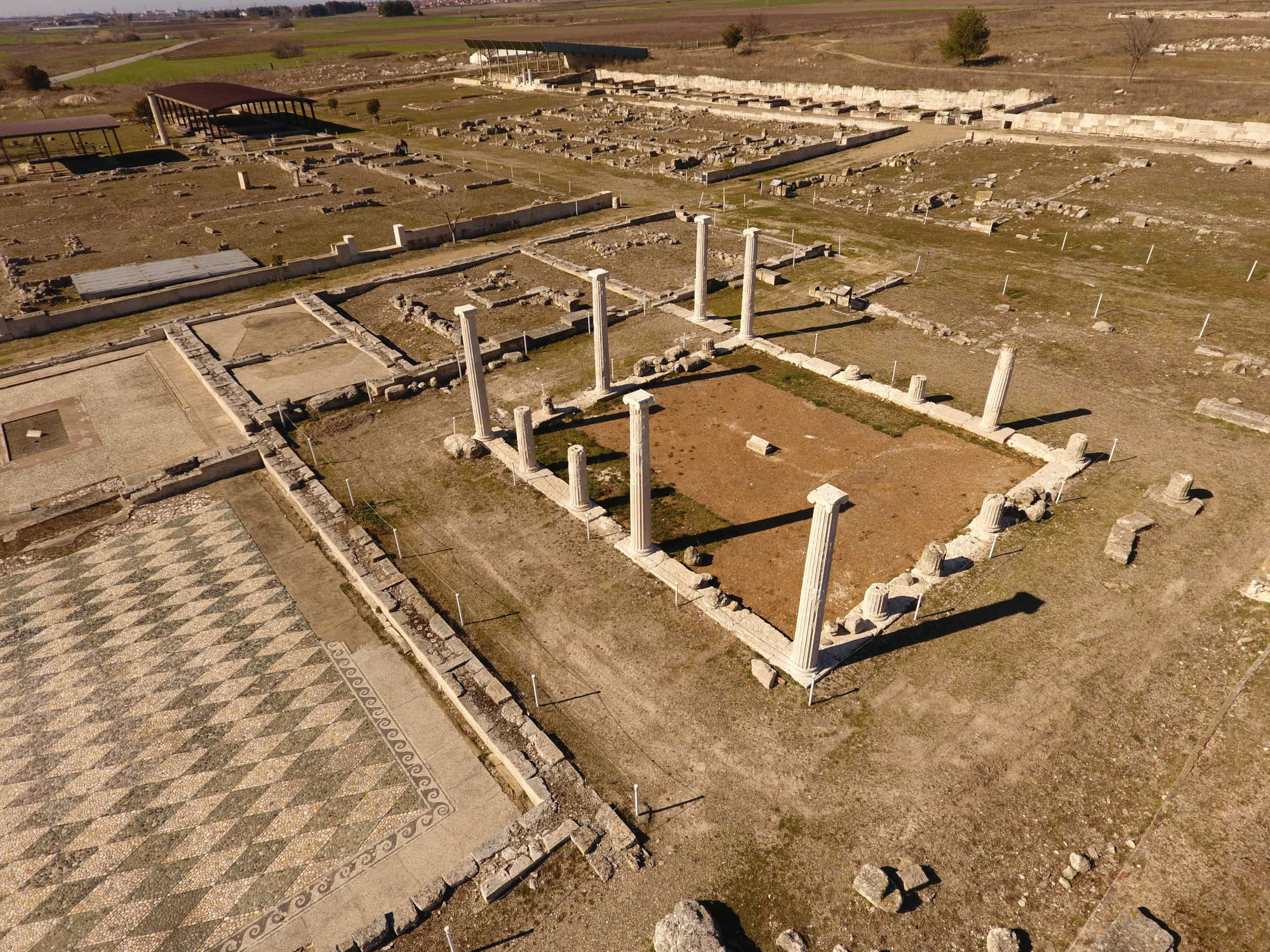
Emerging from the Museum of the Royal Tombs, visitors return to the world of the living with heightened senses. Just 750 meters away, the Palace of Aigai invites us to imagine Philip II in action. The palace’s pioneering peristyle – remarkably level for its time – deliberately placed the Macedonian king on the same footing as those around him, whether he stood in the men’s quarters, the stoas or the colonnaded courtyard.
The reciprocal bond he cultivated with his subjects – farmers transformed into citizens under his reign – is etched into the palace’s architecture. This was not a residence for the royal family’s private life, but a building designed to serve the public life of the city.
Philip II’s insistence on being regarded as first among citizens rather than a tyrant, however, led to his demise. In 336 BC, during his daughter’s wedding, he chose to enter the theater of Aigai without his personal guard and was struck down by his own bodyguard, Pausanias.

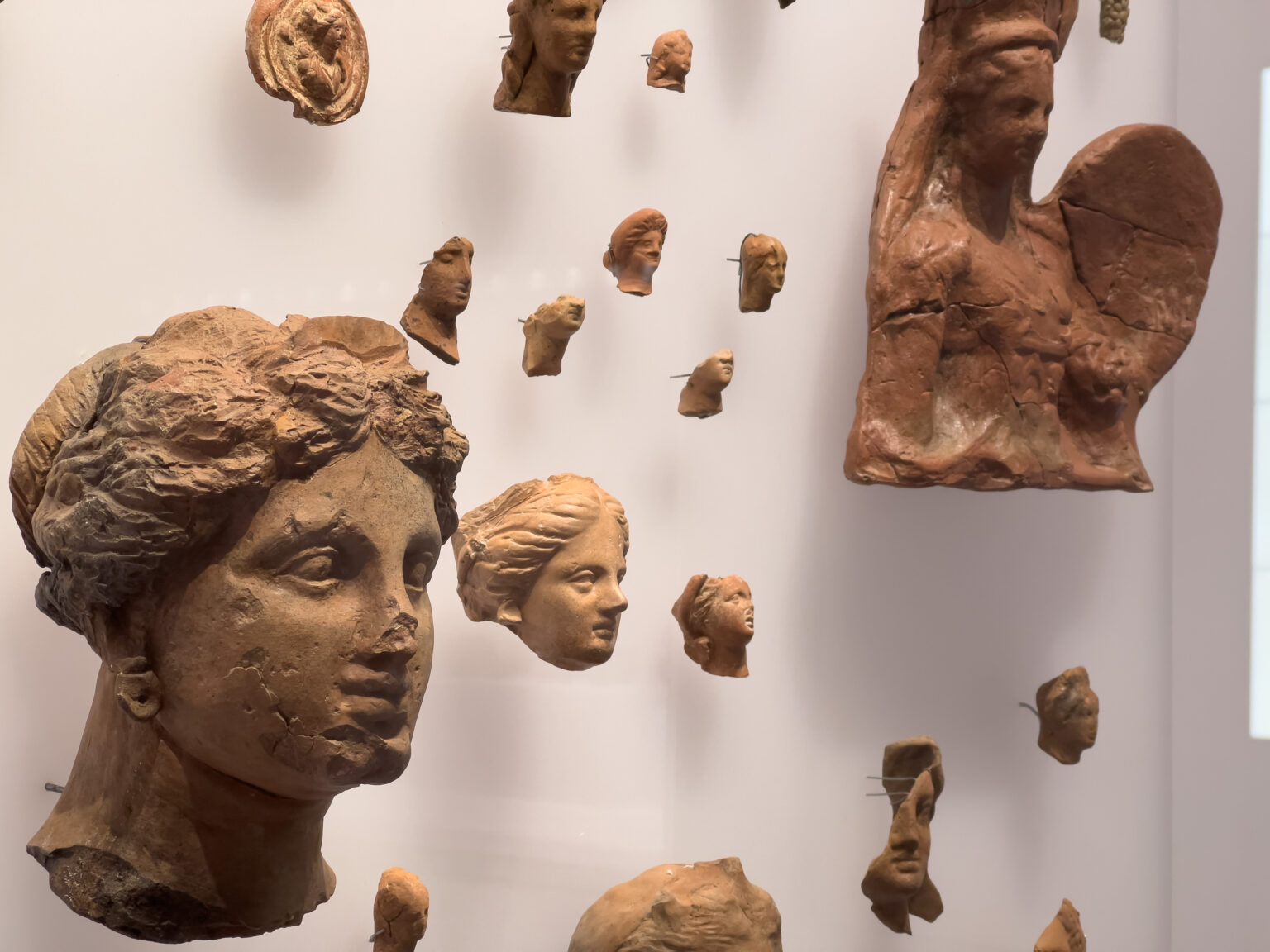


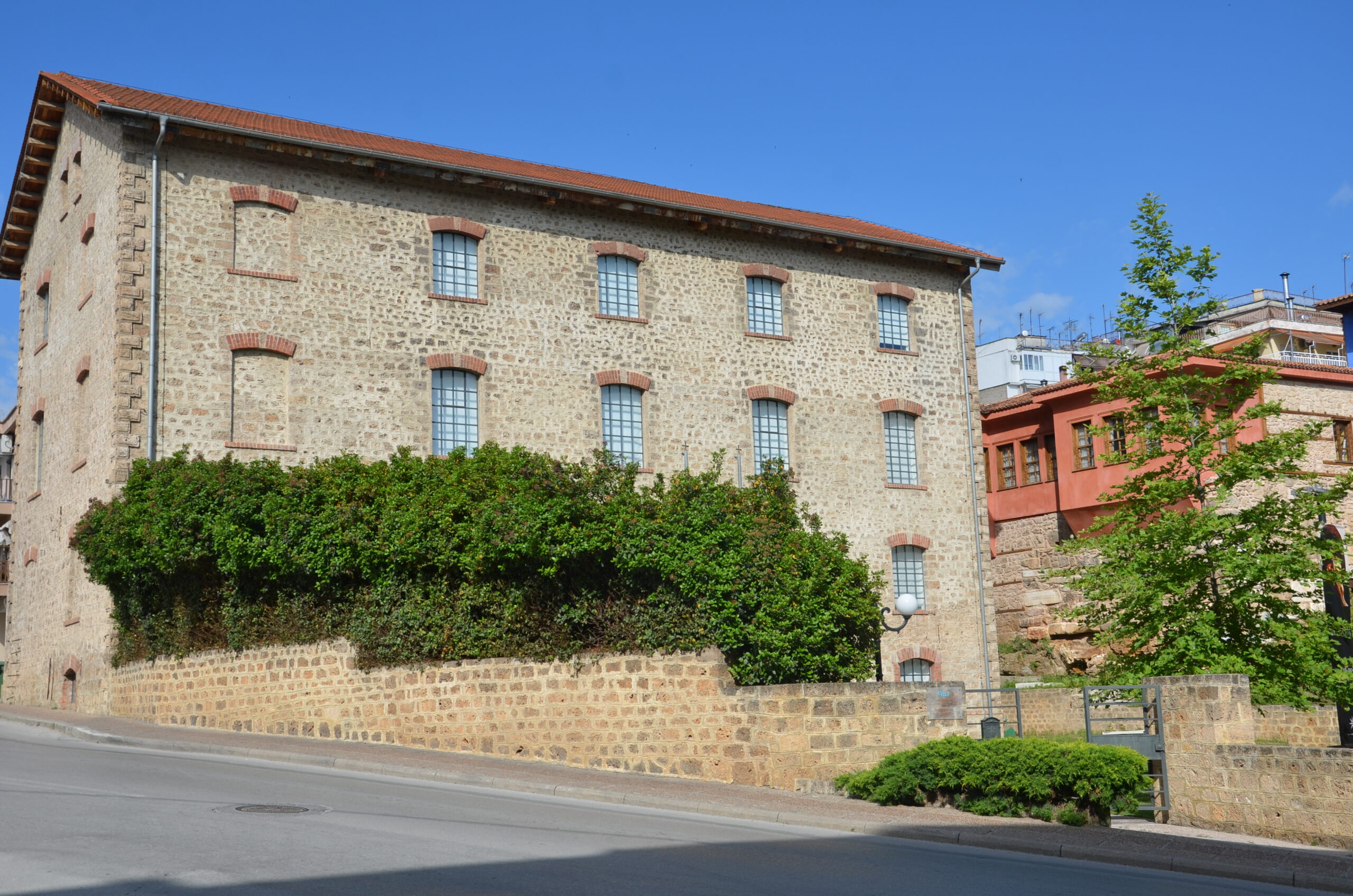
The main building of the Polycentric Museum of Aigai seeks to restore this once-brilliant metropolis – an ideal model of a city for the Hellenistic world – to its former royal glory. Dispensing with labyrinthine display cases filled with numbered exhibits, the museum embraces a new approach in which the image of the city emerges from carefully curated ensembles. Funerary customs, animals of the court, adornments, building materials and weapons all appear here, masterfully arranged in thematic panels that tell the everyday stories of people rather than the exploits of their rulers.
Only in this way can one truly grasp the social organization and economic system of Aigai – the subordination, worship and human power that a princely funeral such as Philip II’s demanded, draining not only the inhabitants but also the resources of Aigai. The call to simplify funerary customs suddenly takes on new depth, offering a fresh perspective on the past.
Directions
59031, Vergina
20 minutes from the village of Vergina
4 minutes from the village of Vergina
15 minutes from Veria
1 hour from Thessaloniki
Opening hours
April 1 – August 31
Daily: 08:00 – 20:00
Tuesday: 12:00 – 20:00
September 1 – 15
Daily: 08:00 – 19:30
Tuesday: 12:00 – 19:30
September 16 – 30
Daily: 08:00 – 19:00
Tuesday: 12:00 – 19:00
October 1 – 15
Daily: 08:00 – 18:30
Tuesday: 12:00 – 18:30
October 16 – 31
Daily: 08:00 – 18:00
Tuesday: 12:00 – 18:00
November 1 – March 31
Mon: 09:00 – 17:00
Tue: closed
Wed: 09:00 – 17:00
Thur: 09:00 – 17:00
Fri: 09:00 – 17:00
Sat: 09:00 – 17:00
Sun: 09:00 – 17:00
The site remains closed on the following dates and public holidays: January 1, March 25, May 1, Easter Sunday, December 25 & 26.
Tickets
Full: €20,00
Reduced: €10,00
Amenities
Contact
Aigai Main Museum Building
Τ: +30 23310 92580
Museum of the Royal Tombs
Τ: +30 23310 92347
Palace of Aigai
Τ: +30 2331092394
Imathia Ephorate of Antiquities
Τ: +30 23310 29737
Ε: efahma@culture.gr