

Opening hours
View Hours

Pella, GR
Get Directions
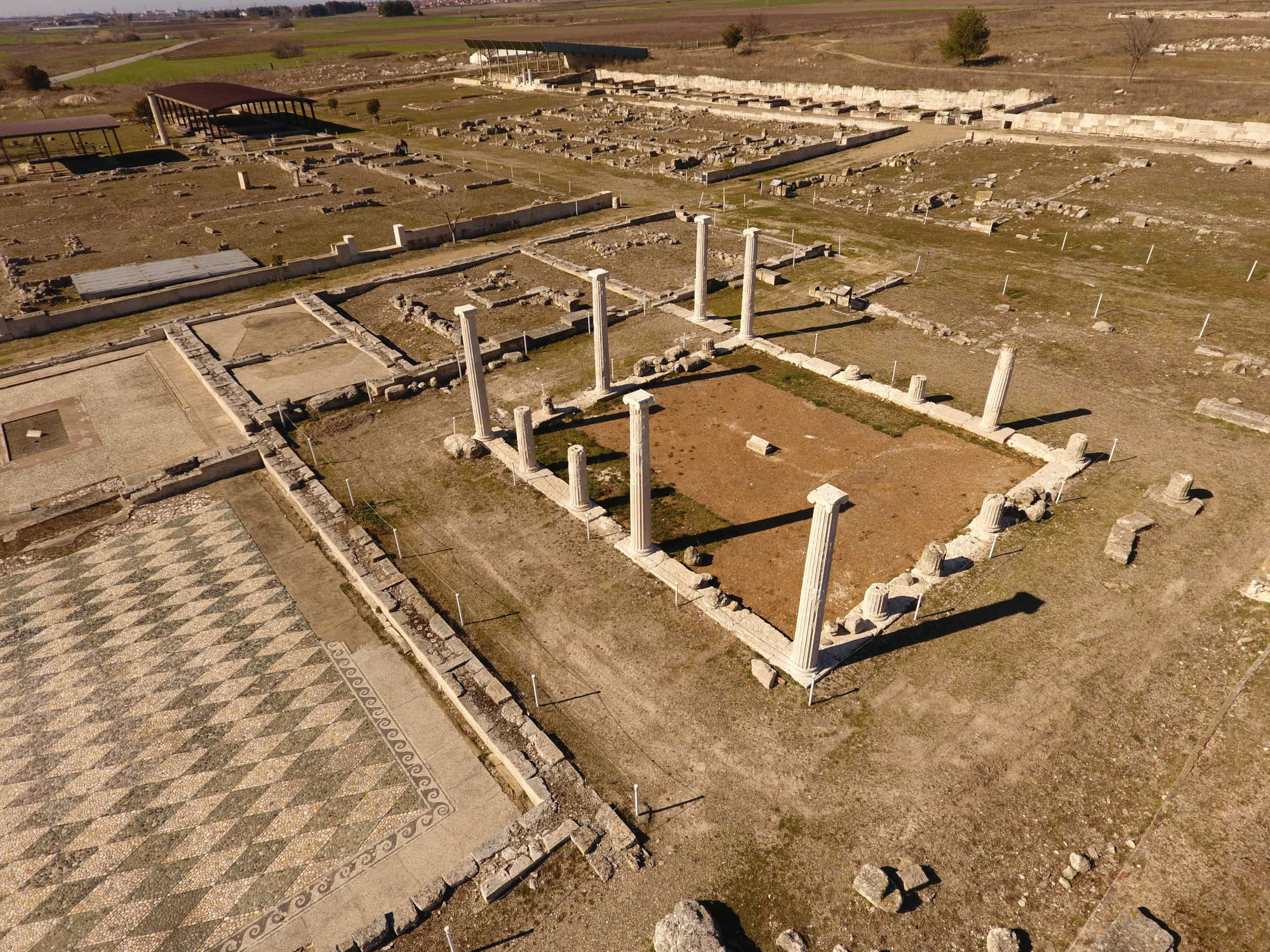
The palace of the ancient city of Pella looms large over a hill, north of the archaeological site. Monumental in scale and complexity, it came to symbolize the political and military supremacy of the Macedonian kingdom.
Construction began in the late 5th century BC under king Archelaus I (413-399 BC), who – for reasons both strategic and financial – decided to transfer the capital city from Aigai (Vergina) to Pella. Later, during the reign of the legendary Macedon King Philip II and his successors, the palace underwent numerous interventions, late into the Antigonid period (306-168 BC). In 168 BC, after the Macedonians suffered defeat by the Romans, the palace was plundered and gradually abandoned. Over the centuries, so many stones were looted that most of the city’s buildings were whittled down to foundation level, which made them difficult to identify.
The palace complex covered approximately 70,000 sq.m and was made up of seven semi-autonomous interconnected buildings that were constructed on a series of artificial terraces. The architectural style varies, depending on the function of each space: Doric in the exterior stoas and propylaea, Ionic in the interior colonnades surrounding the courtyards and the upper storeys of the buildings, and Corinthian in the luxurious interiors.
The main entrance was monumental, consisting of an impressive three-part propylon flanked by two large Doric stoas on either side. All the buildings were interconnected by an ingenious network of covered passageways, stoas and grand staircases that bridged the differences in elevation across the hill. The rooms had pebble floors, while the walls were decorated with colourful plasterwork imitating marble revetment. According to Pliny, the historian, King Archelaus commissioned celebrated painter Zeuxis of Heraclea to decorate the palace.
The location of the palace was of particular strategic importance, as it commanded views over the surrounding area, including the lagoon and the harbour. It should be noted that the ancient city was originally coastal, with the sea only a short distance away. Gradually, sediment deposited by the Axios, Aliakmon and Loudias rivers caused the coastline to advance, creating the vast fertile plain that surrounds the site today.


In addition to King Archelaus I, celebrated Macedonian king Philip II was another famed occupant of the palace. Alexander the Great was born, raised and educated here alongside the sons of aristocratic families, who would later become the generals and “companions” to his great campaigns. It was here that Euripides wrote his tragedies Archelaus and The Bacchae, around 408 BC, at the invitation of King Archelaus I, who sought to transform the capital into one of the leading cultural centres of the time.
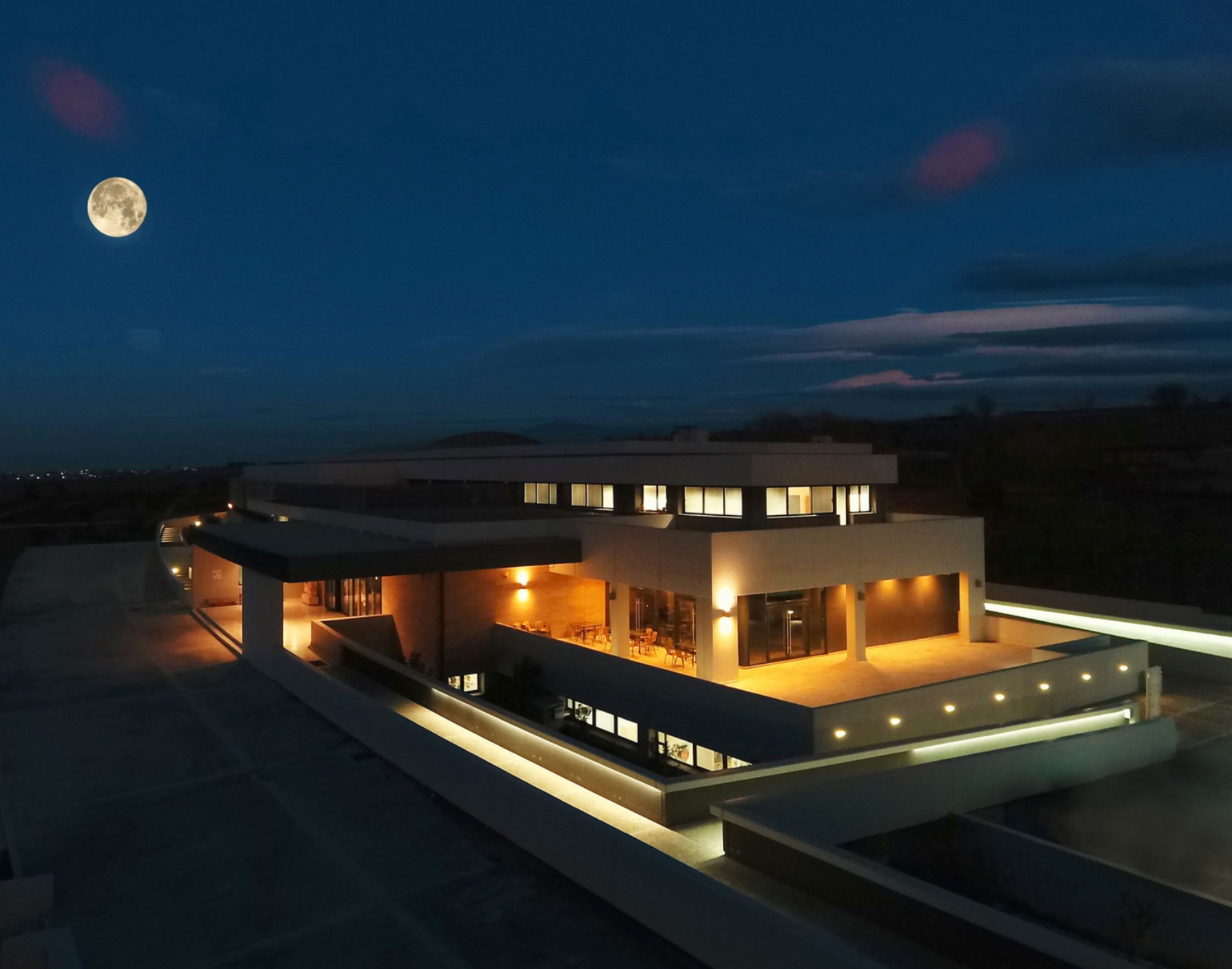
Excavations at the palace began in the 1950s and continues to this day, alongside conservation work and a concerted effort to enhance and present the complex to the public. A substantial part of the palace restoration project – including the monumental entrance, the palaestra and the swimming pool – has been completed and was inaugurated in 2025. The visitor reception and information centre opened its doors to the public in 2026. Today, this remarkable monument offers important insight into the lives and daily routines of the Macedonian kings, as well as into the history and architecture of ancient Macedonia.
Directions
58005, Pella
On foot
15 minutes from the centre of the modern town of Pella
By bus
By intercity bus from Thessaloniki
By local bus from Giannitsa
By car
3 minutes from the centre of the modern town of Pella
45-60 minutes from Thessaloniki
10-15 minutes from Giannitsa
Opening hours
Summer hours
April 1 – October 31
Mon: Closed
Tue: Closed
Wed: Closed
Thu: Closed
Fri: Closed
Sat: 09:00 – 16:00
Sun: 09:00 – 16:00
Last admission: 20 minutes before closing time
The site remains closed on the following dates and public holidays: January 1, March 25, May 1, Easter Sunday, December 25 & 26.
The site remains closed on the following dates and public holidays: January 1, March 25, May 1, Easter Sunday, December 25 & 26.
Tickets
Free admission
Amenities
WC
Parking
Accessibility
Contact
Ephorate of Antiquities of Pella
Τ: +30 23810 24356
Ε: efapel@culture.gr