
The Phaistos Disc: An eternal enigma
The Phaistos Disc is not just one of the most iconic discoveries of the Minoan civilization, but also one of the most enigmatic, with countless theories attempting to decipher its content.
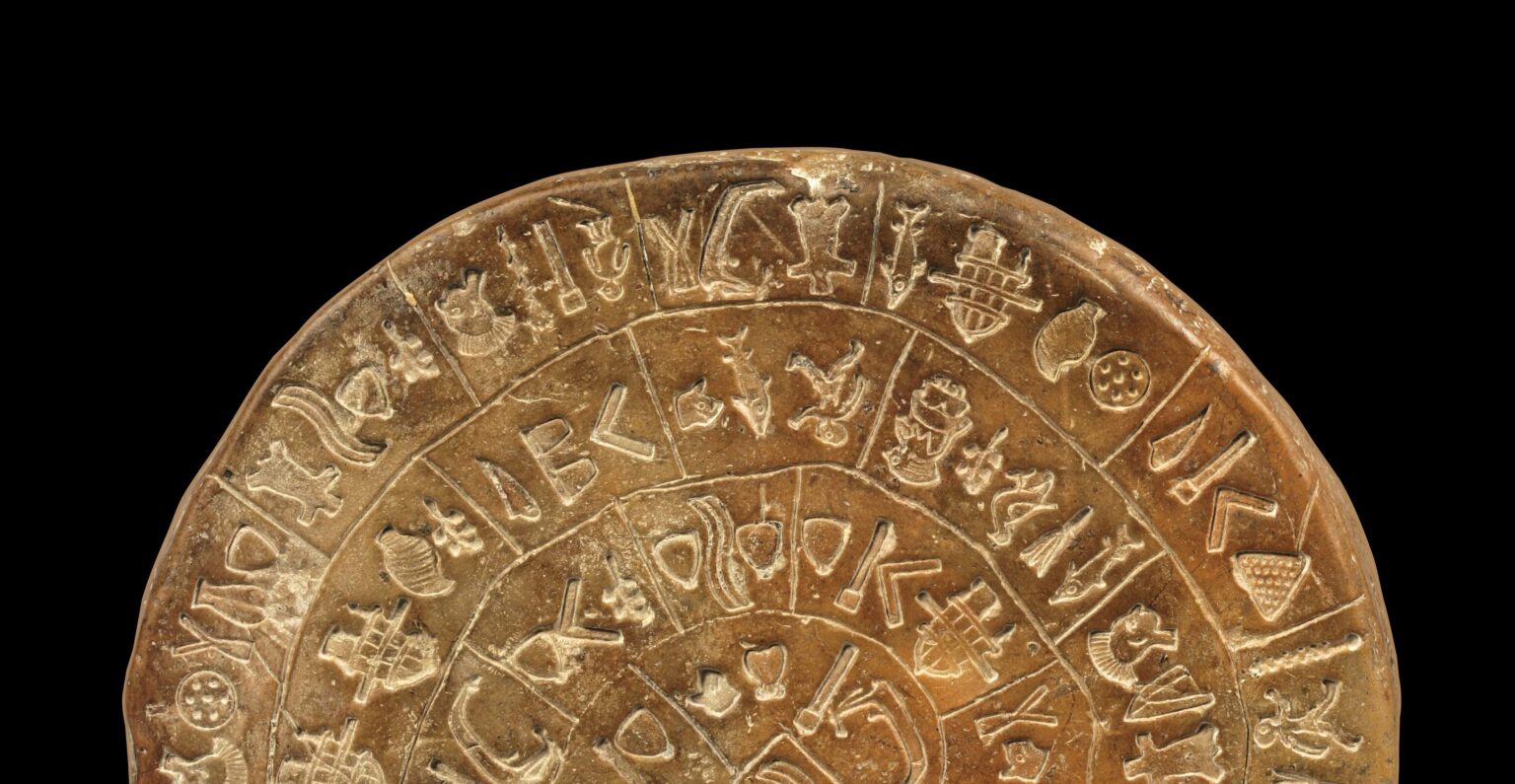
On July 3, 1908, the Italian archaeologist Luigi Pernier discovered a mysterious clay disc in a small room of the Palace of Phaistos, covered in ashes yet in remarkably good condition. Ever since that day, archaeologists, linguists, palaeographers, scientists and amateur sleuths have tried to interpret the disc’s purpose and content. Dating back to around the 17th century BC, it has inspired theories ranging from the plausible to the utterly fantastical. None, however, has been universally accepted by the scholarly community, while some researchers have even gone so far as to question the object’s authenticity.
Due to the poetic alliteration of certain combinations of elements inscribed on the Phaistos Disc, the prevailing view is that it may be a religious text or hymn. Until we discover more examples of this peculiar hieroglyphic script, it will continue to fire the imagination.
But why is the Phaistos Disc so difficult to decipher? Measuring 15 centimeters in diameter, it bears a total of 241 impressions arranged in a spiral on both sides, clearly stamped into the wet clay before firing, which would make it the oldest known example of printing! These 241 impressions consist of 45 symbols, most of which depict recognizable objects like birds, fish, plants, and human figures, repeated and separated into groups by incised lines. These groups form 61 “words.”
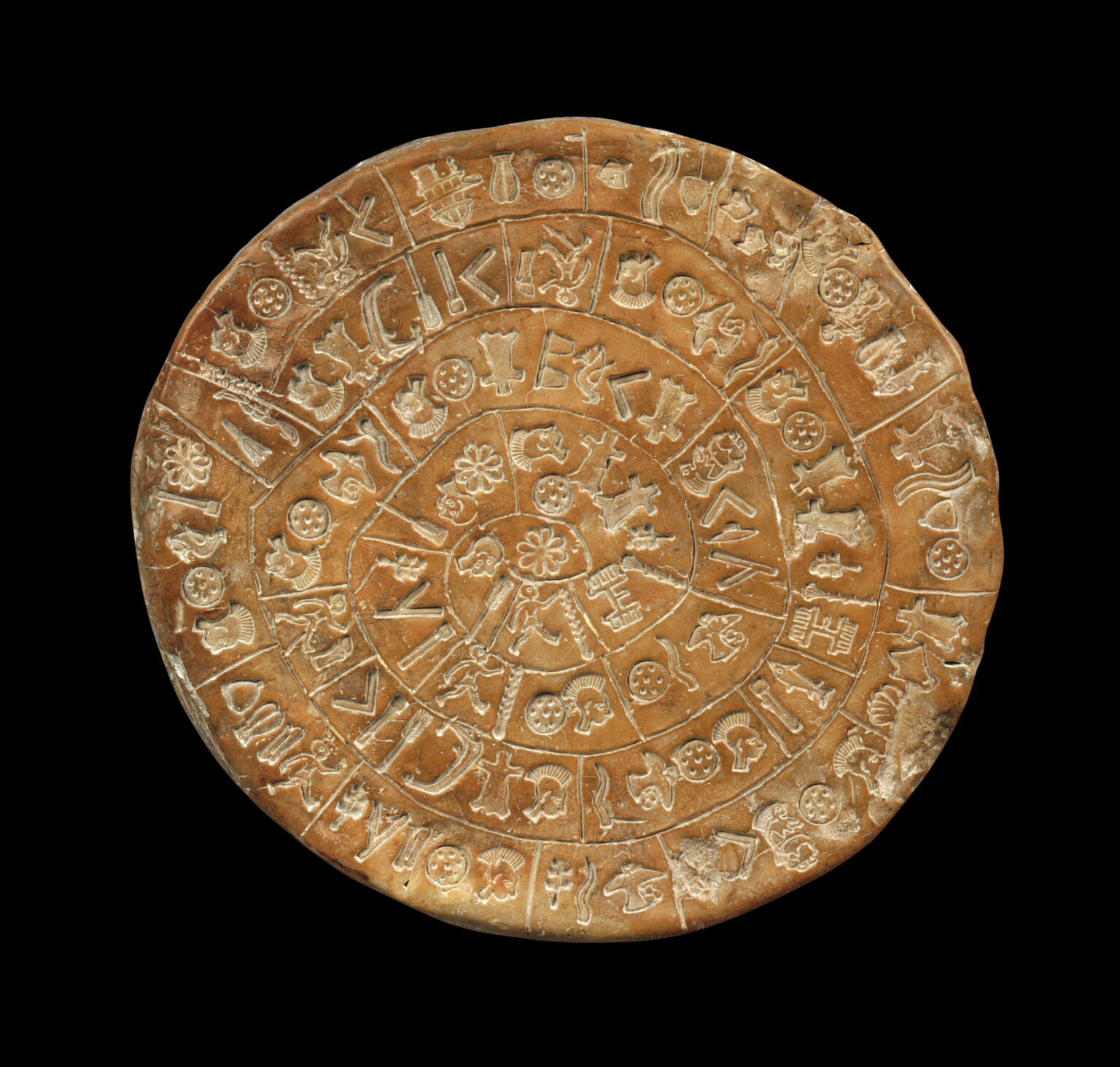
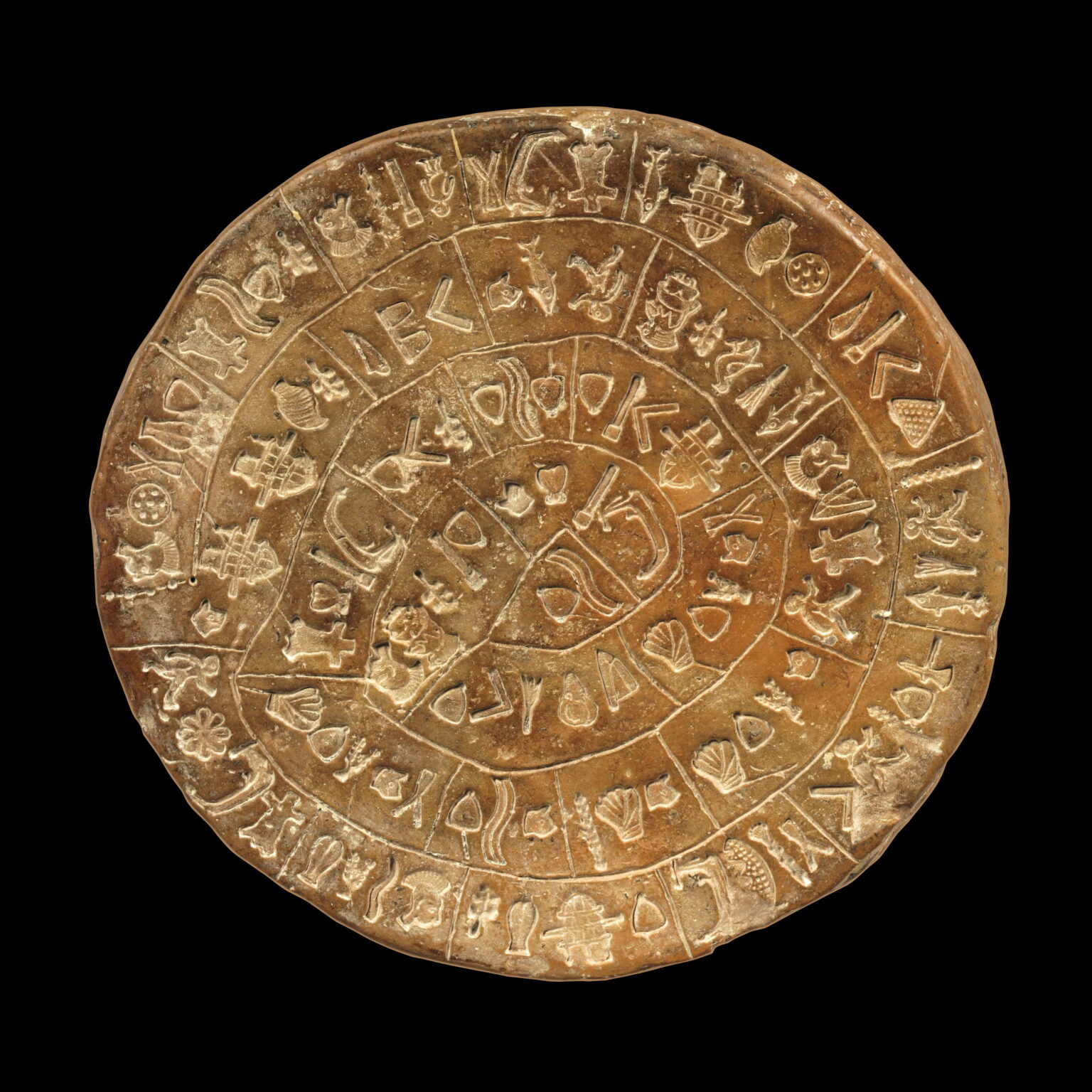
Compared to other writing systems of the same period and region, the unique nature of both the object and the script it was covered in, makes reading the legendary disc exceedingly difficult, as no other sufficient examples using the same symbols have ever been found.
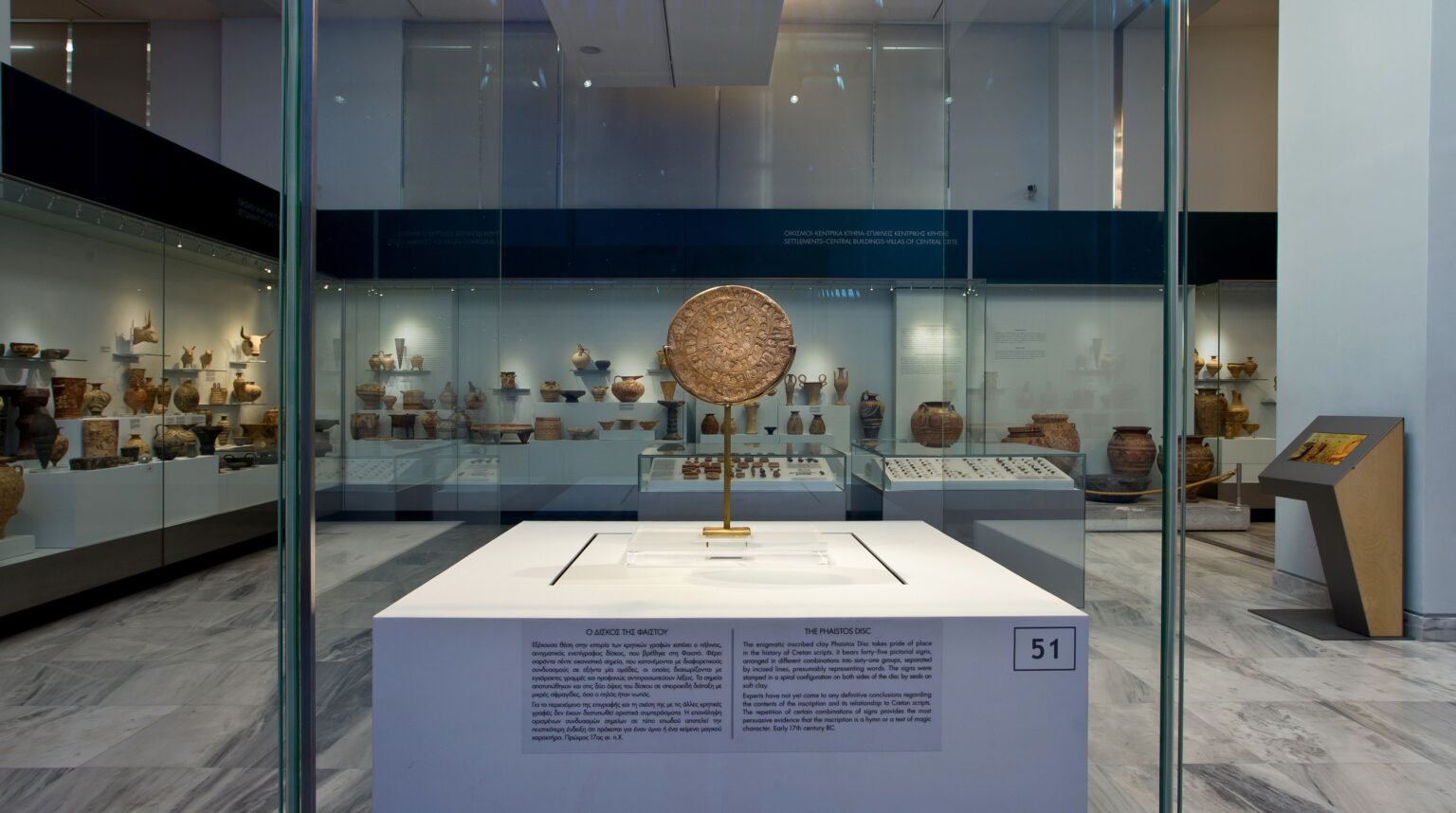
Due to the poetic alliteration of certain combinations of elements, the prevailing view is that it may be a religious text or hymn. One thing is for sure: until we discover more examples of this peculiar hieroglyphic script, which would allow for a concrete interpretation, the Phaistos Disc will continue to fire the imagination, as one of the most spellbinding exhibits of the Heraklion Archaeological Museum.
See also
Iphigenia in black and white
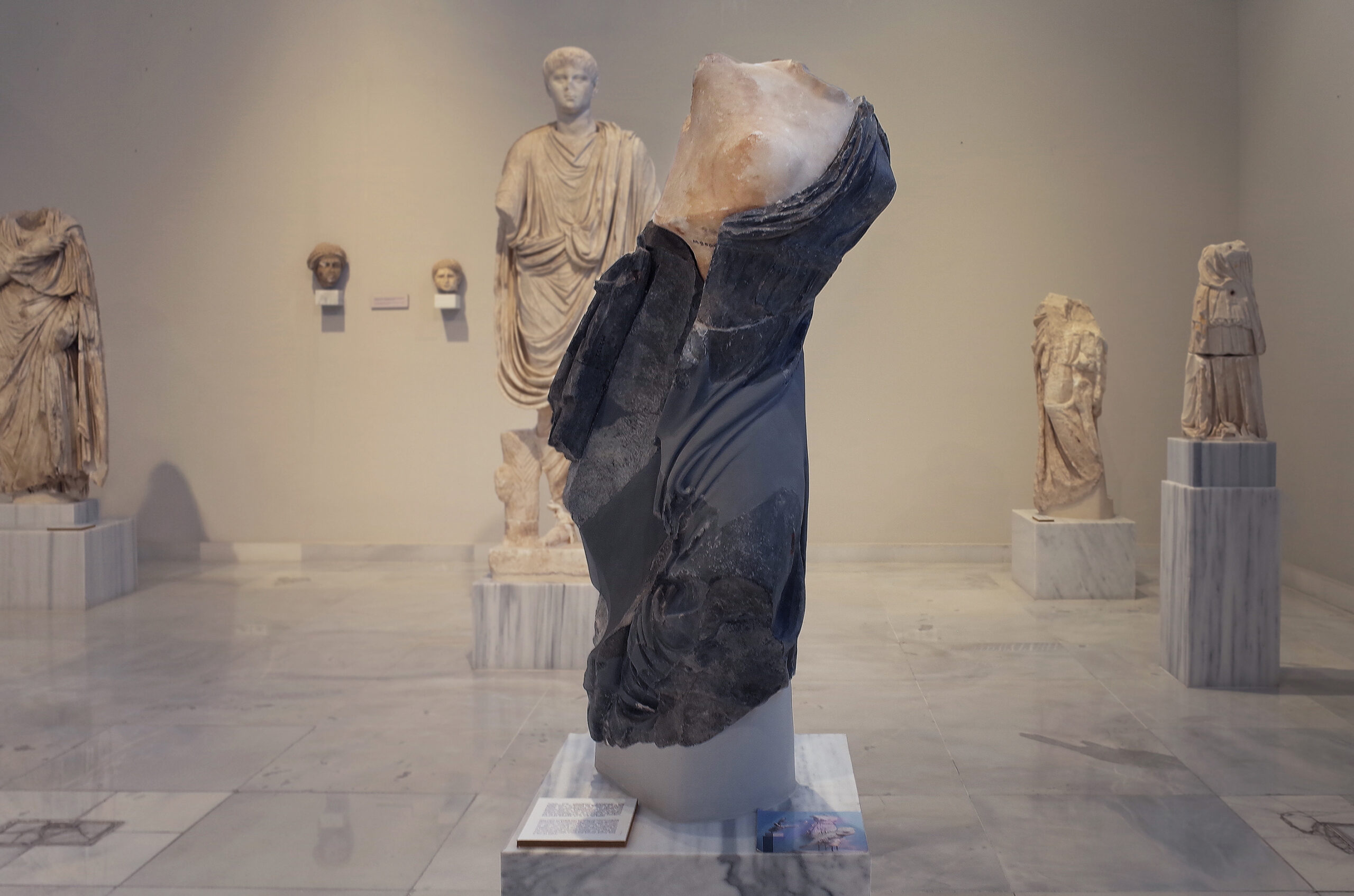
The statue of Iphigenia – a female figure in flight – may not be the most famous exhibit of the Archaeological Museum of Pythagoreio in Samos, but it is a rare example of hybrid sculpture well worth seeing in person.
The Antikythera Mechanism: The world’s first analog “computer”

The Antikythera Mechanism does not give away its secrets all at once. It would actually be pretty easy to pass it up while walking around a museum, since it is not the most visually stunning find recovered from the famous Antikythera shipwreck.
The Antikythera Ephebe and the Roman Empire
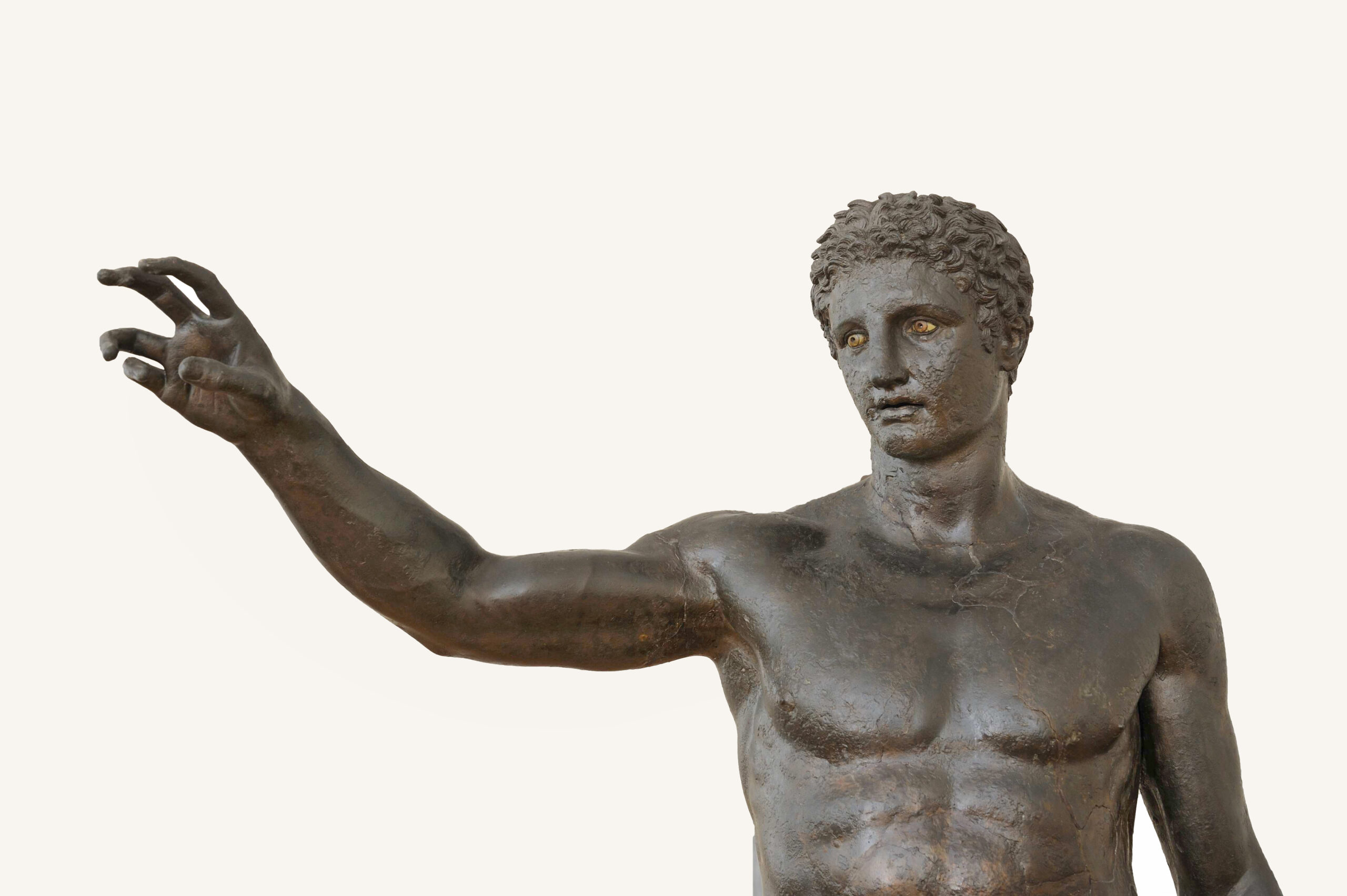
Few people know that most ancient Greek sculptures were actually cast in bronze. But bronze was a precious metal that lived many lives and tended to be reused over and over again, so many of those statues did not survive the passage of time.