
The Antikythera Ephebe and the Roman Empire
Few people know that most ancient Greek sculptures were actually cast in bronze. But bronze was a precious metal that lived many lives and tended to be reused over and over again, so many of those statues did not survive the passage of time.
When the Romans conquered Greece and the entire Eastern Mediterranean basin in 146 B.C., they encountered the flourishing Hellenistic arts and sculpture and fell in love. They took what they could back to Rome and then started copying everything else, to enrich the collections of wealthy Roman citizens. There wasn’t a single nobleman’s residence that didn’t feature a Greek statue in the garden. By copying those older works of art, the Romans inadvertently immortalized different styles of statues that would otherwise be lost.
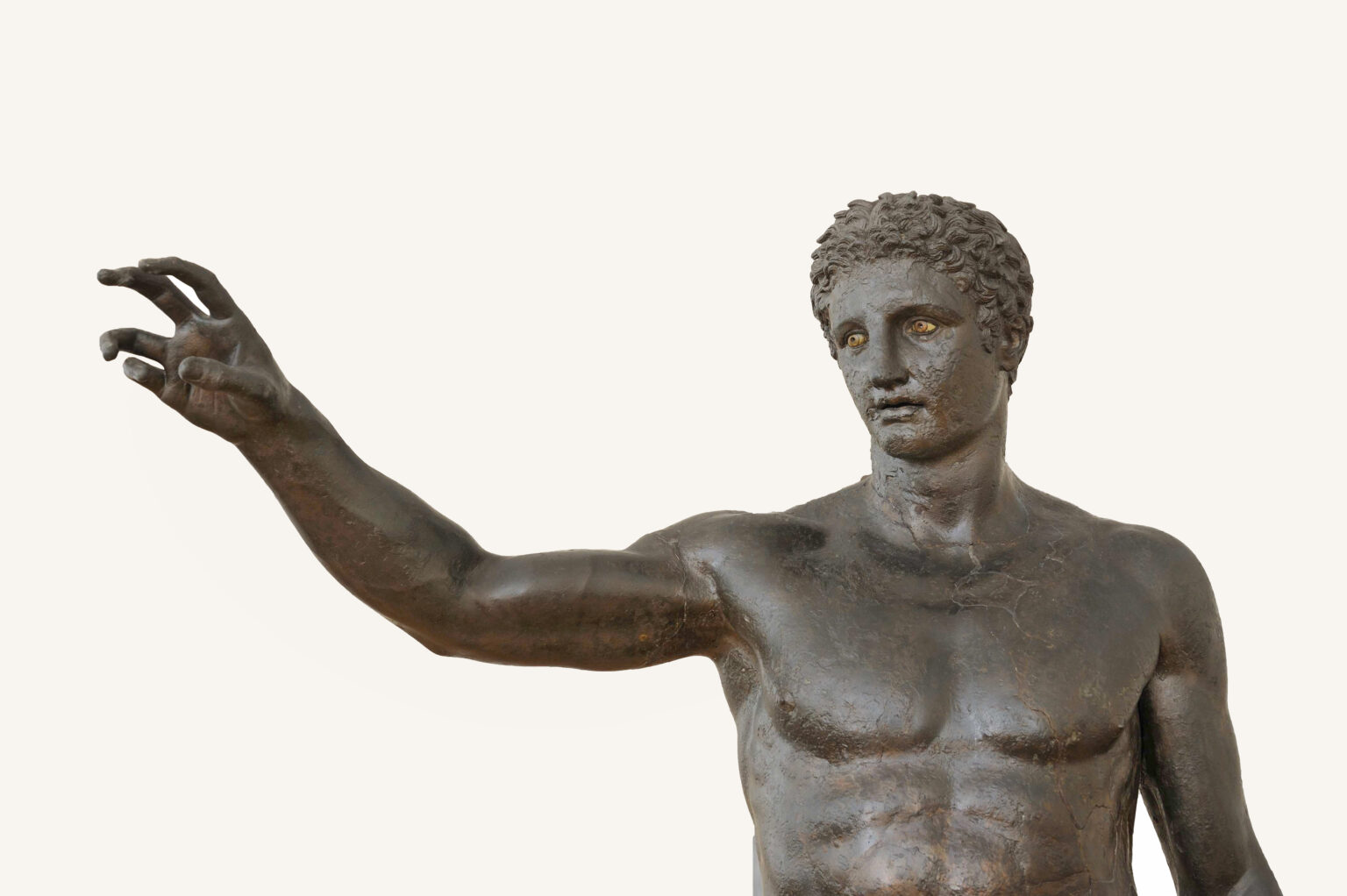
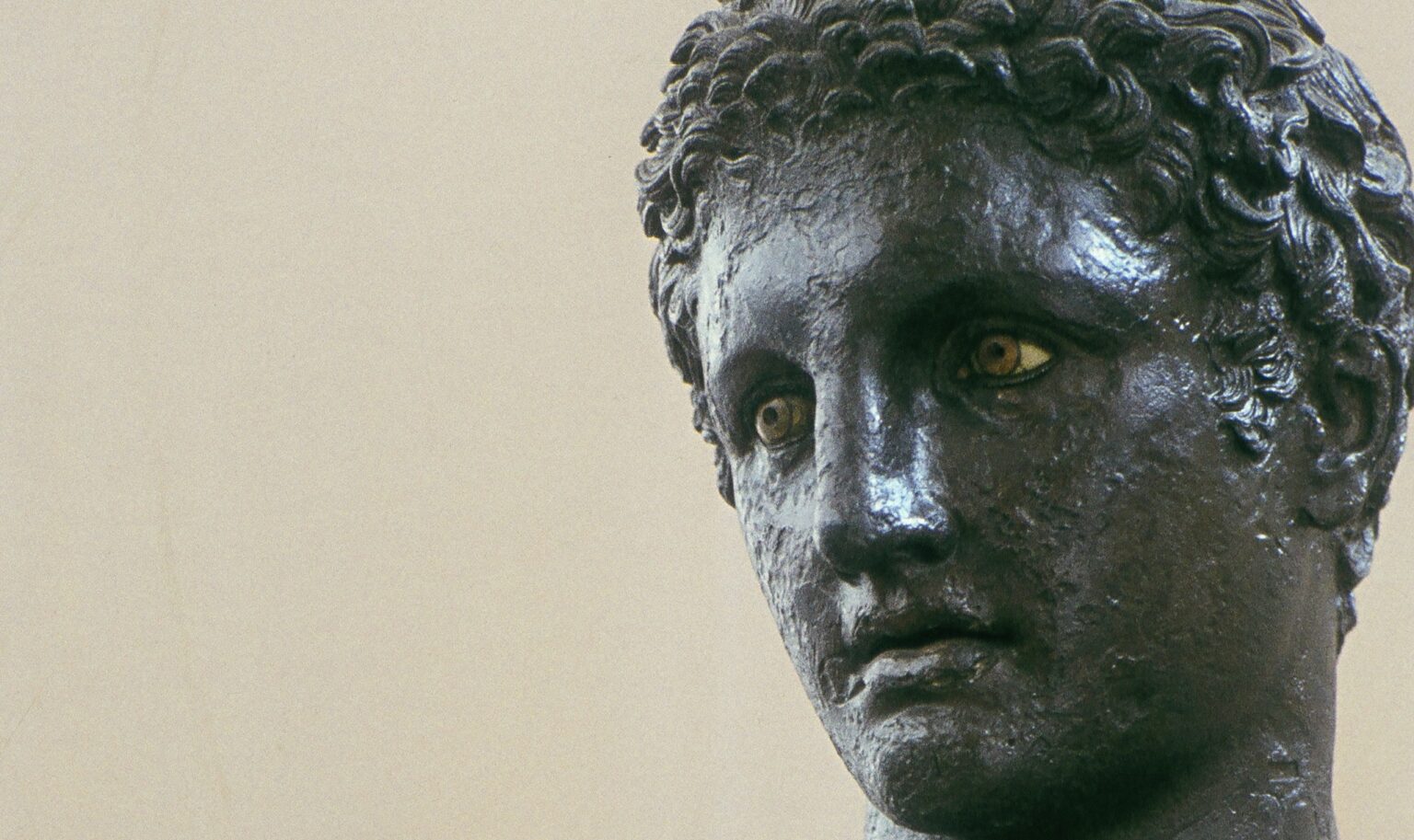
Restoring the Ephebe to his original appearance was very challenging, as he was not only discovered in pieces, but his eyes were made of glass inserts, which is very rare and very telling of his unique place in the pantheon of Hellenistic sculpture.
The Antikythera shipwreck is intricately entwined with the age-old practice of exact copies, as the carrier ship that was transporting the Antikythera Ephebe – along with the world-famous Antikythera Mechanism and a variety of other works – was on its way to Rome. The emblematic Antikythera Ephebe is one the few bronze sculptures that has survived in its original format, without getting copied or melted down.
The shipwreck, which dates back to 60-50 B.C., was discovered in 1900 by sponge divers and was recovered in two separate rescue missions, one of which involved Jacques Cousteau and his team in 1976.
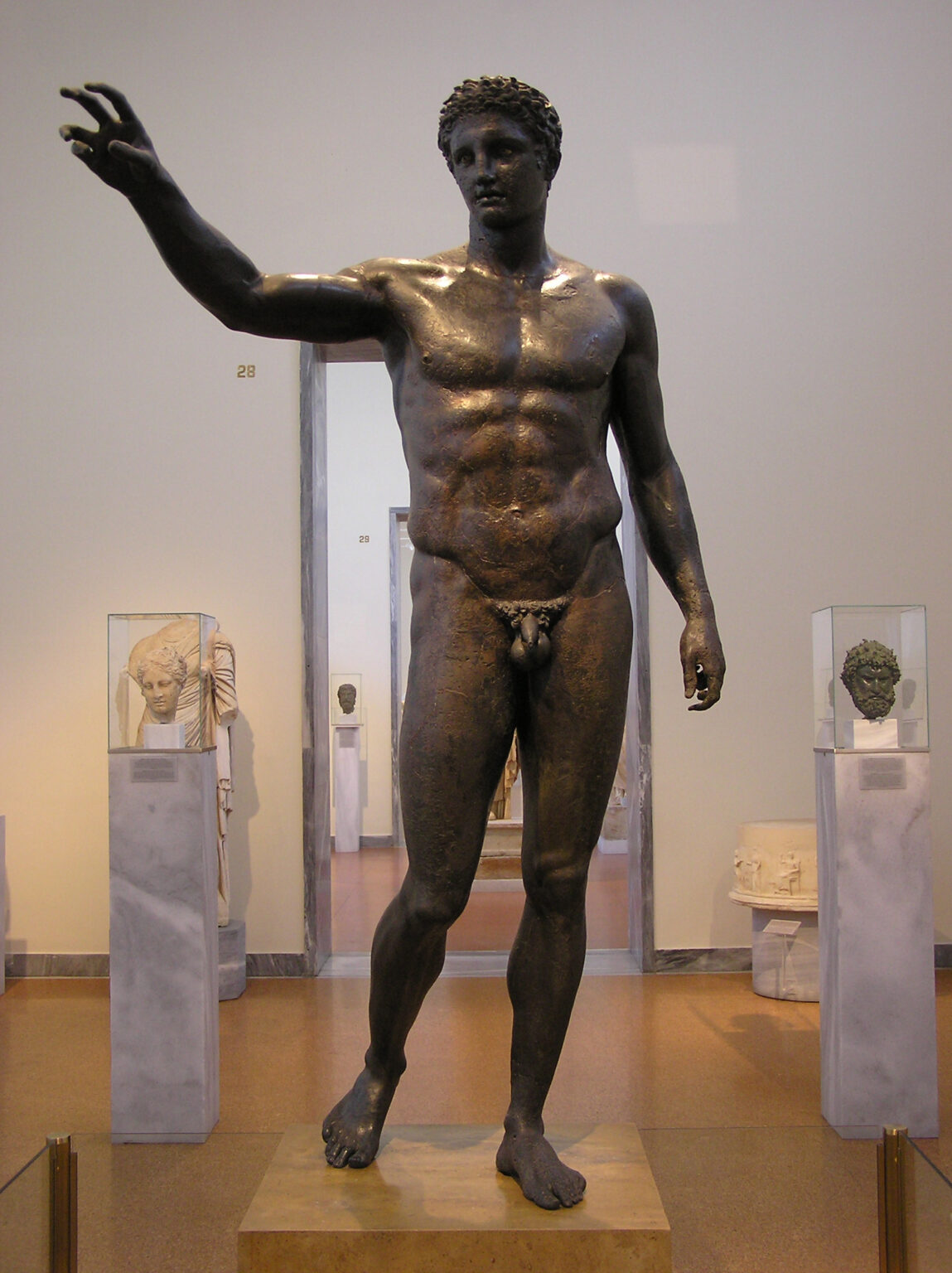
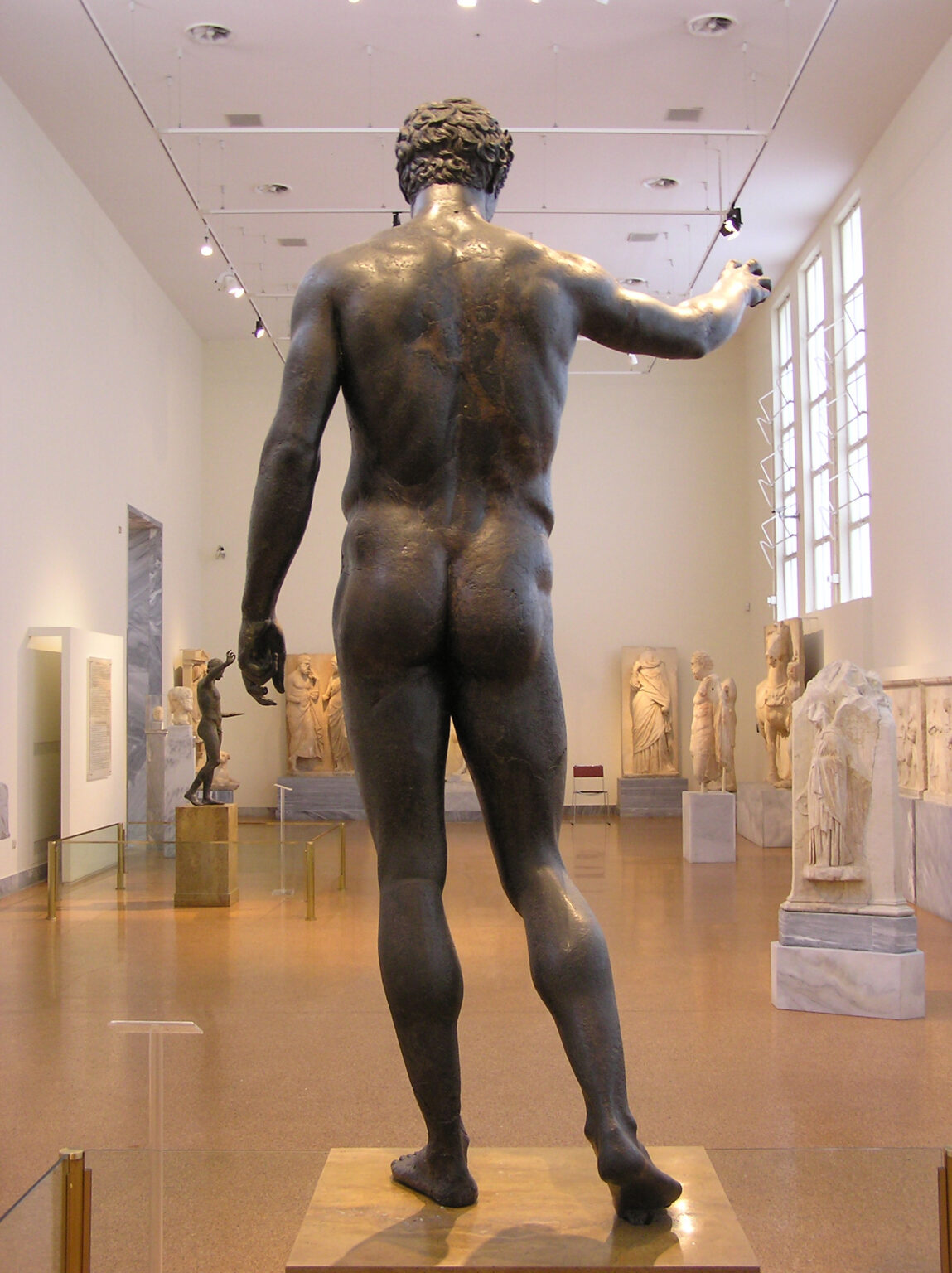
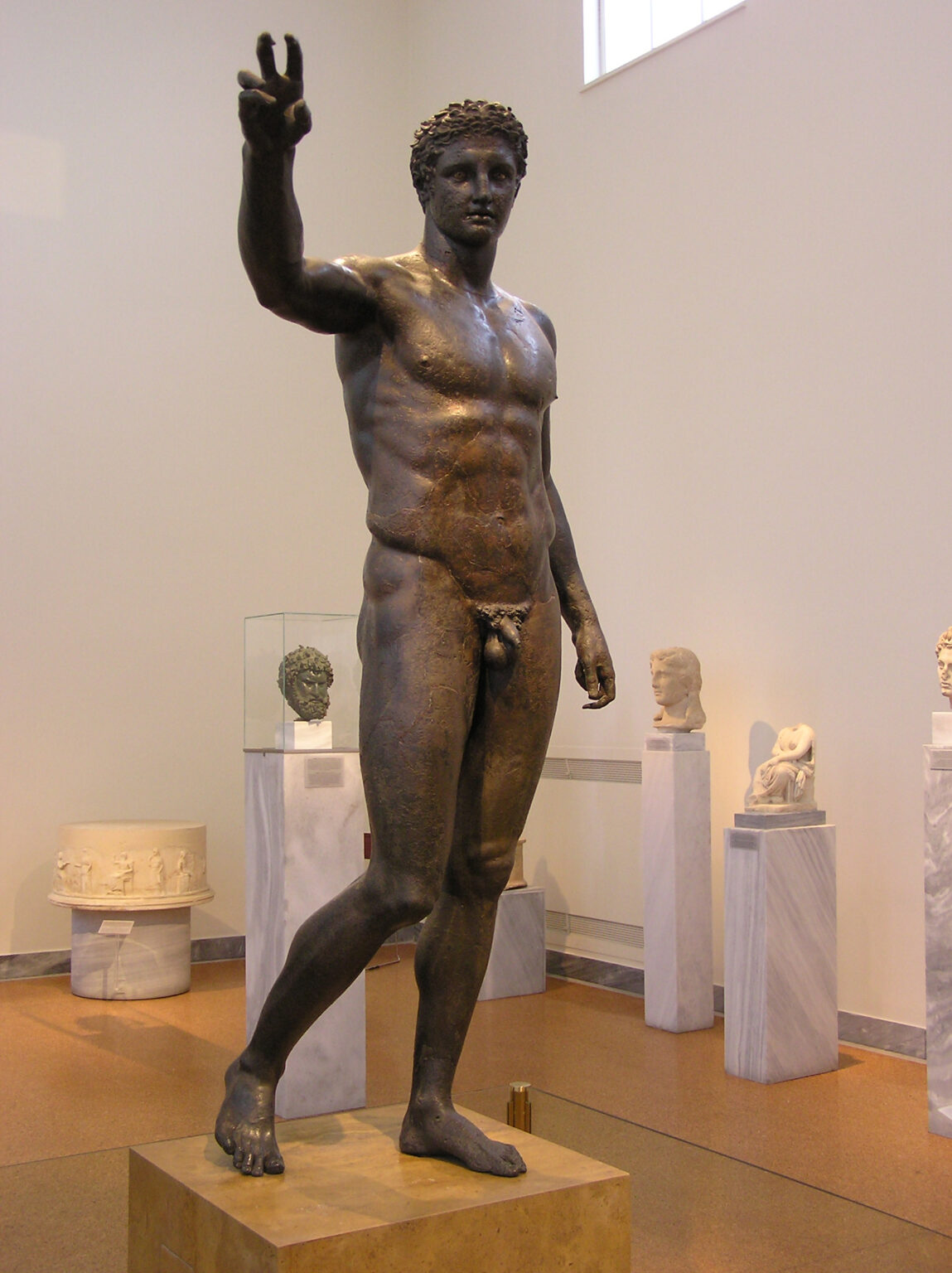
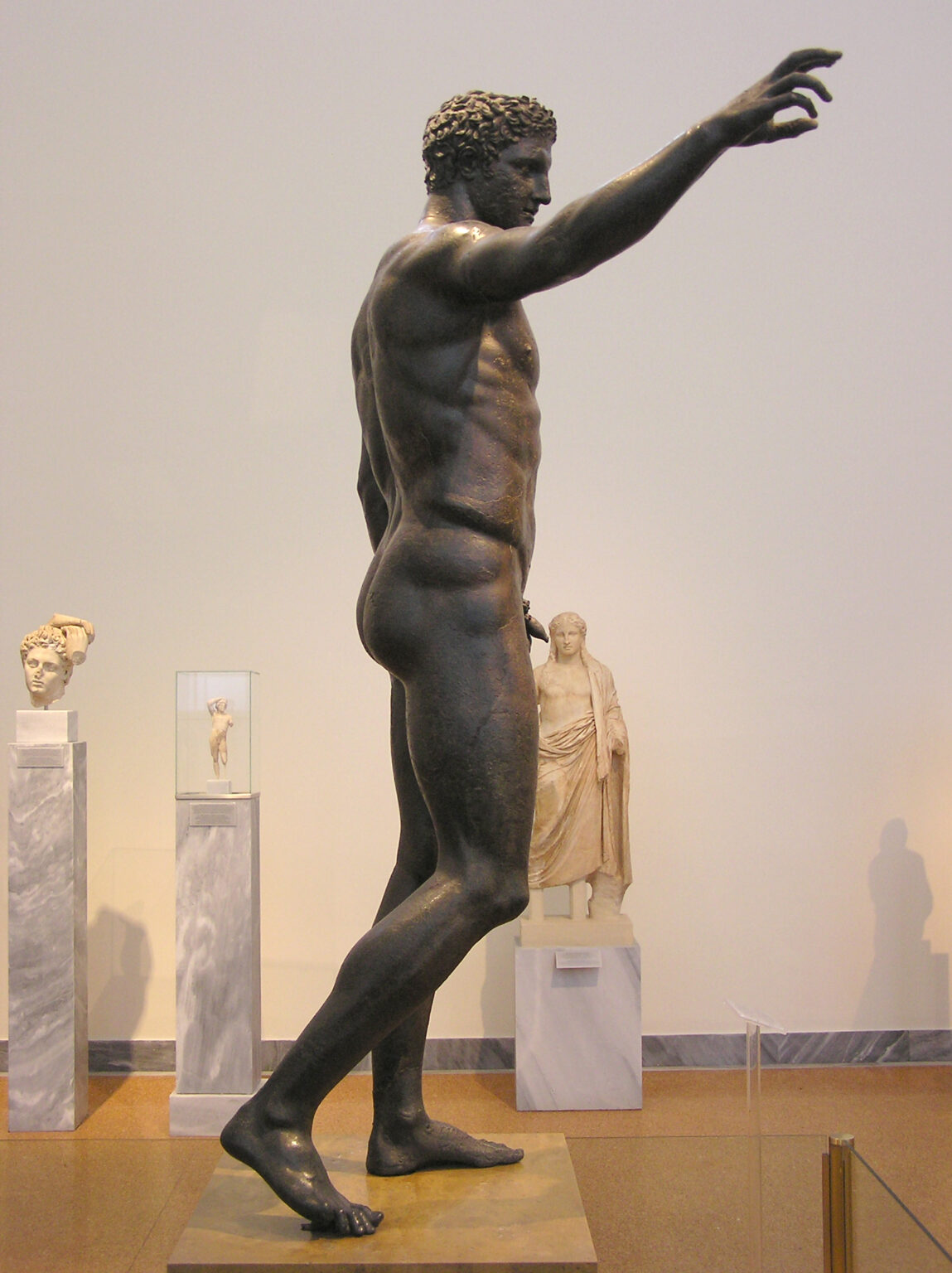
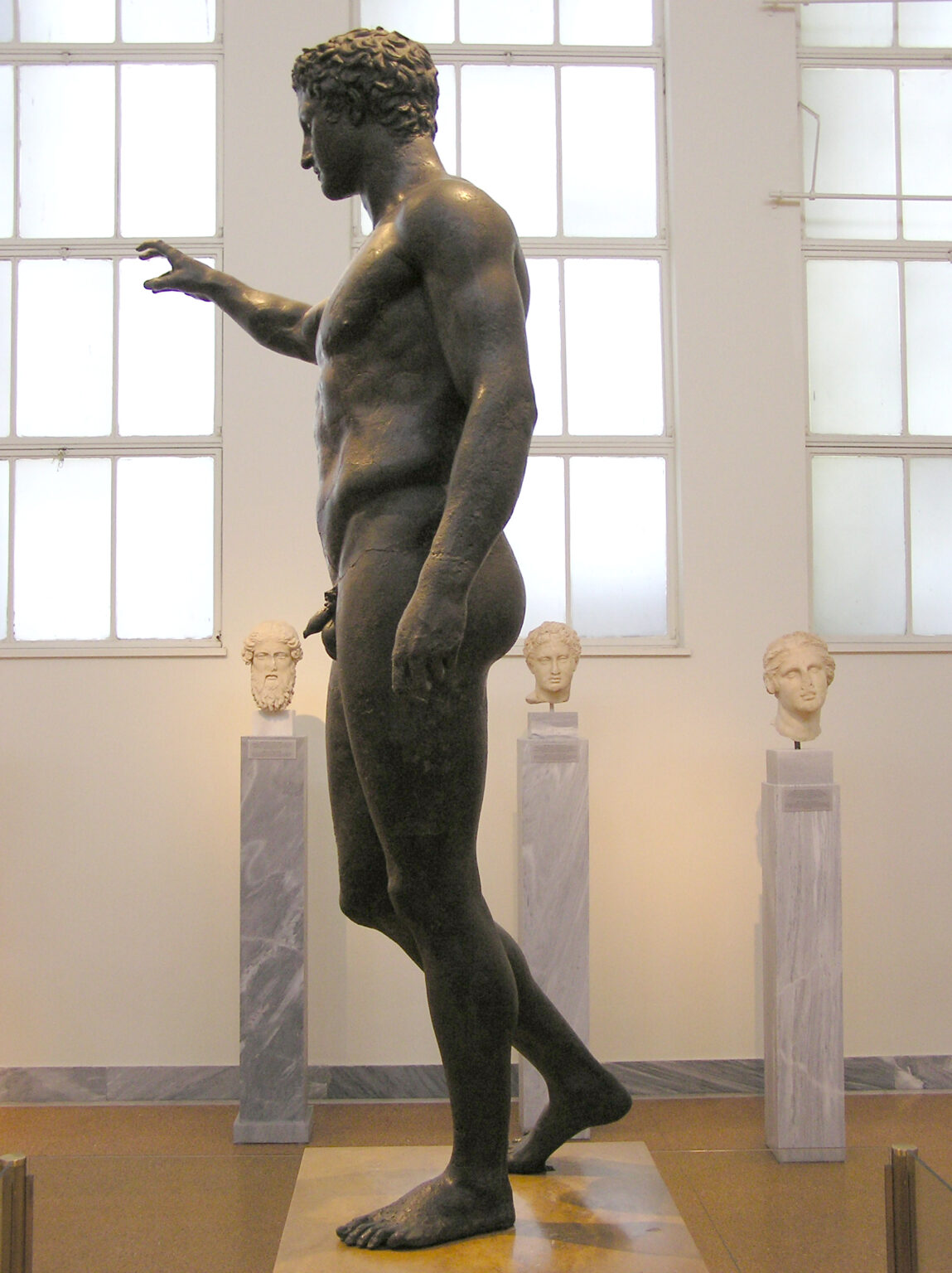
Restoring the Ephebe to his original appearance was very challenging, as he was not only discovered in pieces, but his eyes were made of glass inserts, which is very rare and very telling of his unique place in the pantheon of Hellenistic sculpture. One of his eyes is a contemporary replacement, which was extremely hard to fabricate and went against standard practice, as conservators tend to leave eye sockets empty.
This slightly larger-than-life statue of a young man, measuring in at 1.96 meters, dates between 340 and 330 B.C. and is thought to have originally held a spherical object in his right hand. If it was the Apple of Discord that would make him Paris, whereas the head of the slain Gorgon would make him Perseus. Either way, the Ephebe is most likely the work of celebrated sculptor Euphranor from Corinth and can be exclusively admired at the National Archaeological Museum. Due to its painstaking restoration and delicate state, the Antikythera Ephebe will never get to travel again.
See also
The Antikythera Mechanism: The world’s first analog “computer”

The Antikythera Mechanism does not give away its secrets all at once. It would actually be pretty easy to pass it up while walking around a museum, since it is not the most visually stunning find recovered from the famous Antikythera shipwreck.
Iphigenia in black and white
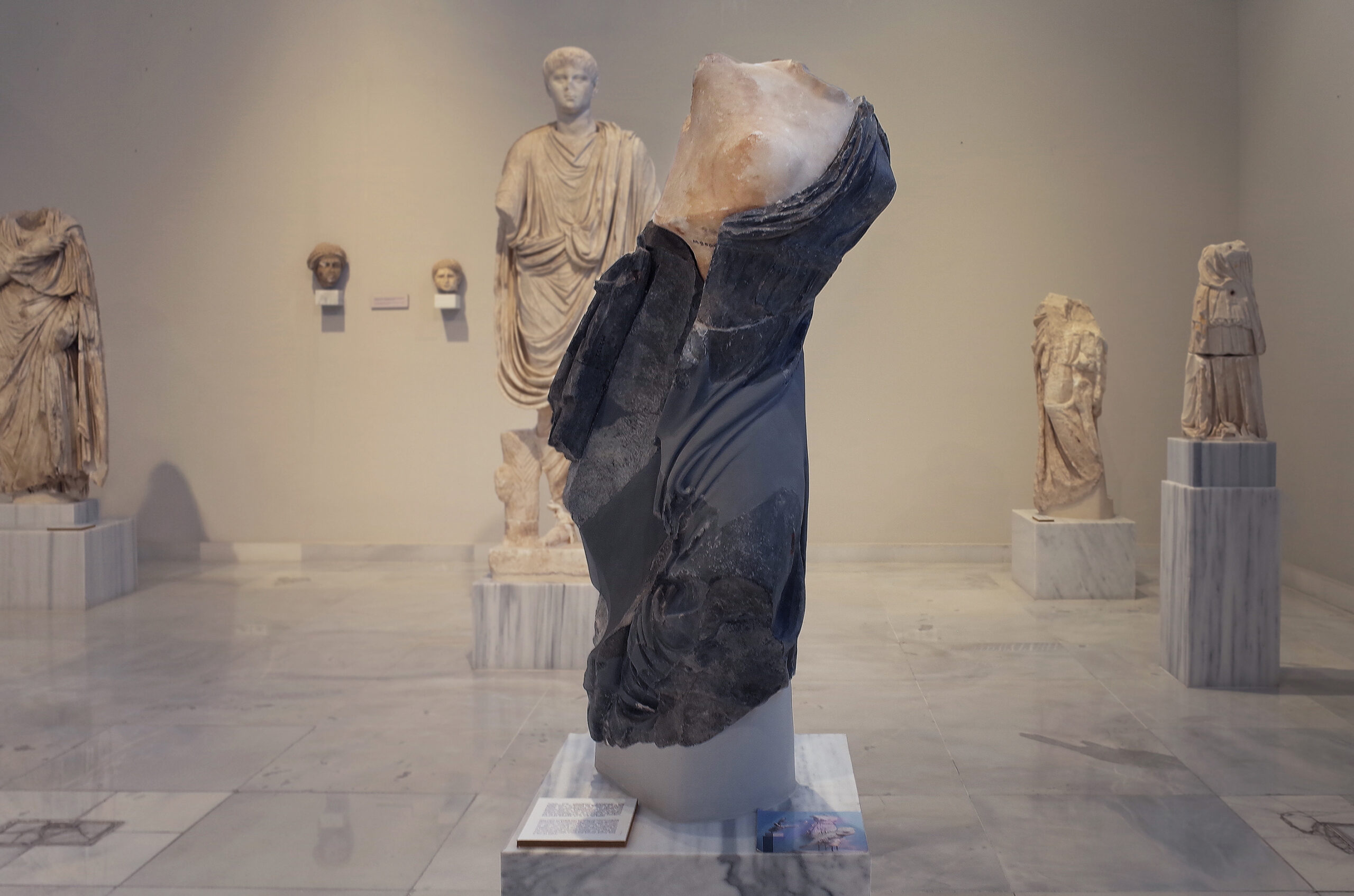
The statue of Iphigenia – a female figure in flight – may not be the most famous exhibit of the Archaeological Museum of Pythagoreio in Samos, but it is a rare example of hybrid sculpture well worth seeing in person.
The Phaistos Disc: An eternal enigma
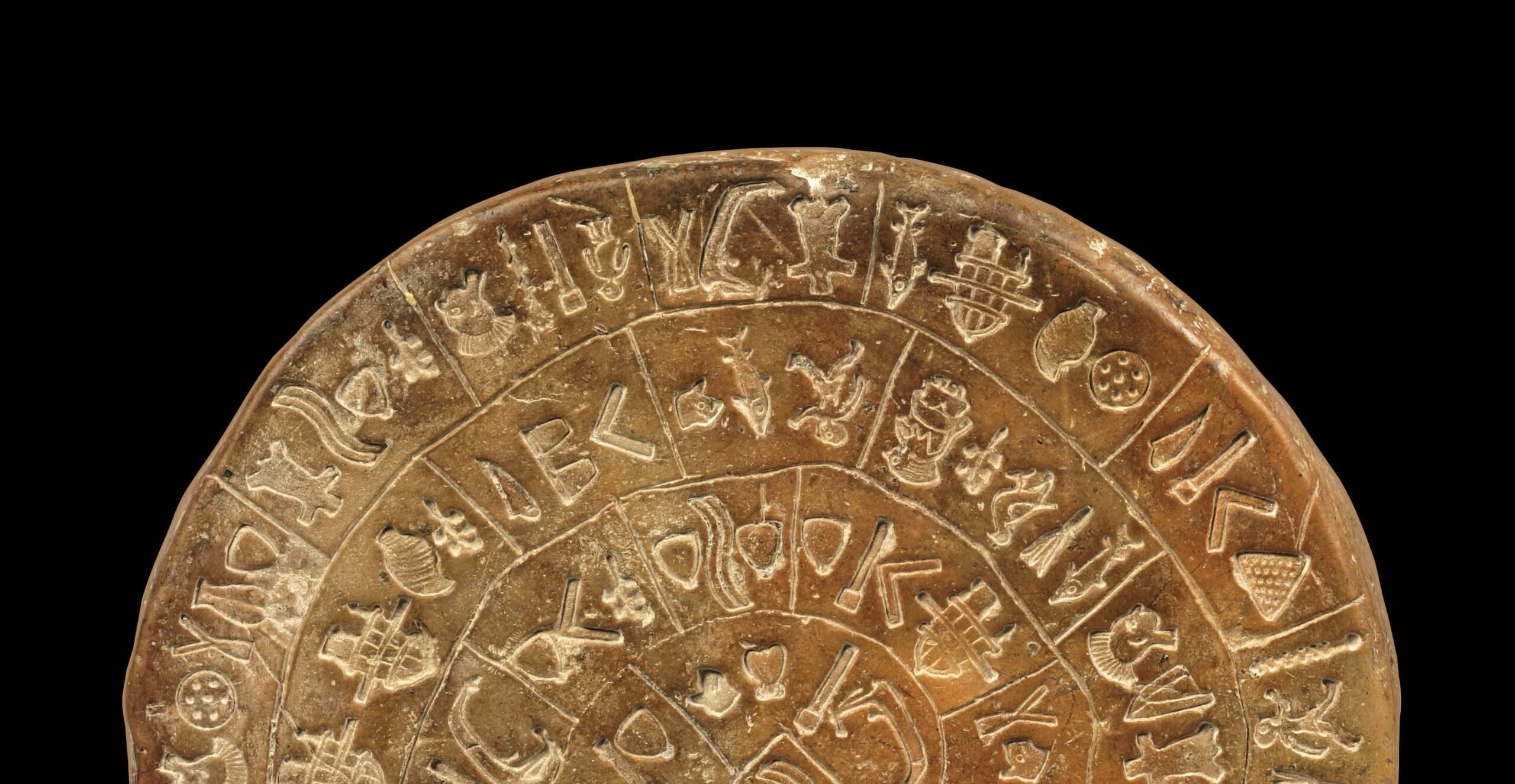
The Phaistos Disc is not just one of the most iconic discoveries of the Minoan civilization, but also one of the most enigmatic, with countless theories attempting to decipher its content.