
The Kouros of Samos, the great survivor
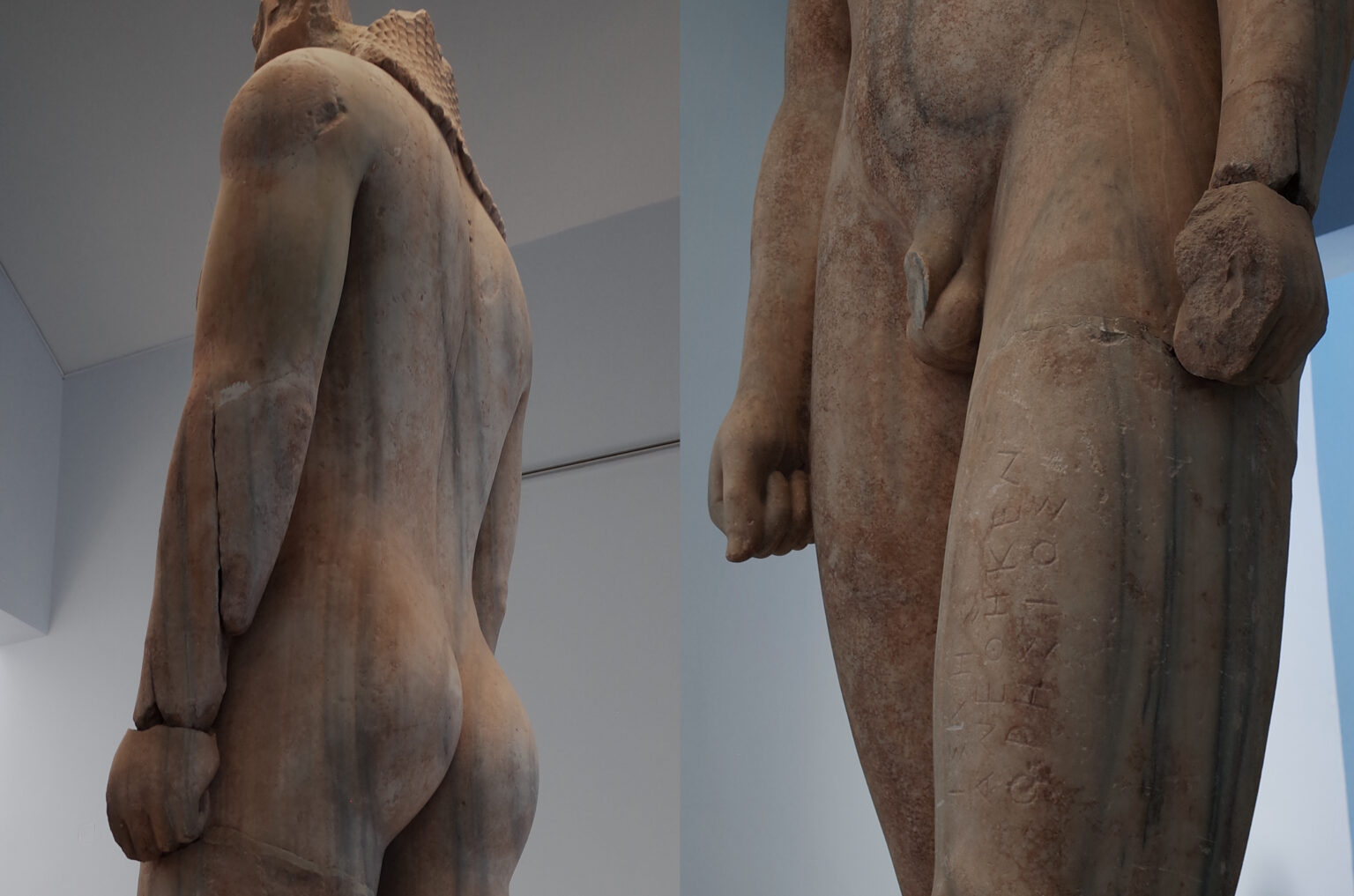
The colossal Kouros of Samos, rising to nearly 5 meters (4.80 to be precise), is the largest of its type to have survived almost intact to this day.
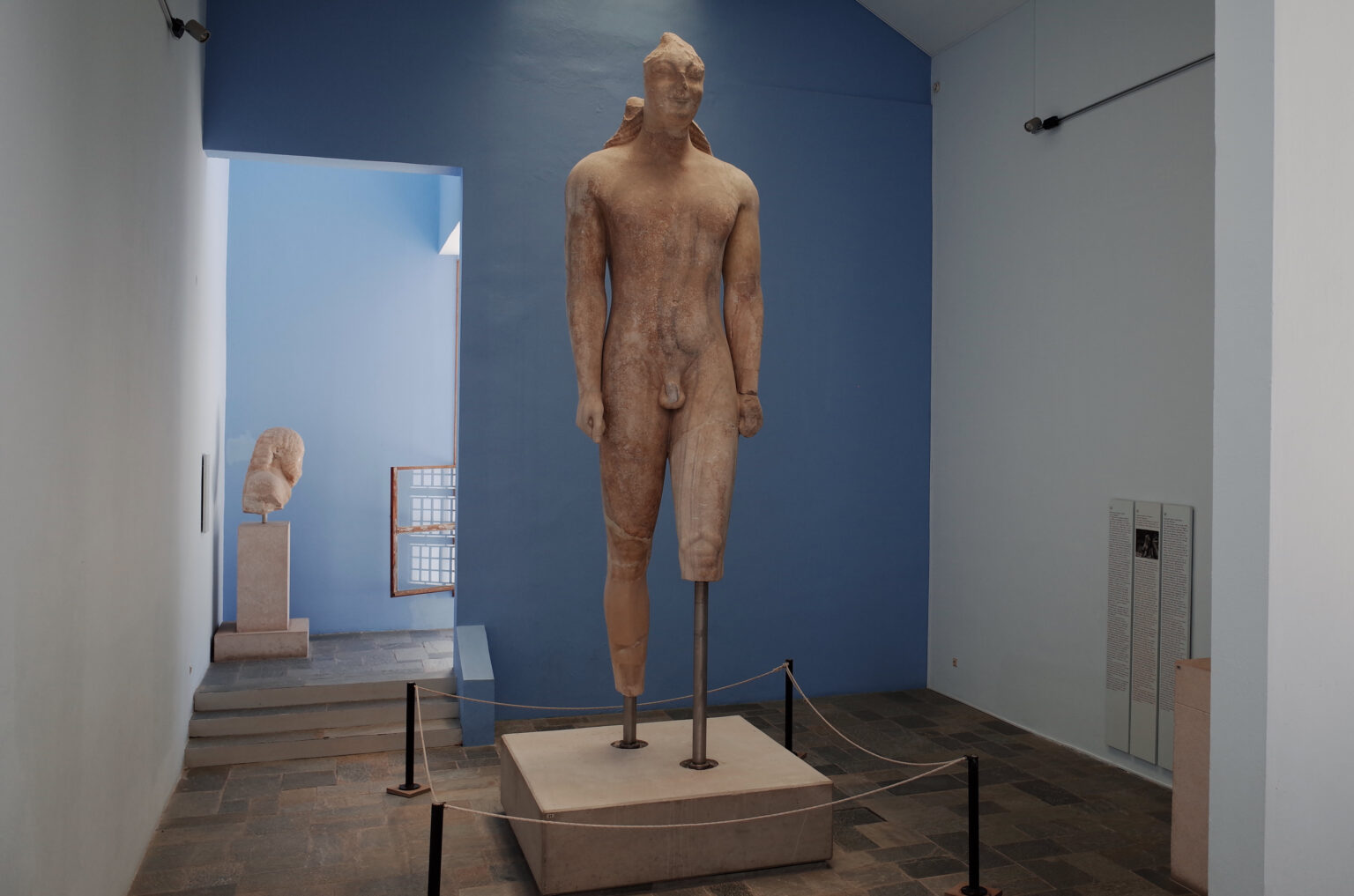
It is certainly not the largest example of this sculptural type – let’s not forget the Colossus of the Naxians on Delos, standing 9 meters tall, or the Apollo Kouros on Naxos, towering at 10.7 meters. Yet, the first survives only in fragments, while the second remains unfinished, ceding first place to the Kouros of Samos, which visitors can admire in the Archaeological Museum of Vathy.
Although the Kouros of Samos has been removed from its natural habitat, along the Sacred Way of the Heraion, where it was found buried under just 20 centimeters of soil, its idealized form is nevertheless awe-inspiring.
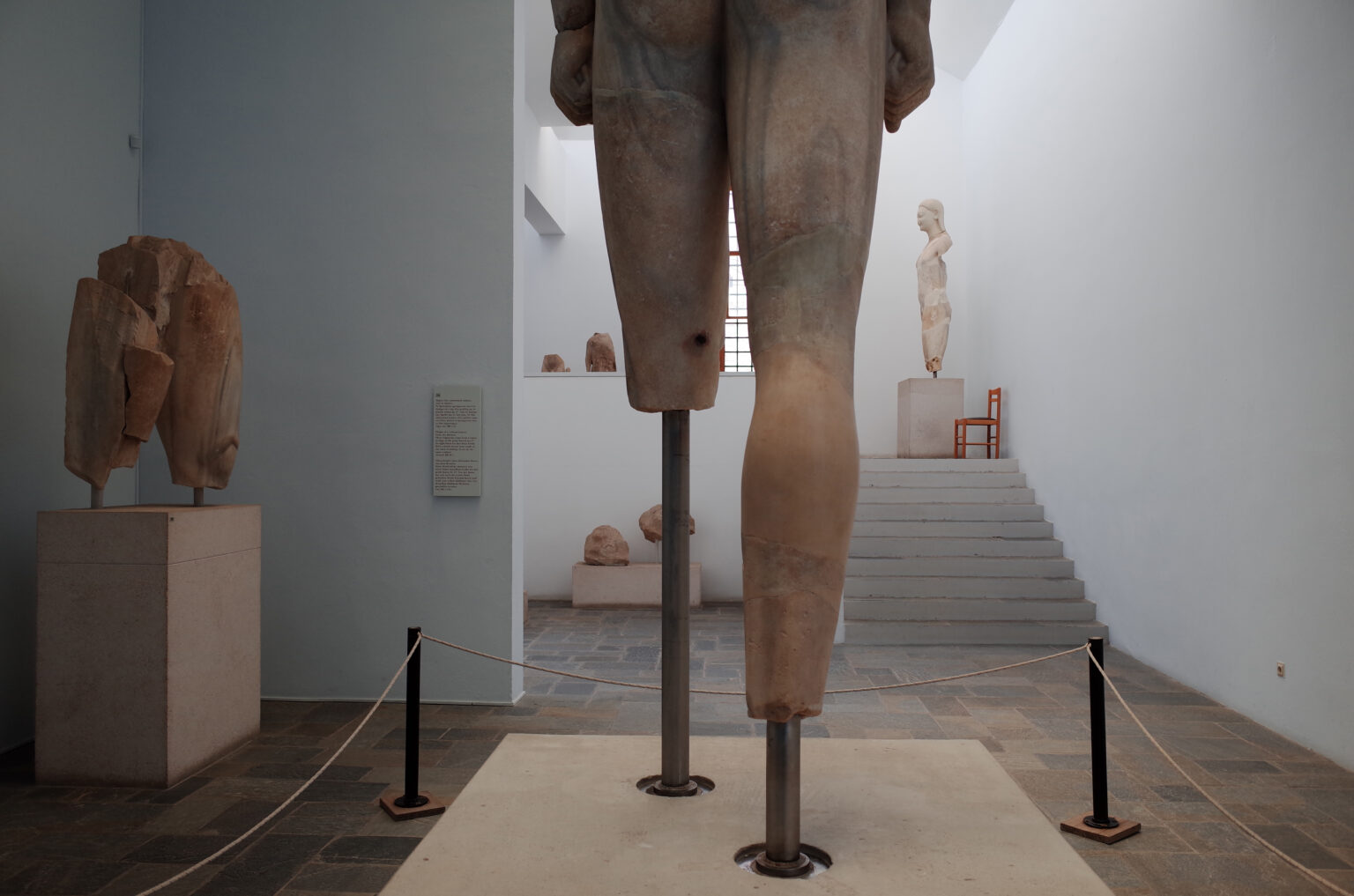
Although it has been removed from its natural habitat, along the Sacred Way of the Heraion, where it was found buried under just 20 centimeters of soil, its idealized form is nevertheless awe-inspiring. It was discovered in the 1970s, when archaeologists unearthed its gigantic right shin. The torso, thighs and arms followed in the 1980s and four years later its head and part of the face.
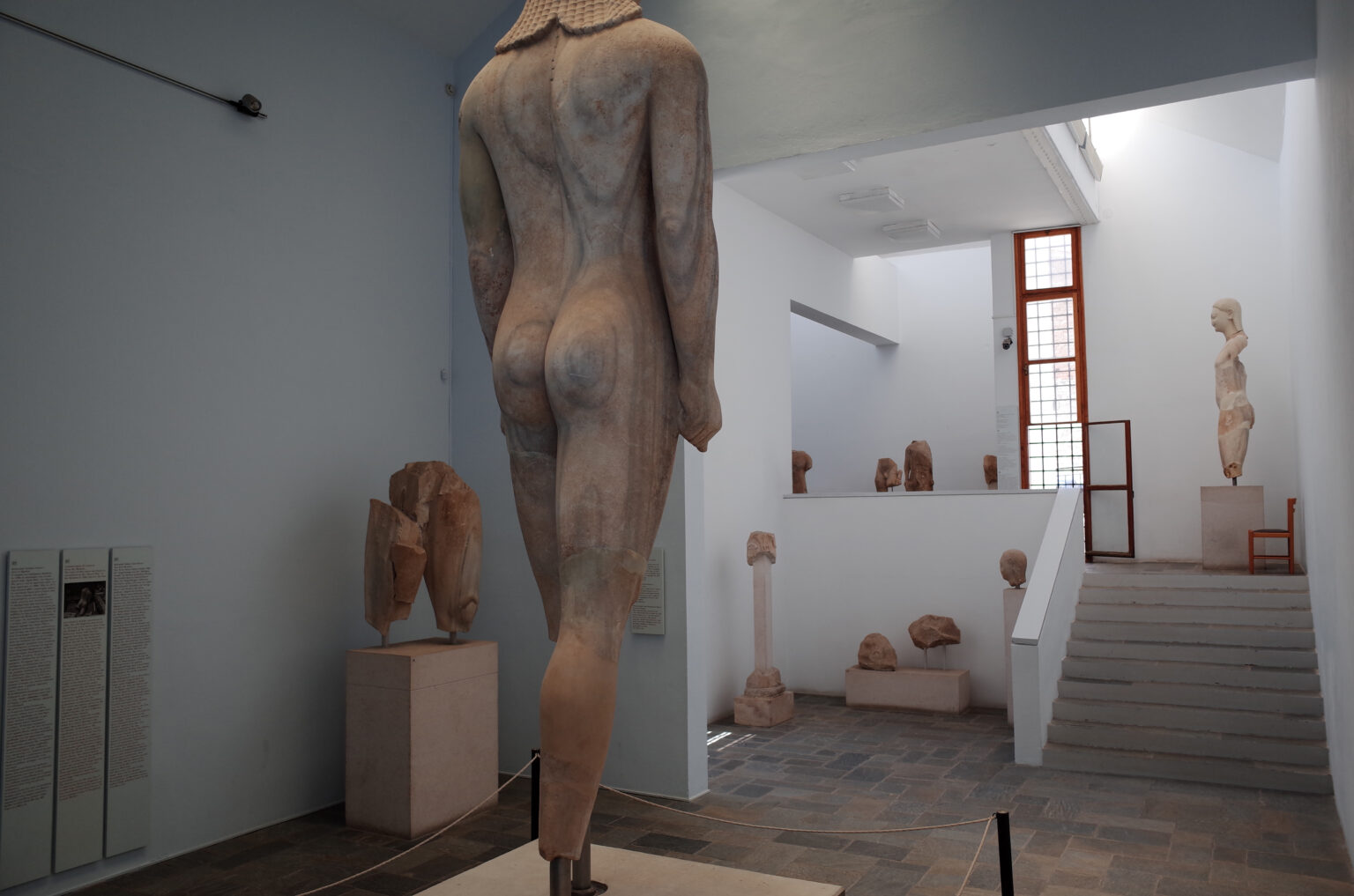
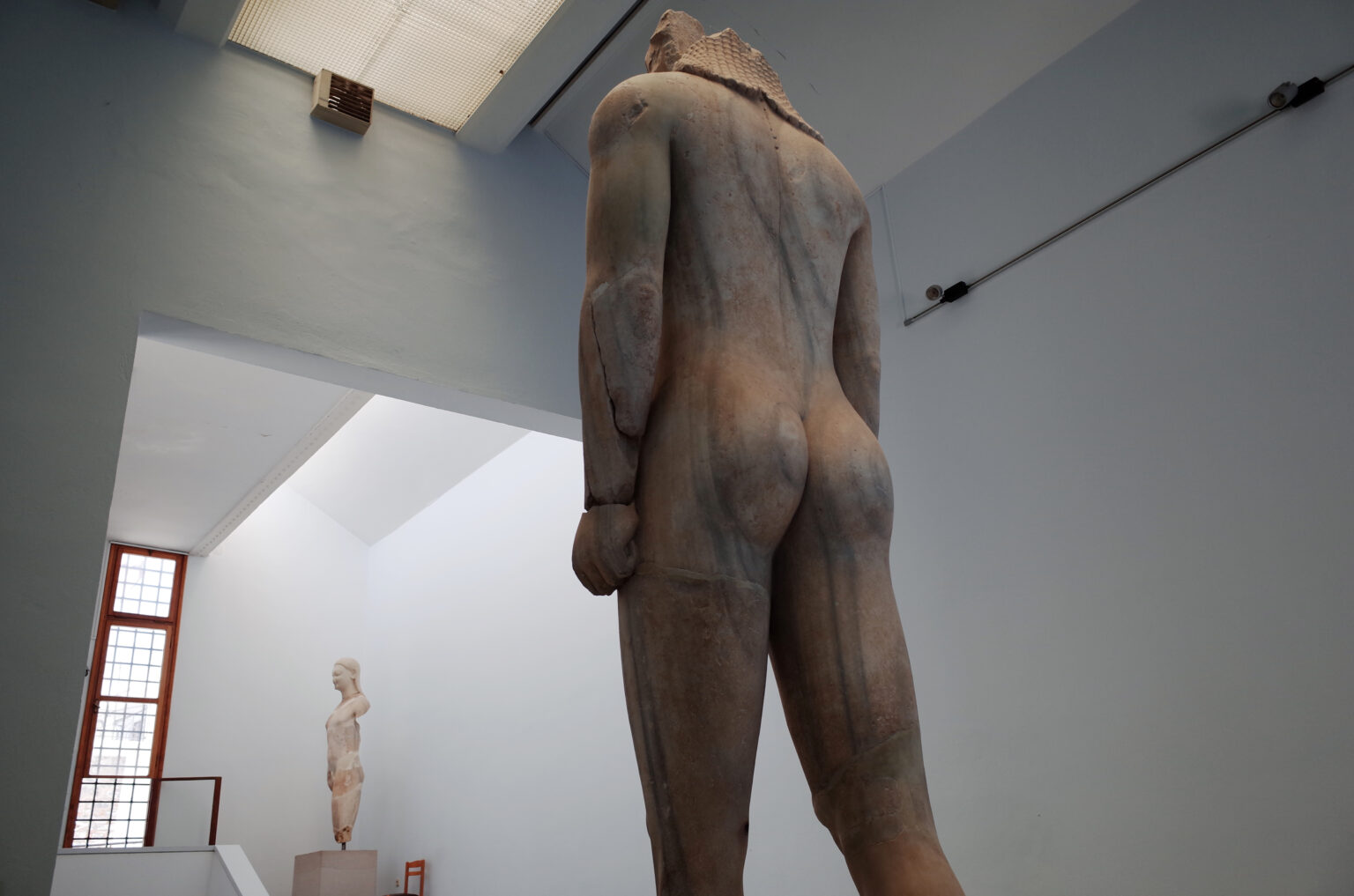
Speaking of the face, one cannot help but acknowledge its almost Egyptian beauty: the broad face, the high forehead, the elongated, almond-shaped eyes and full lips – features characteristic of the eastern Aegean style, very different to the robust aesthetic of the Argive kouroi from Delphi or the linear elegance of their Cycladic counterparts. It is no coincidence that this statue was built using the Samian cubit, identical to the Egyptian cubit – a unit of measurement representing the distance from the elbow to the fingertip – which betrays the close relationship between Samos and Egypt during the 6th century BC.
Nobody knows who the artist behind the colossal Kouros of Samos was, but the donor is clearly inscribed on the statue’s right thigh: “Isches, son of Rhesios”. His name does not appear in other ancient scriptures, yet it is evident he was among the wealthiest citizens of Archaic Samos, where both living and artistic standards were exceptionally high. And where great wealth gave rise to both generosity and vanity.
See also
Iphigenia in black and white
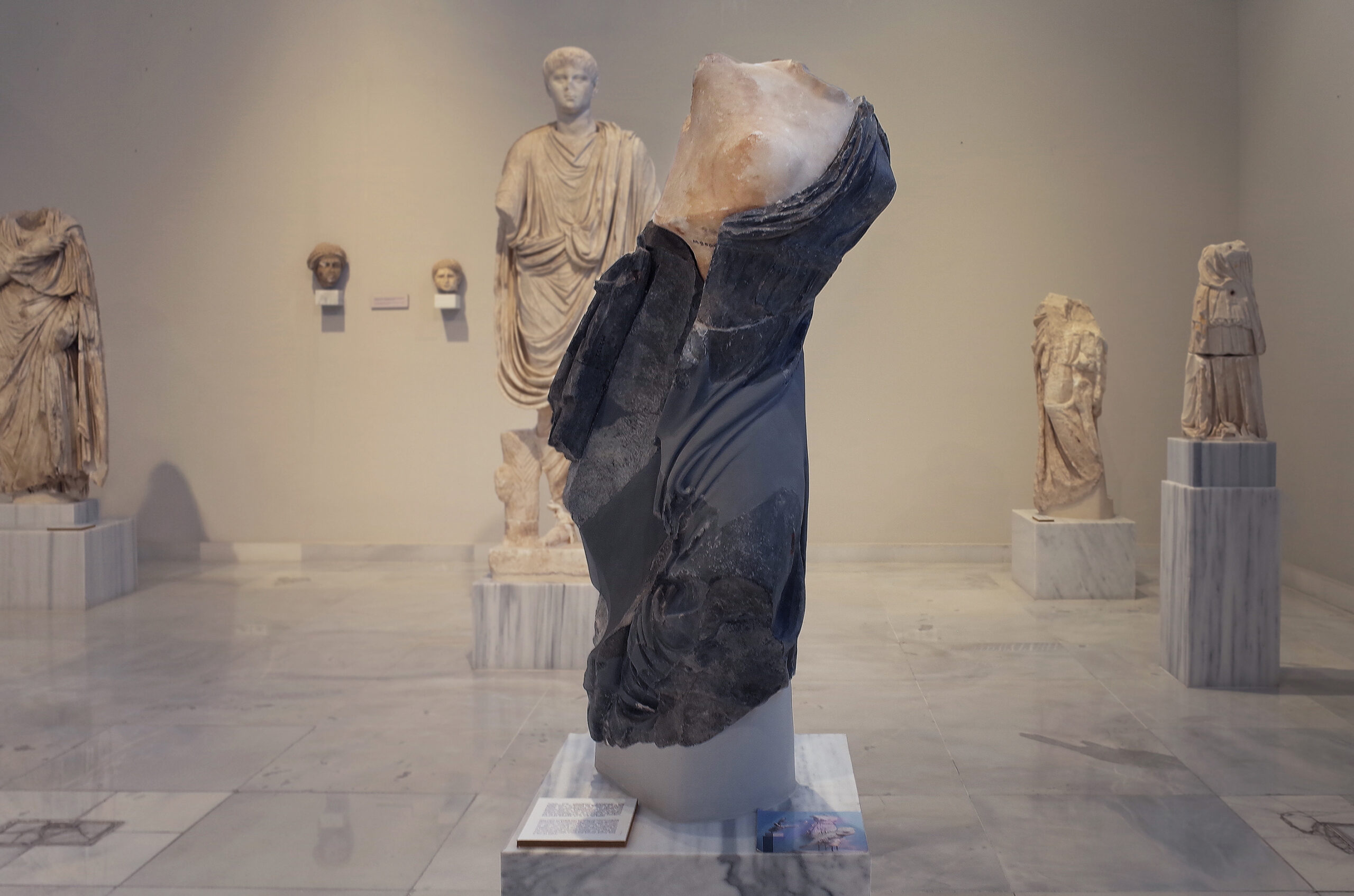
The statue of Iphigenia – a female figure in flight – may not be the most famous exhibit of the Archaeological Museum of Pythagoreio in Samos, but it is a rare example of hybrid sculpture well worth seeing in person.
The Antikythera Ephebe and the Roman Empire
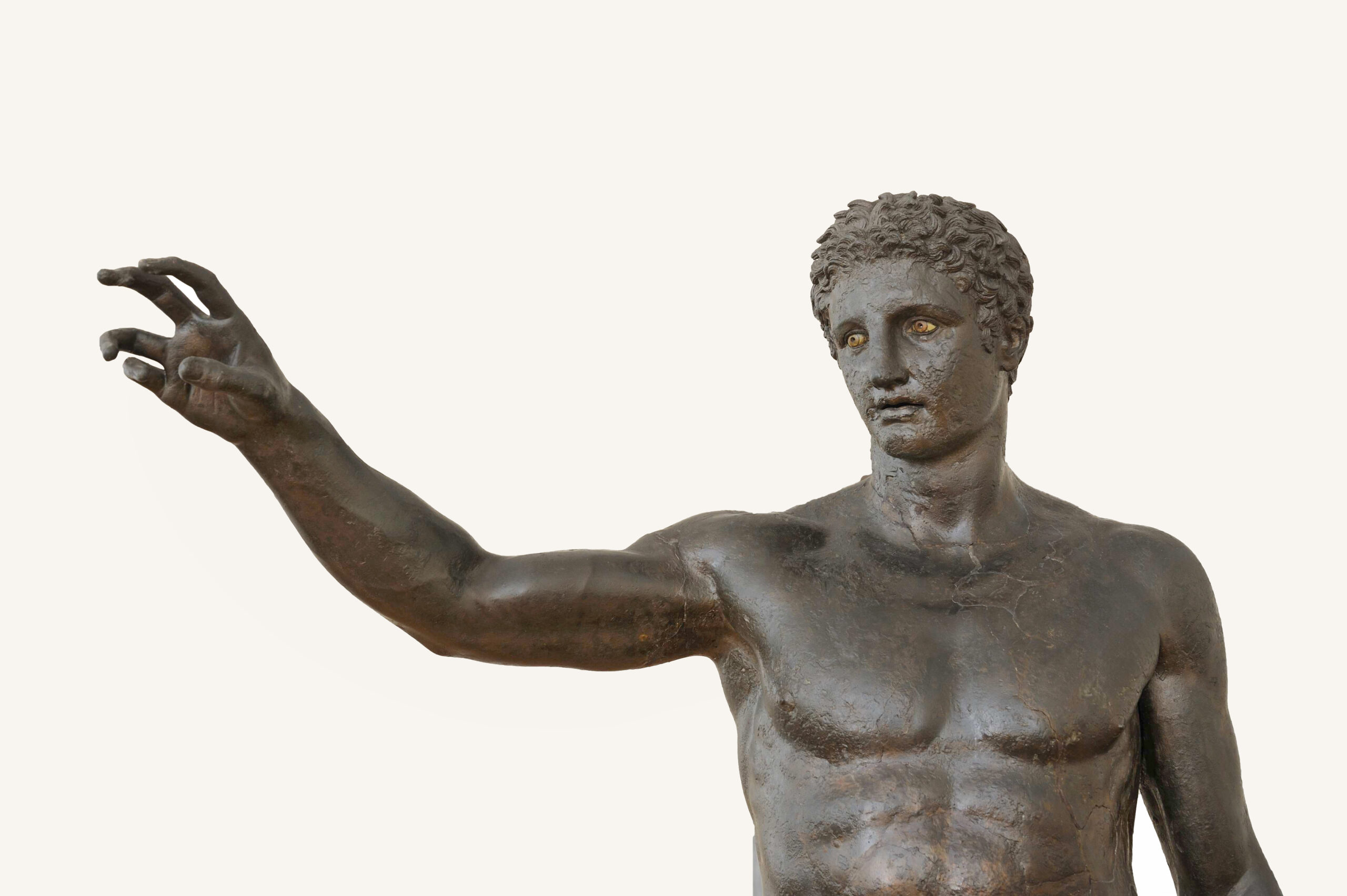
Few people know that most ancient Greek sculptures were actually cast in bronze. But bronze was a precious metal that lived many lives and tended to be reused over and over again, so many of those statues did not survive the passage of time.
The incredible adventures of the Lion of Cythera
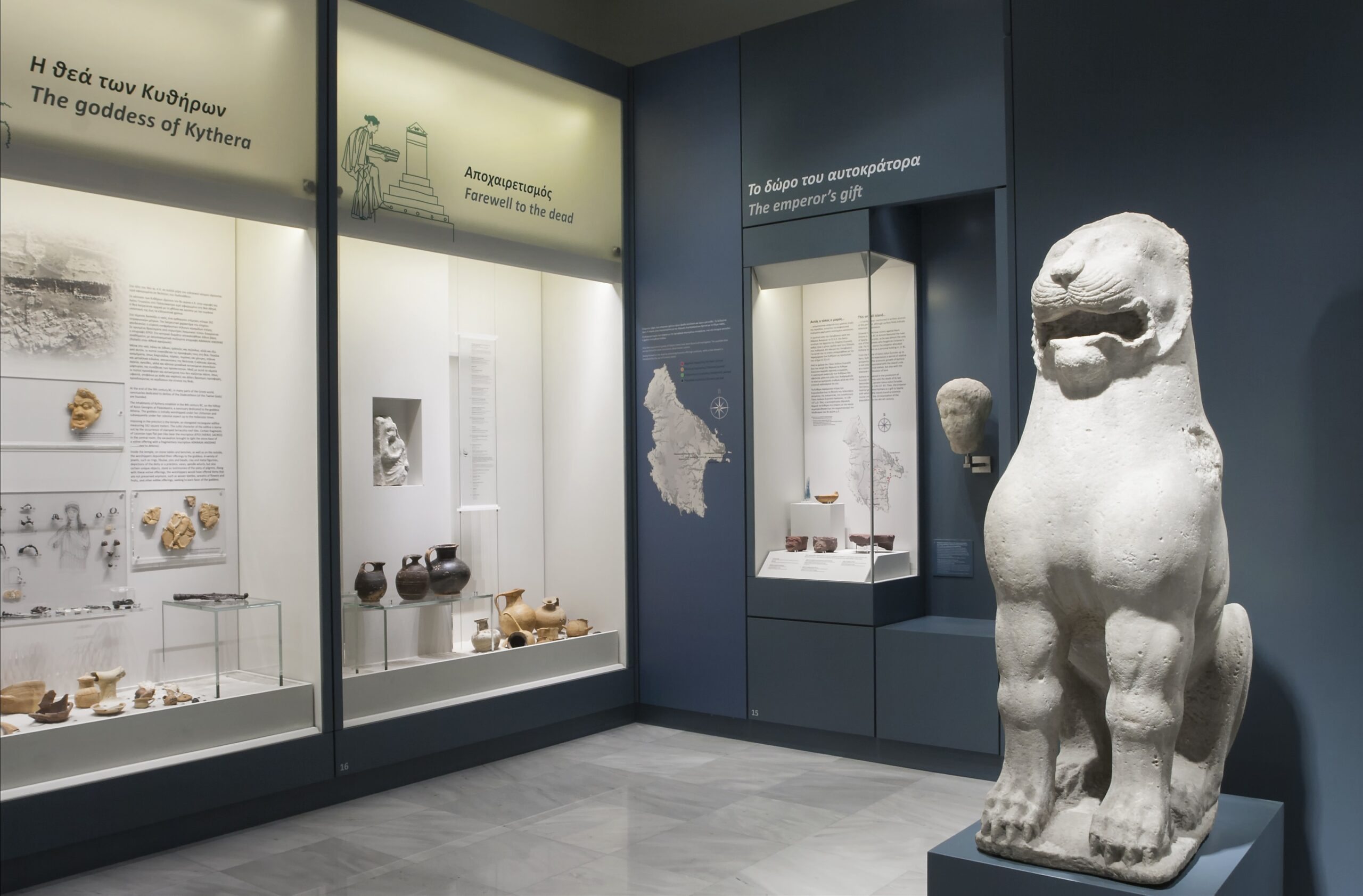
The powerful marble archaic lion that dominates the Archaeological Museum of Cythera has endured a true odyssey – changing hands and homes many times over before finally finding a permanent shelter.