
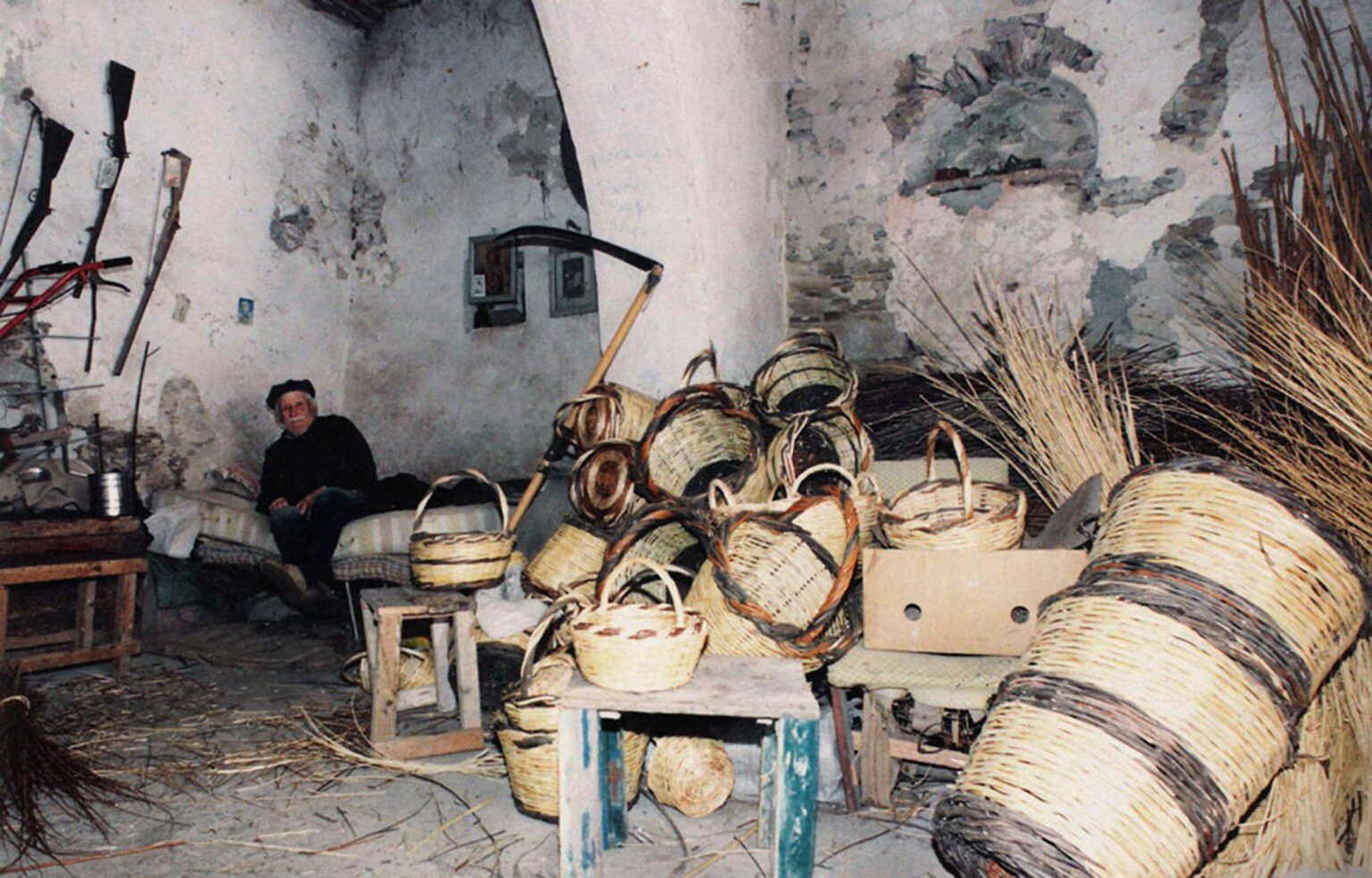
The art of basket weaving in Volax
Folk Life
Volax, the Tinian village with the unusual name and the mysterious lunar landscape that has led to endless speculations about fallen meteorites, was once one of the most important basket-weaving centers in Greece.
Built on a small plateau in the heart of Tinos, no one knows exactly when the village was established, but it is certainly one of the oldest on the island. With minimal modern interventions, it remains one of the most impressive destinations in the Cyclades, glowing with freshly whitewashed houses and well-kept courtyards.
The enormous rocks, locally known as volia, that gave the village its name and continue to form an integral part of the landscape, are in fact eroded granite boulders and often serve as walls for the traditional houses. The inhabitants of the village were exclusively employed in basket-weaving since at least the second half of the 18th century, which allowed them to specialize in a single craft.
The inhabitants of the village were exclusively employed in basket-weaving since at least the second half of the 18th century, which allowed them to specialize in a single craft.
Today, only a few basket weavers remain in the village of Volax, keeping their art alive through sheer determination. Luckily, the island’s recent rise in tourism has attracted a whole new audience to their painstakingly made products. Most importantly, the locals refuse to let their traditions disappear, following the same processes for collecting and preparing the materials and weaving the baskets they were taught by their predecessors, as if nothing has changed. Their dogged determination has paid off, since in 2019 the local basket-weaving tradition was inscribed in the National Inventory of Intangible Cultural Heritage of Greece.
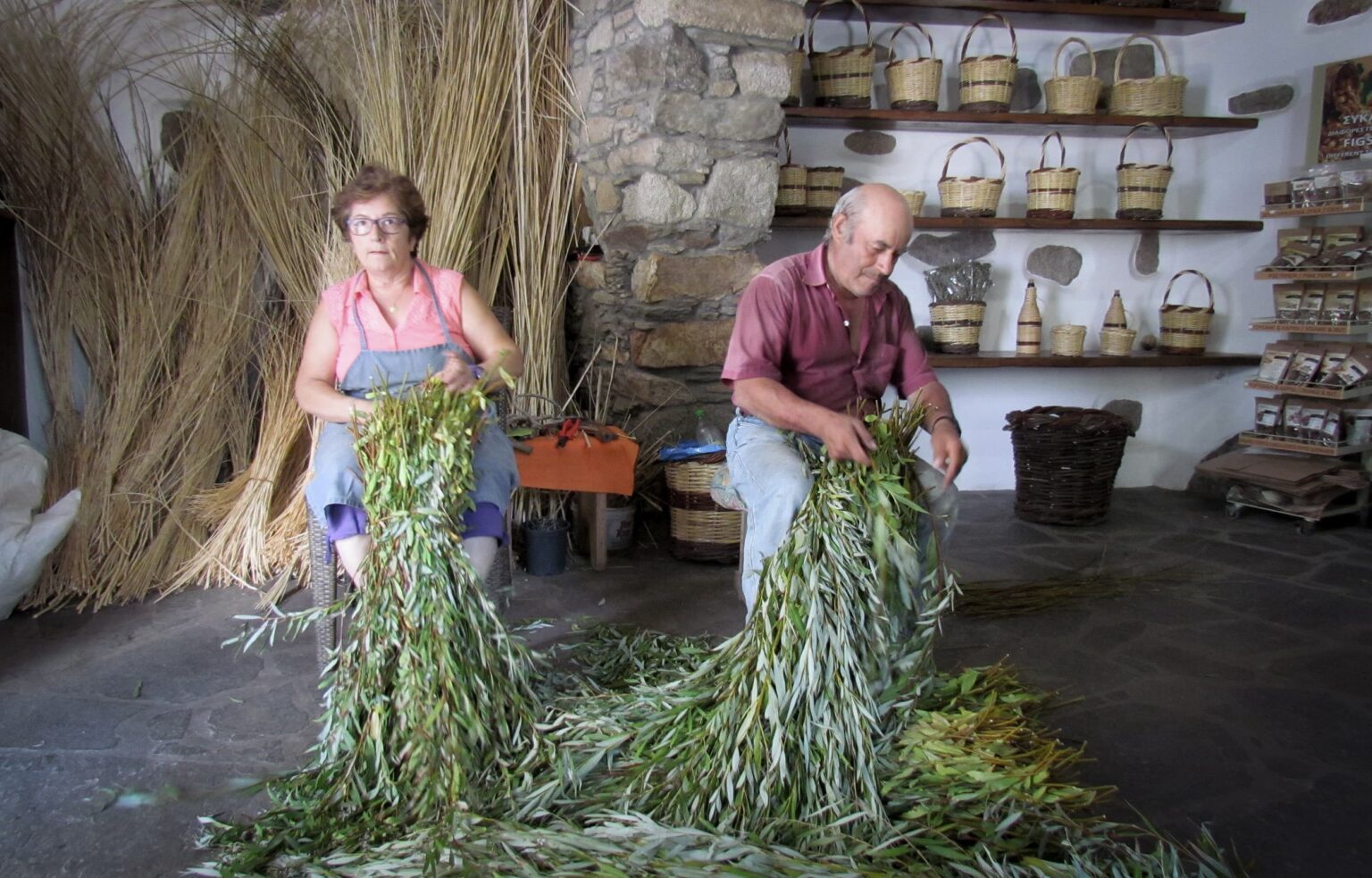
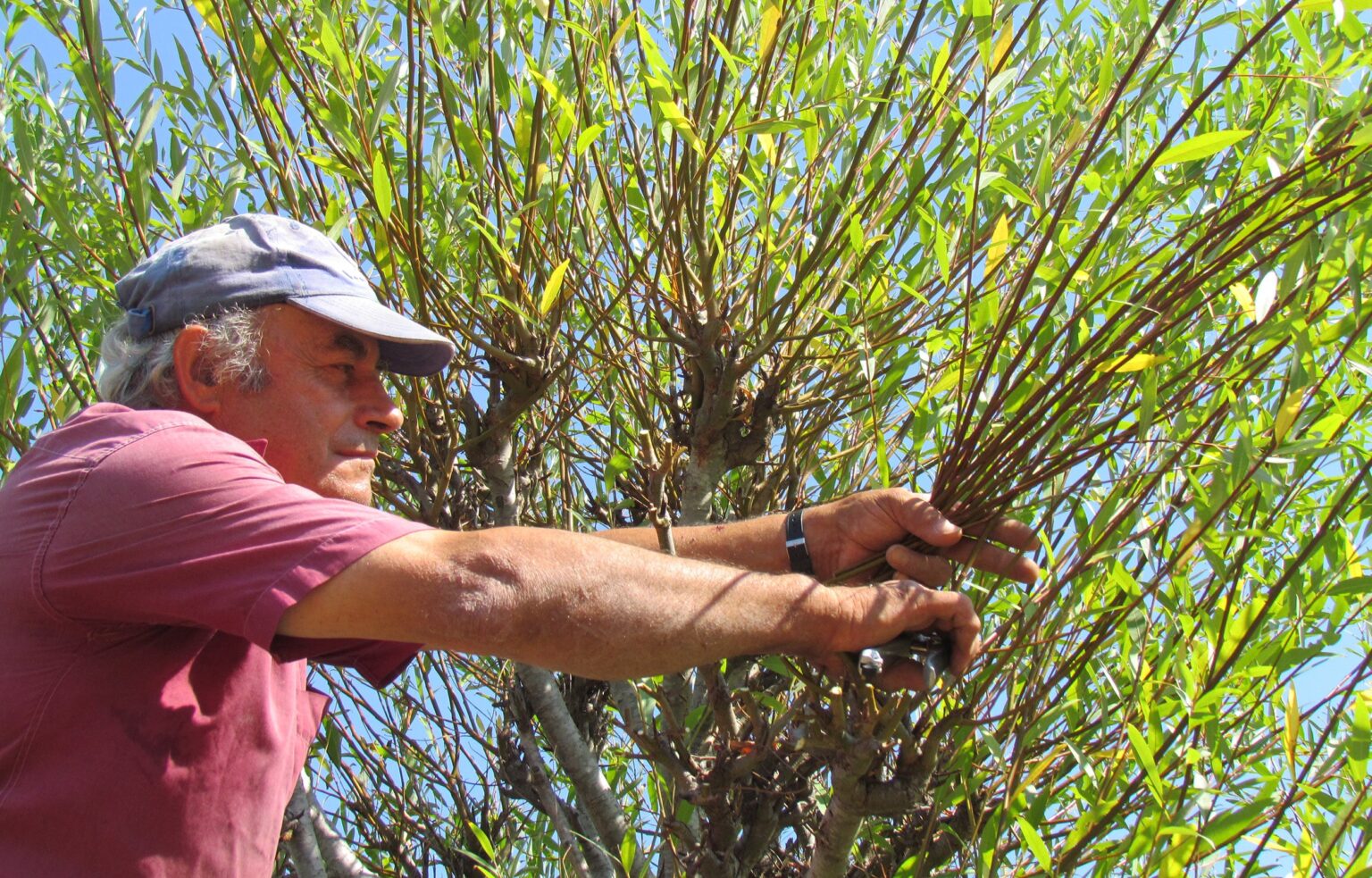
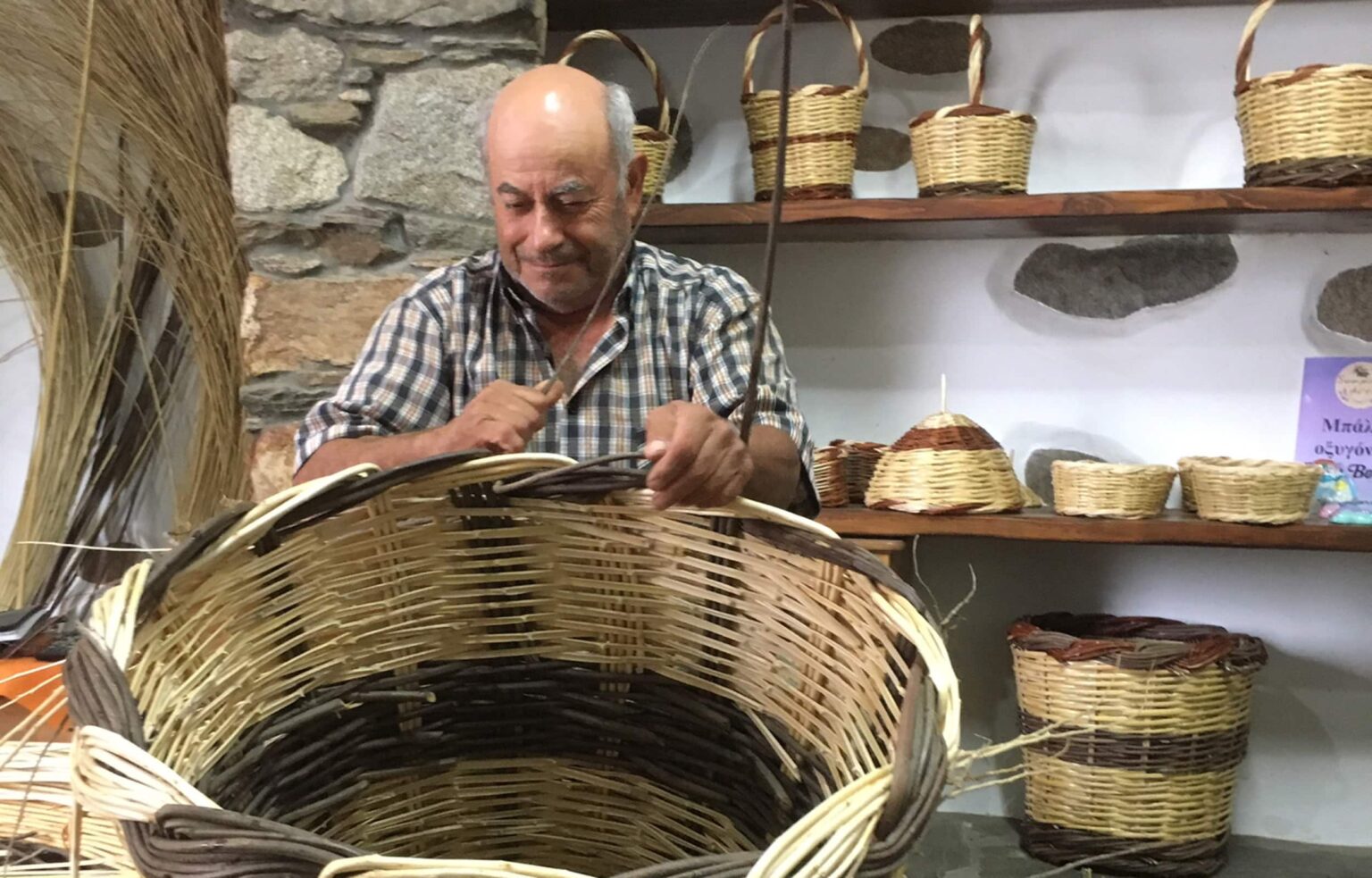
The raw materials used for the baskets are reeds, as well as willow and wicker shoots, harvested during the full moon, otherwise they run the risk of rotting or becoming infested by insects. Each variety is cut at a different time of year and requires its own processing, developing distinct colors and properties as they dry out. This is heavy manual work requiring good physical condition, so back in the day children used to start by doing simpler tasks, while women were in charge of cleaning and sorting the shoots.
Before leaving Volax, be sure to look for the tiny folk museum, a small room filled with beautiful remnants of the village’s communal past, and don’t forget to attend a performance in the newly configured stone amphitheatre.
See also
Mastic: Nature’s tears
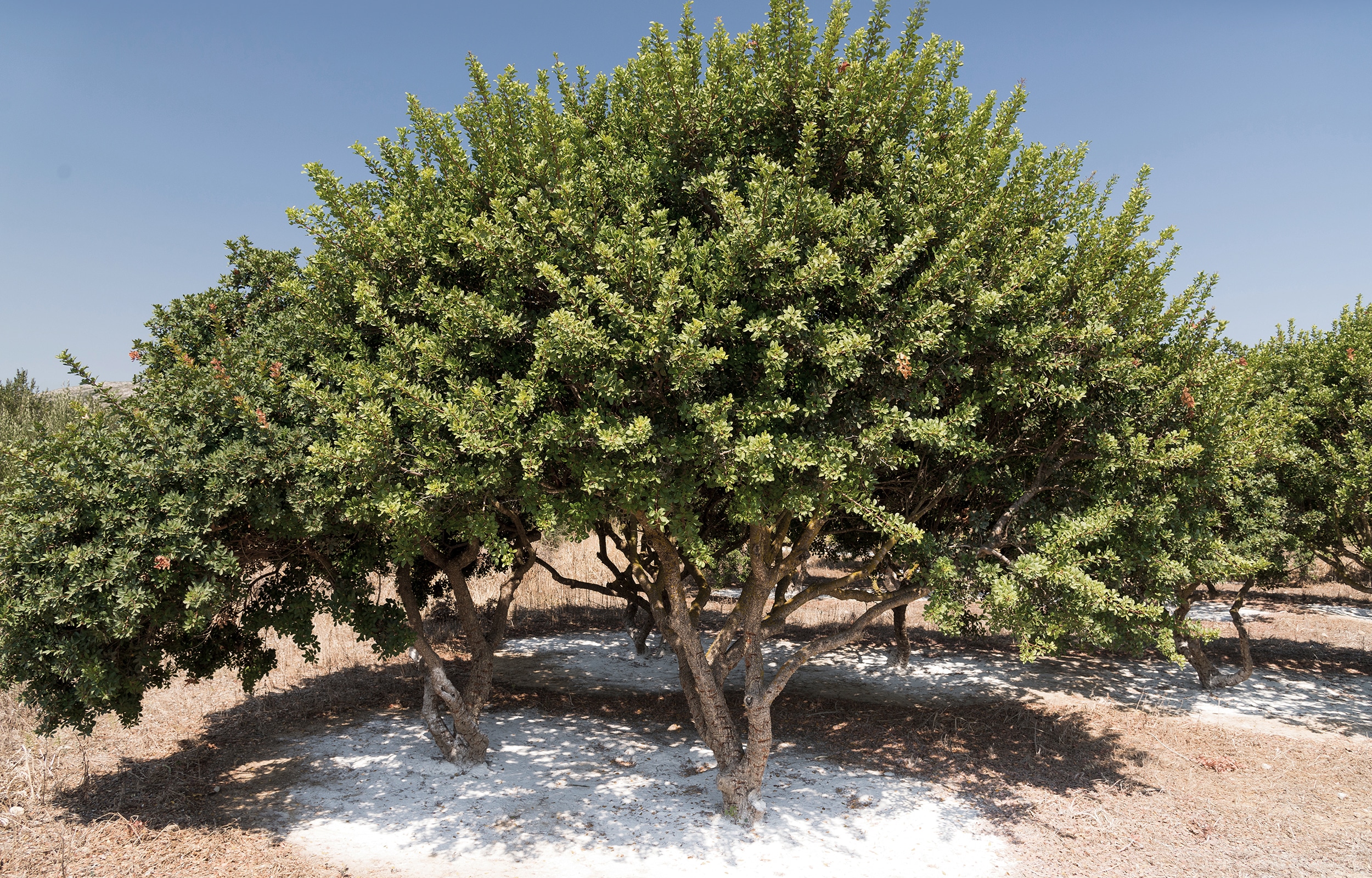
The aromatic tears of a unique variety of mastic tree have been linked to the cultural identity of southern Chios for centuries, as it happens to be the only place in the world where mastic is systematically produced.
The dry-stone landscape of Tinos, a living monument
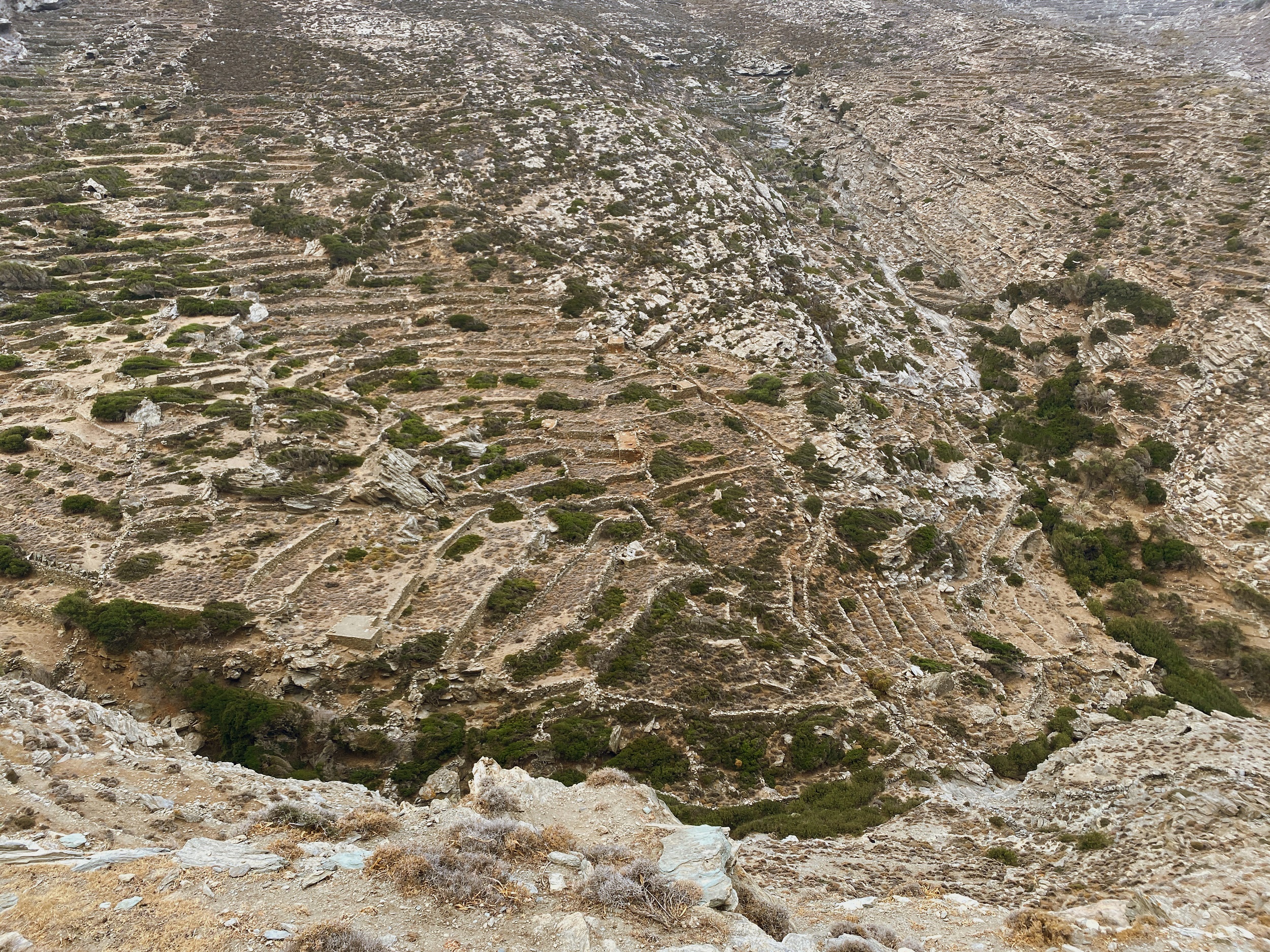
The rural landscape of Tinos is unique in the Aegean, as it represents one of the most intensively cultivated terrains in the Cyclades.
Carob: From humble animal feed to modern superfood
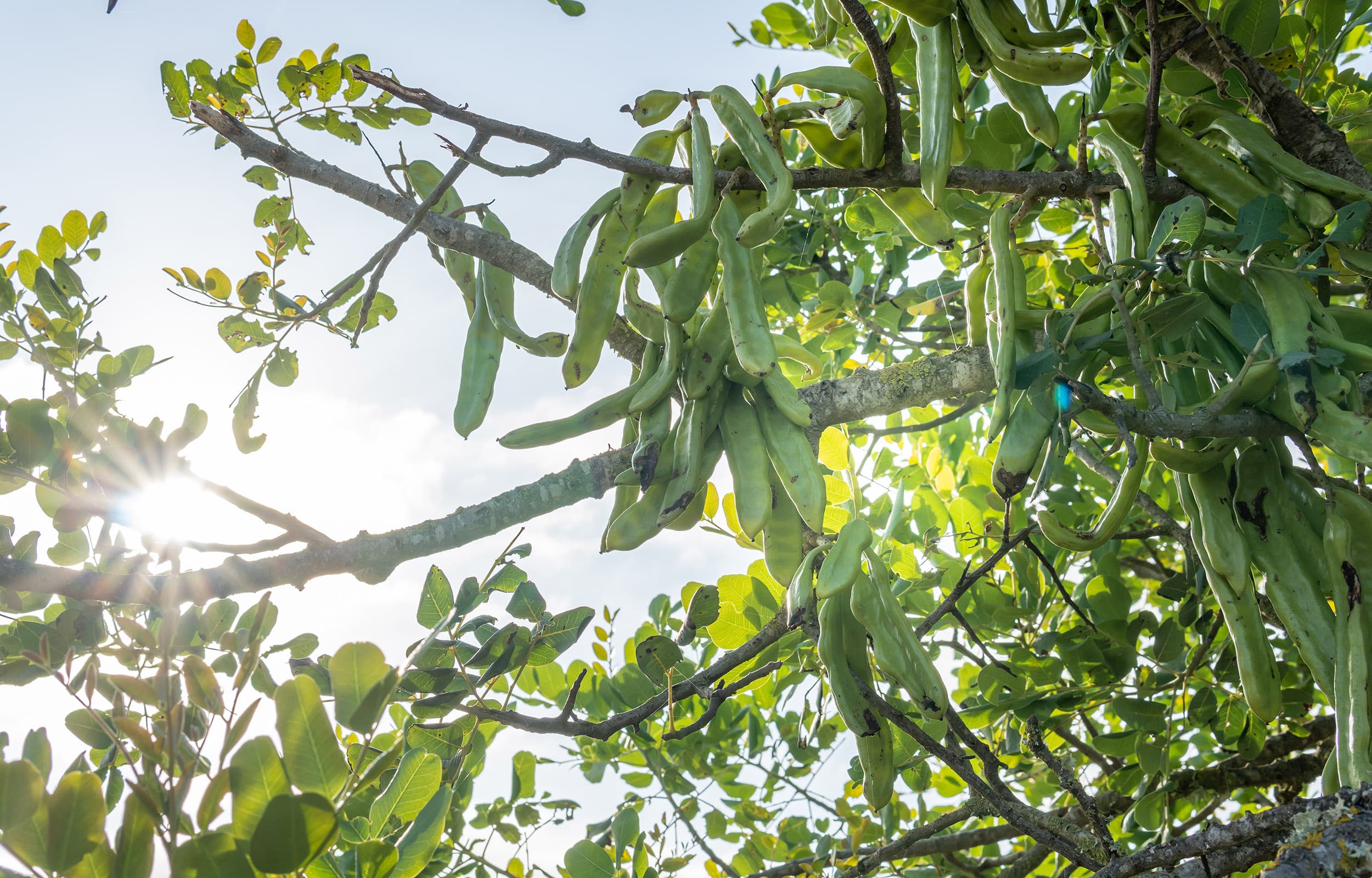
Dominant in the wild Cretan landscape, the carob tree aspires to play an important role on the Mediterranean table, ushering traditional forms of agricultural cultivation back into the spotlight.