
Iphigenia in black and white
Highlights
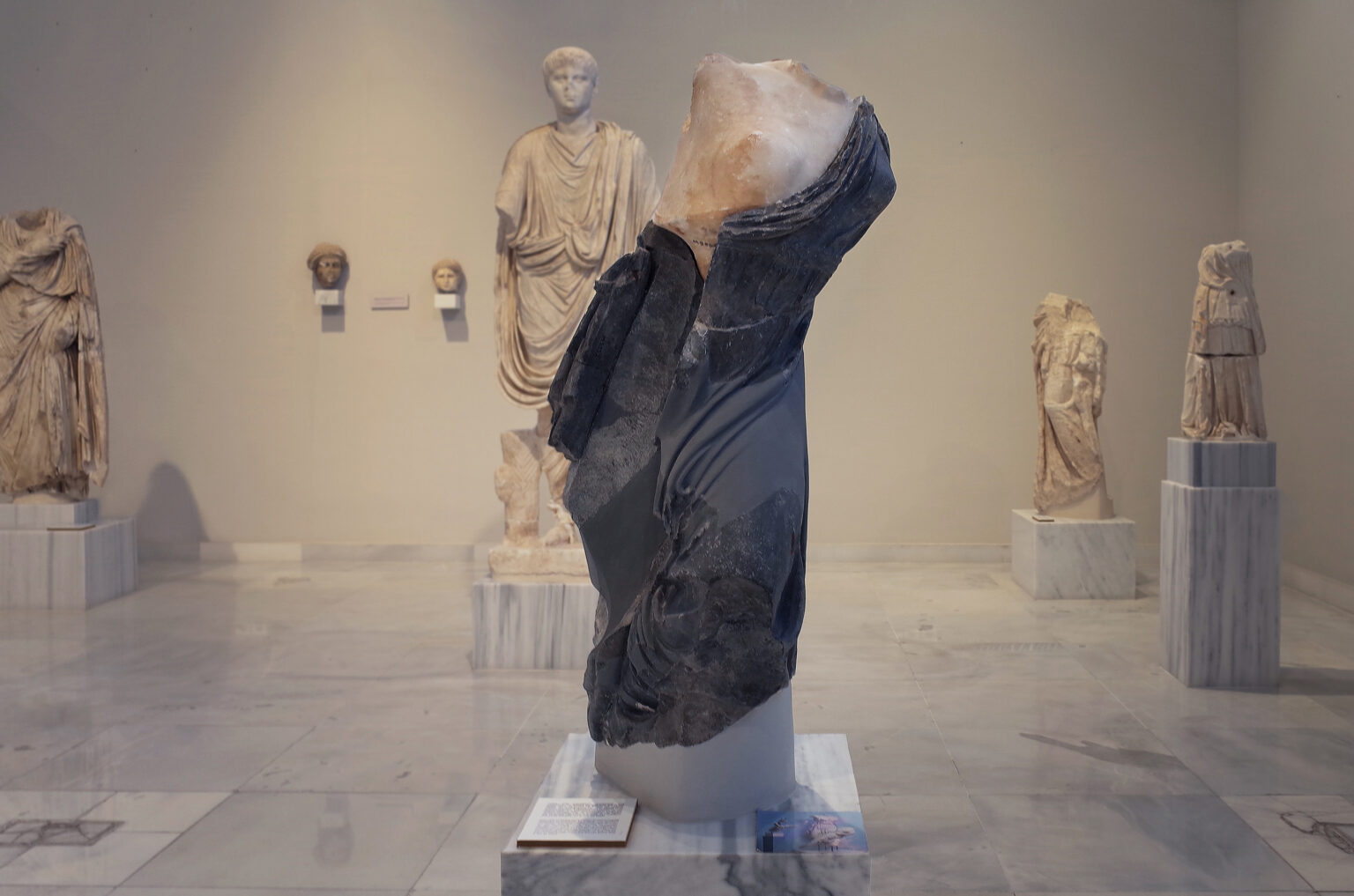
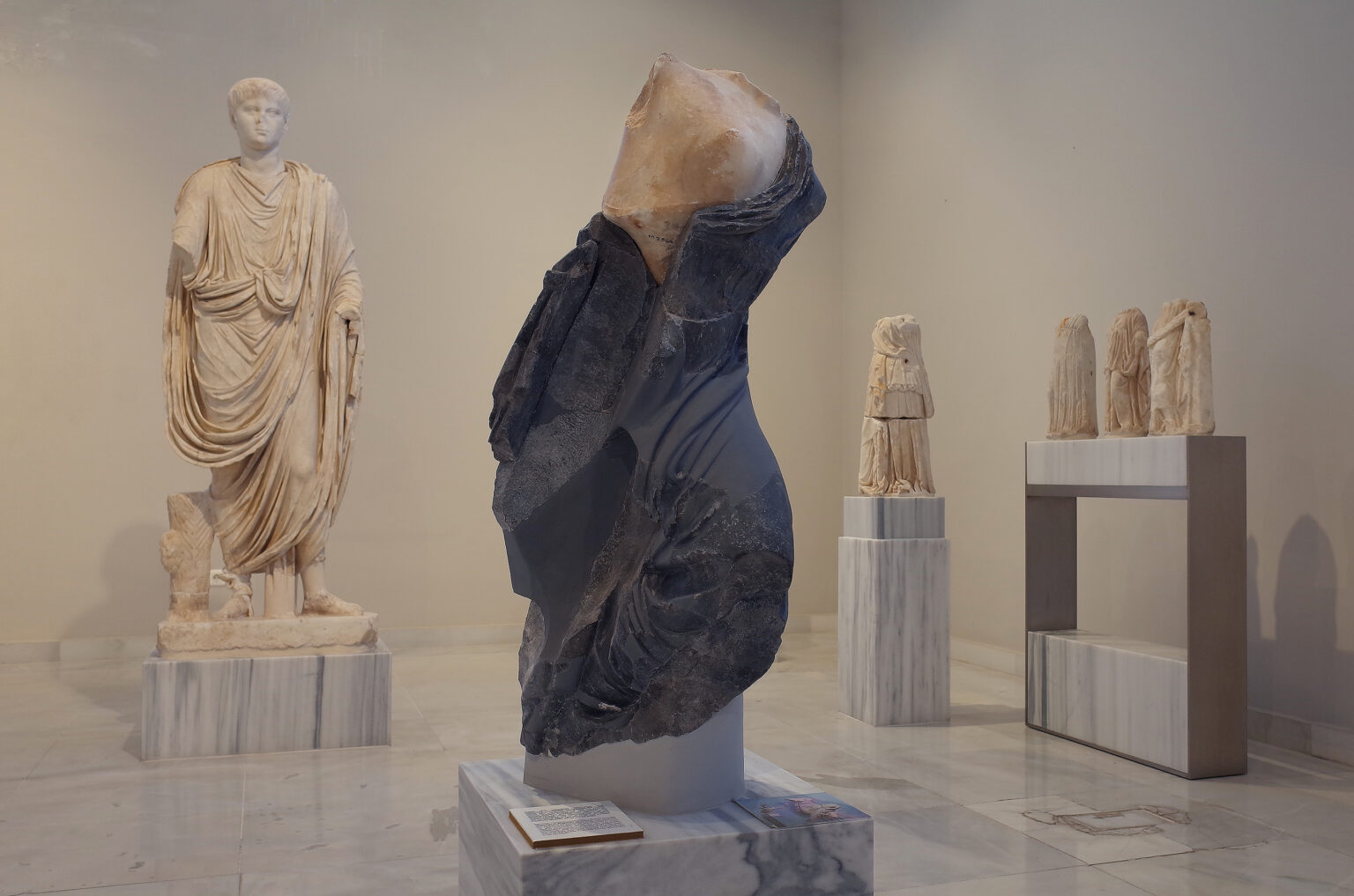
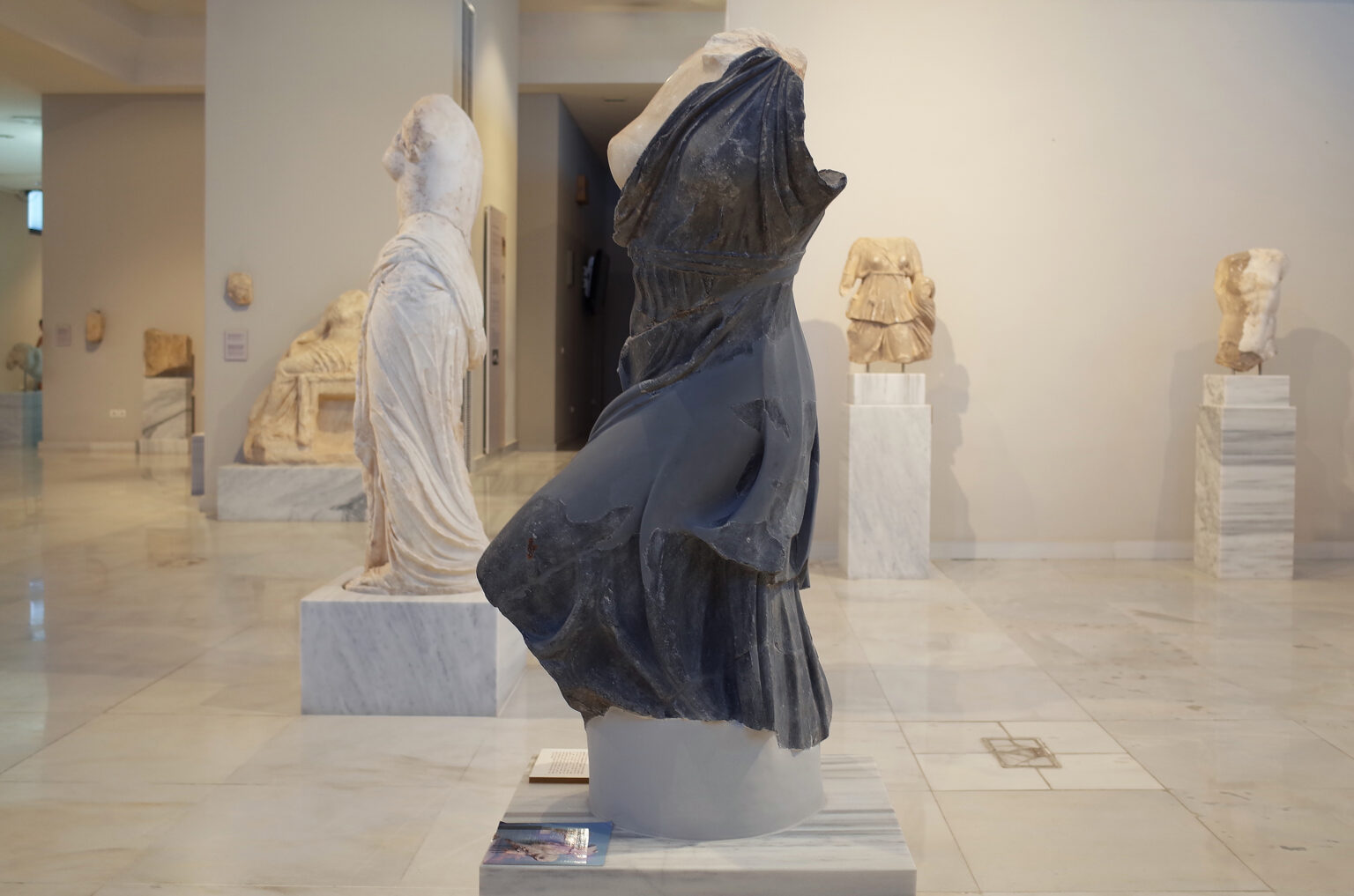
The statue of Iphigenia - a female figure in flight - may not be the most famous exhibit of the Archaeological Museum of Pythagoreio in Samos, but it is a rare example of hybrid sculpture well worth seeing in person.
This beautiful blend of black and white marble – a technique seldom encountered in either ancient Greece or Rome – once formed part of a sculptural complex depicting the abduction of Iphigenia by the goddess Artemis, just as the young daughter of Agamemnon is about to be sacrificed. Her death was meant to secure favorable winds for her father’s fleet, eager to set sail for Troy.
Combining two tones of marble was not common at the time, since the quarrying and transport of multiple kinds of stone for a single work increased both cost and difficulty, which meant that any chromatic variation was achieved with the use of paint, after the sculpture was finished.
Although the statue’s head is no longer preserved, the expressiveness of the torso – caught in full rotation, with the left shoulder pulling the rest of the body into a forceful movement that almost defies the laws of gravity – offers a vulnerable expression of femininity. The texture of the chiton and the girl’s nearly transparent limbs are beautifully rendered by the artist, distinguishing the fabric from her bare flesh with black and white marble.
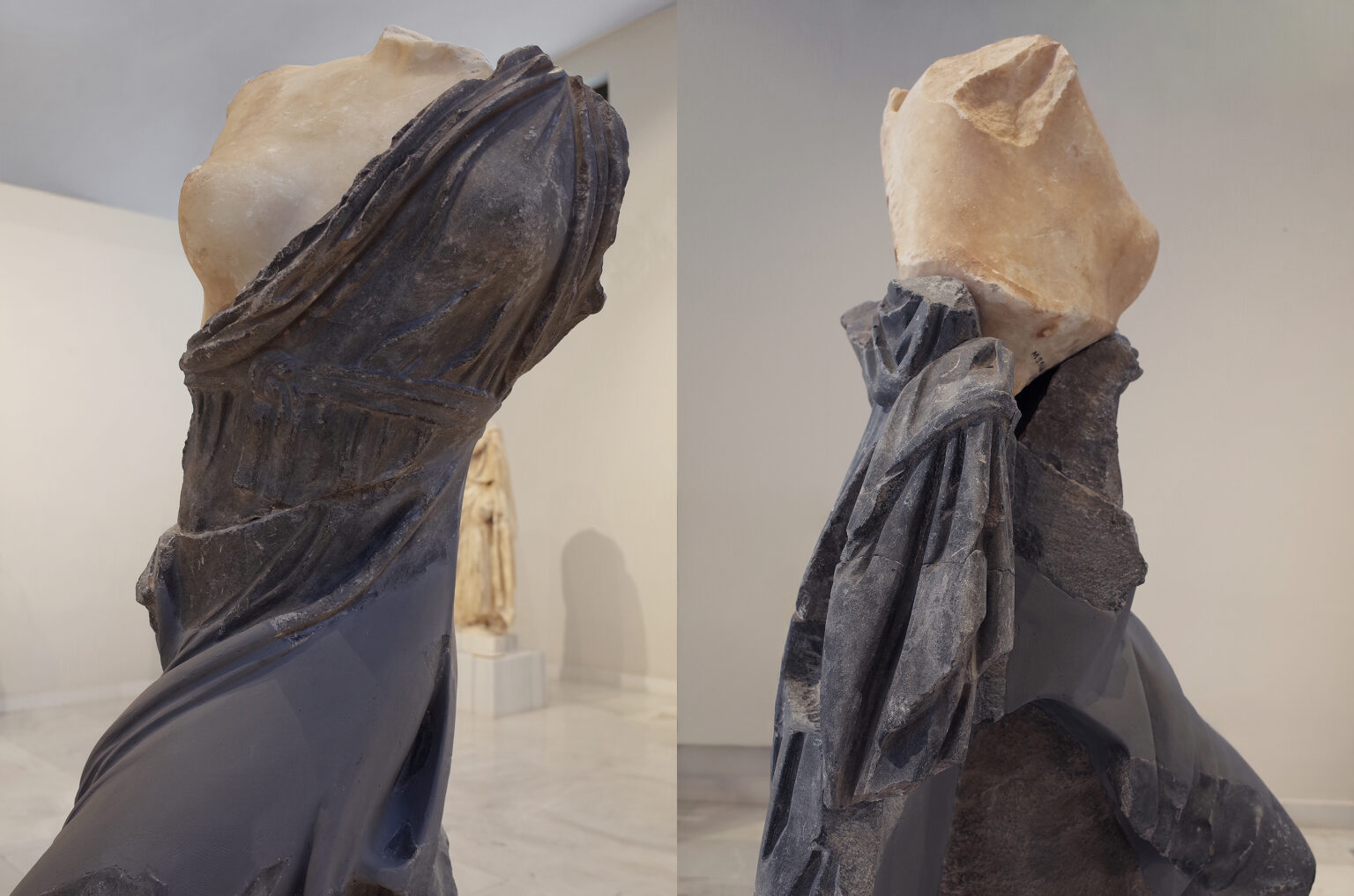
This specific technique was not common at the time, since the quarrying and transport of multiple kinds of marble for a single work increased both cost and difficulty, which meant that any chromatic variation was achieved with the use of paint, after the sculpture was finished.
This rare version of Iphigenia, currently on display at the Archaeological Museum of Pythagoreio, dates back to the 2nd century AD and was discovered in the Roman Baths of Samos, richly decorated with statues, mosaics and frescoes.
See also
The Kouros of Samos, the great survivor
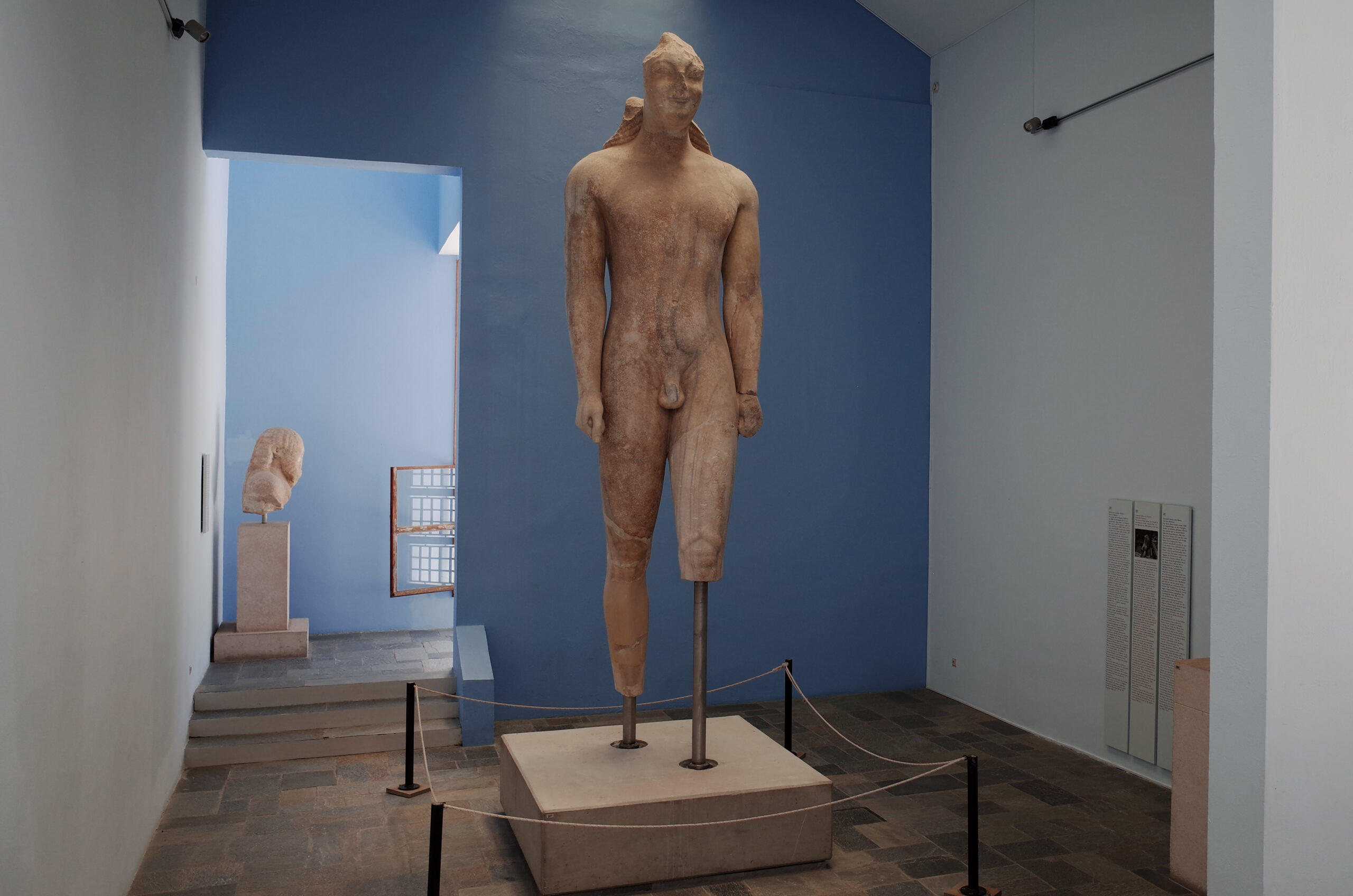
The colossal Kouros of Samos, rising to nearly 5 meters (4.80 to be precise), is the largest of its type to have survived almost intact to this day.
The Antikythera Ephebe and the Roman Empire
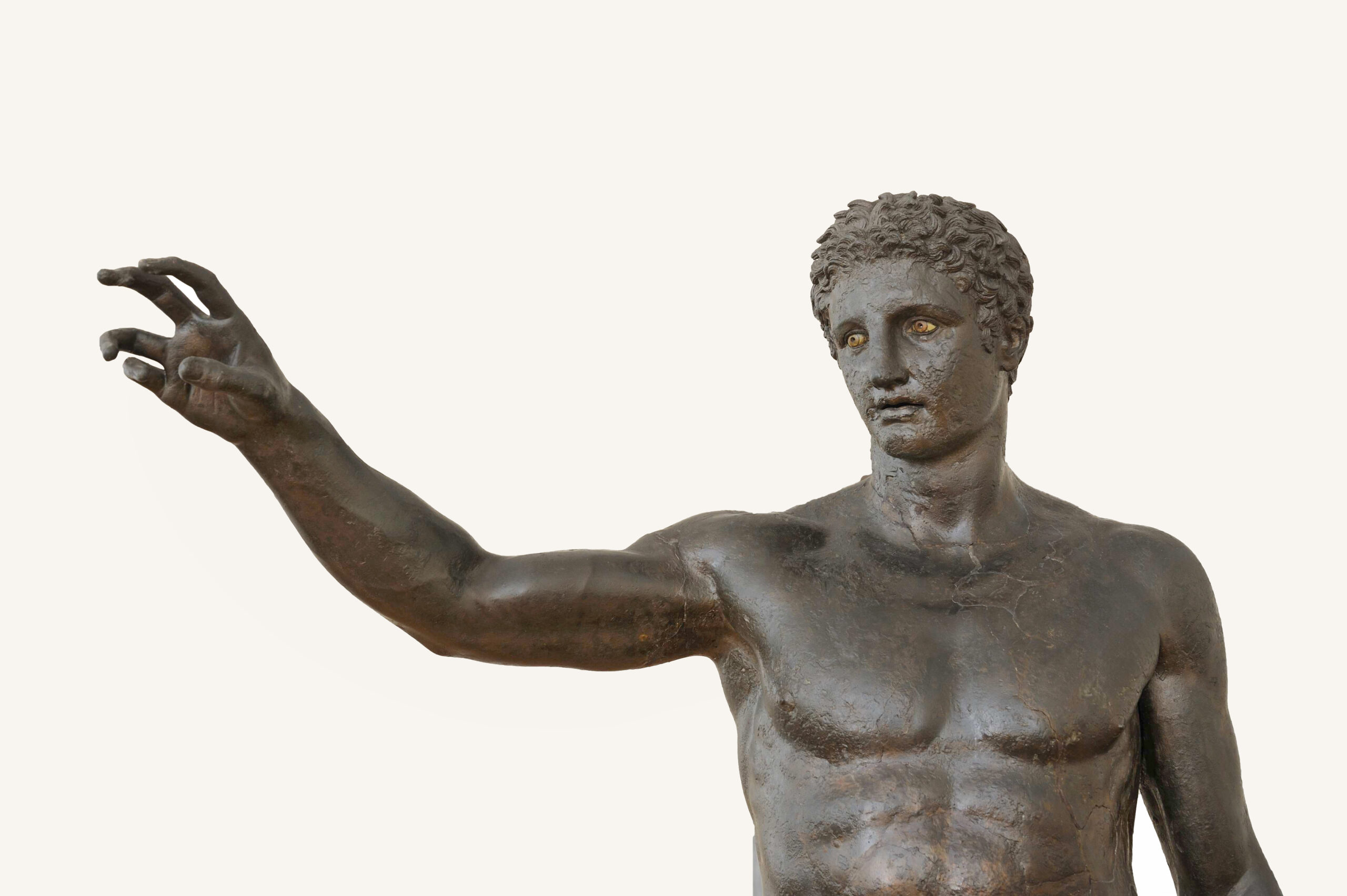
Few people know that most ancient Greek sculptures were actually cast in bronze. But bronze was a precious metal that lived many lives and tended to be reused over and over again, so many of those statues did not survive the passage of time.
The Phaistos Disc: An eternal enigma
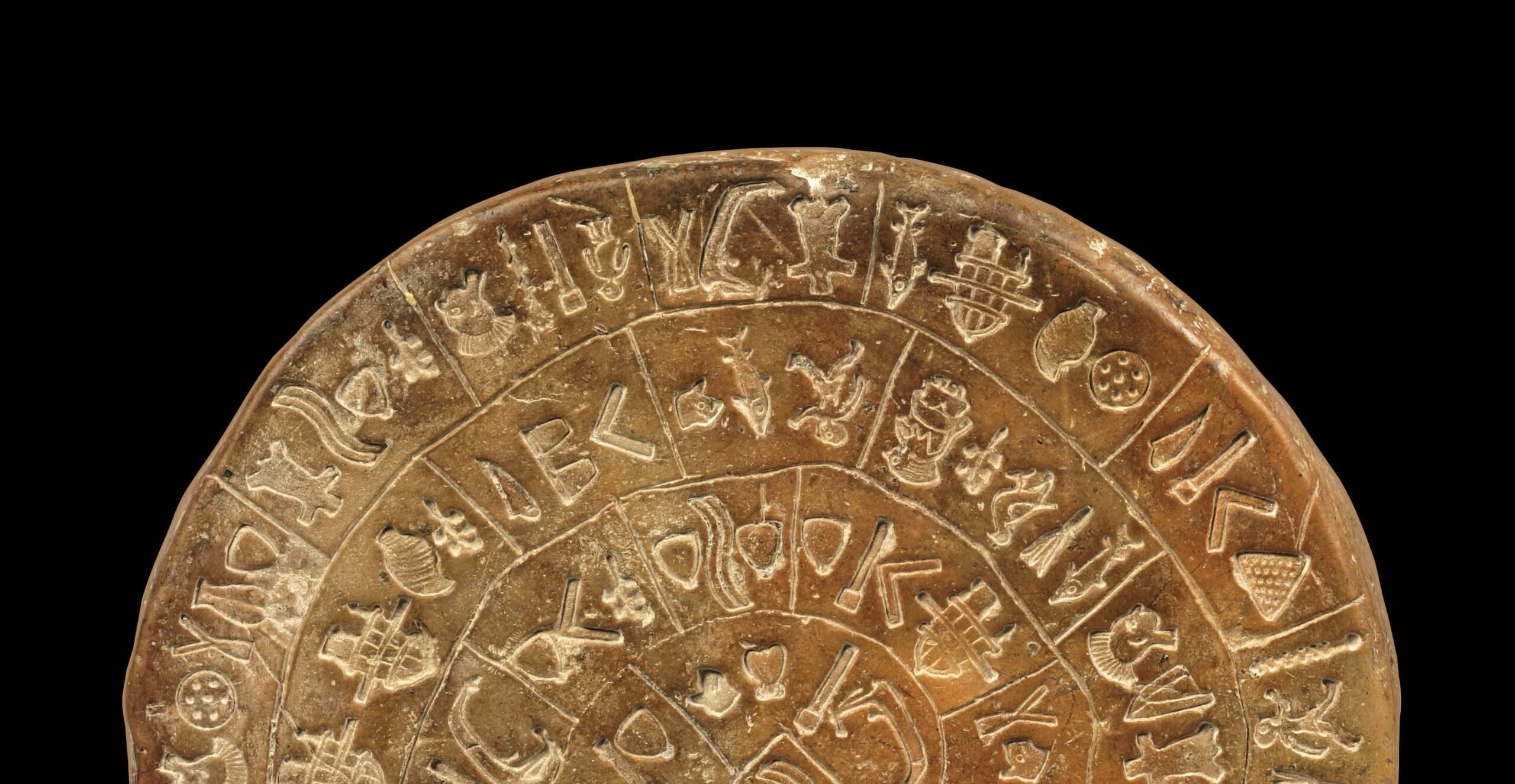
The Phaistos Disc is not just one of the most iconic discoveries of the Minoan civilization, but also one of the most enigmatic, with countless theories attempting to decipher its content.