
Opening hours
View Hours

Thessaloniki, GR
Get Directions
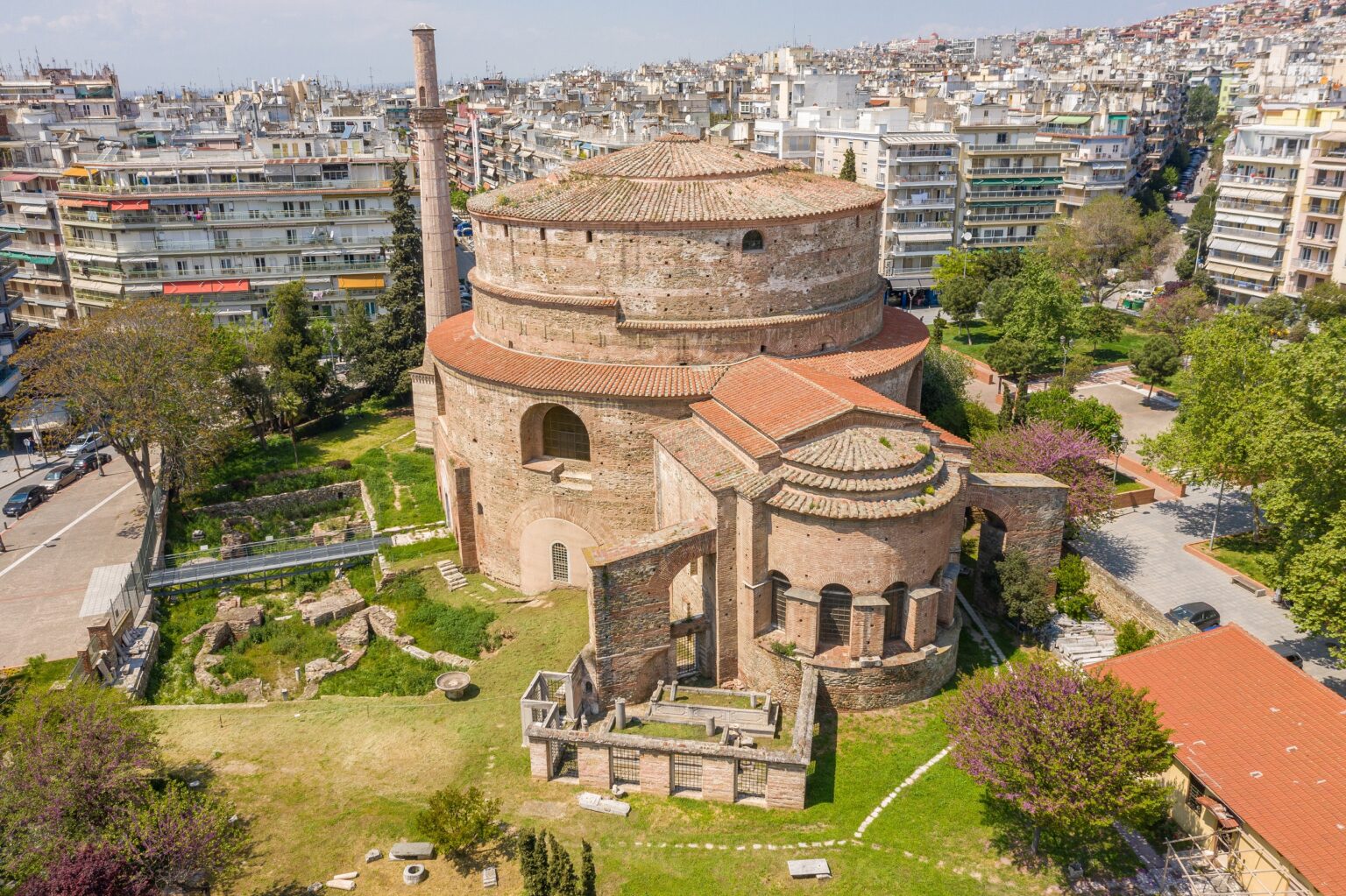
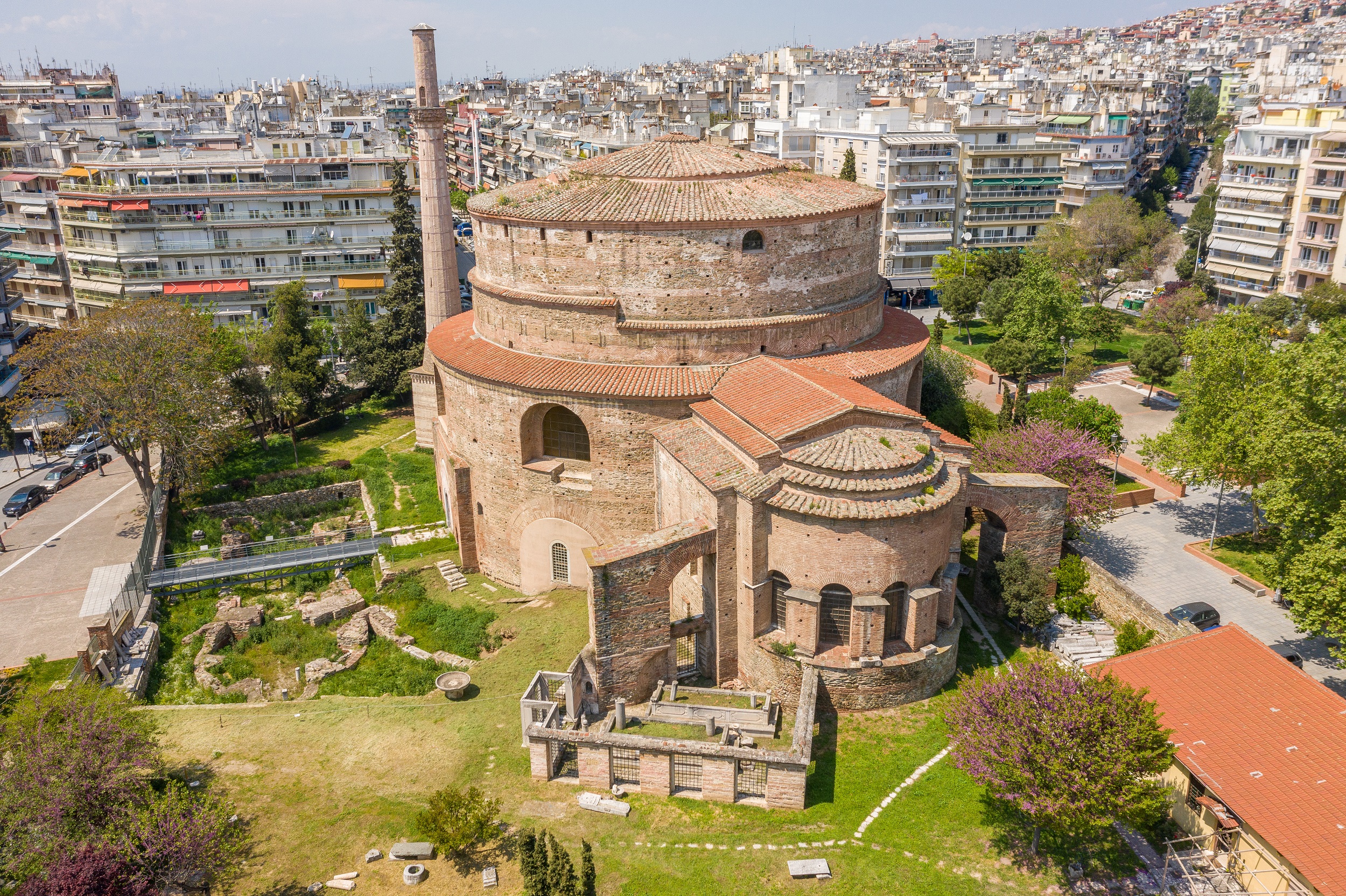
Built during Emperor Galerius’ reign, either as a pagan temple or the emperor’s own mausoleum, the Rotunda is a fascinating riddle.
Buried under multiple layers of age-old human faith, no one has been able to determine its original use.
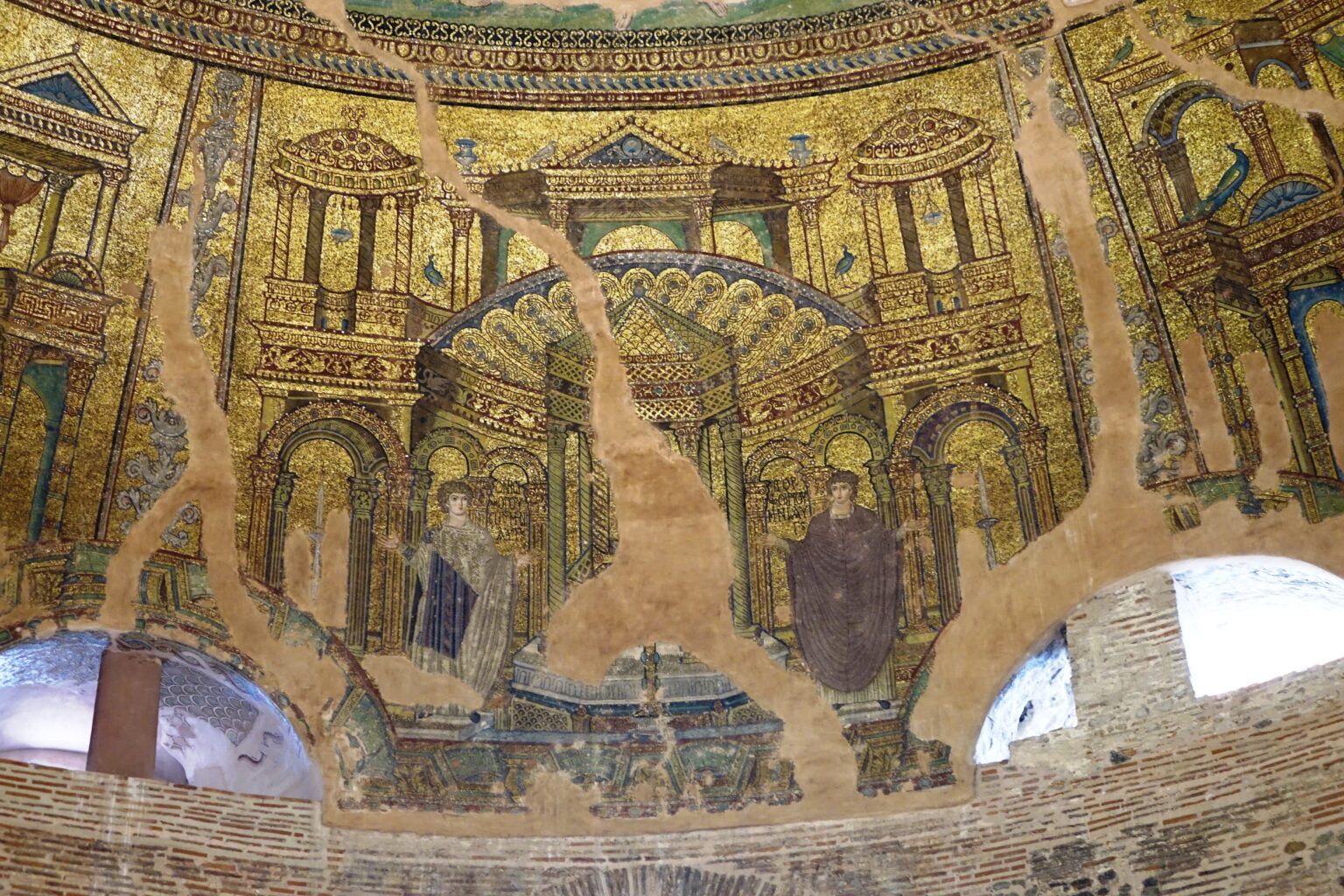
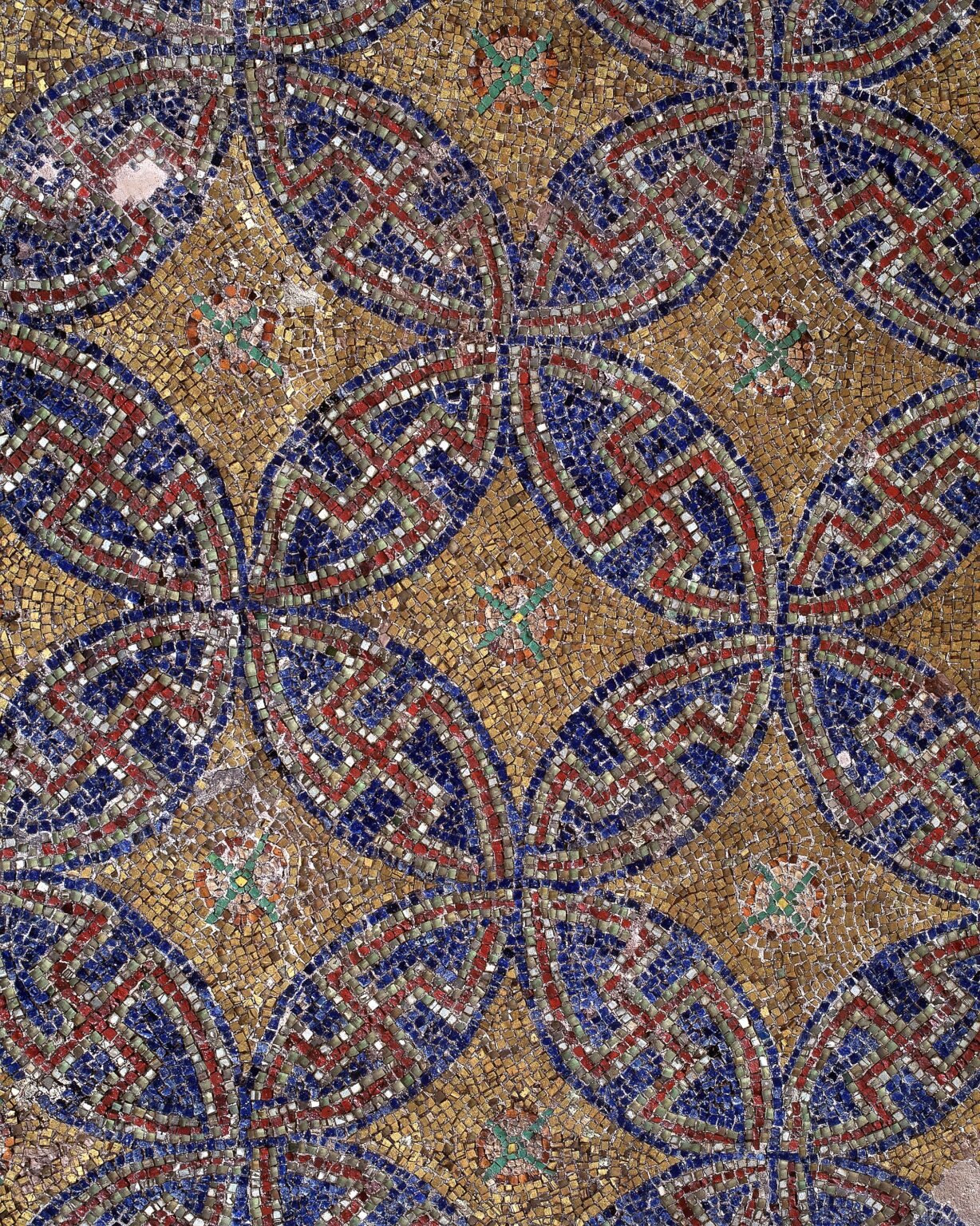
The successive transformations of the Rotunda into a place of worship – from ancient temple to Christian church and, later on, a mosque – started in the second half of the 4th century BC. The circular structure features 6.30 meter-thick walls with a height of 28 meters. Its diameter is 24 meters. The domed roof and the arches above the eight apses hold a magnificent mosaic from the early Byzantine period.

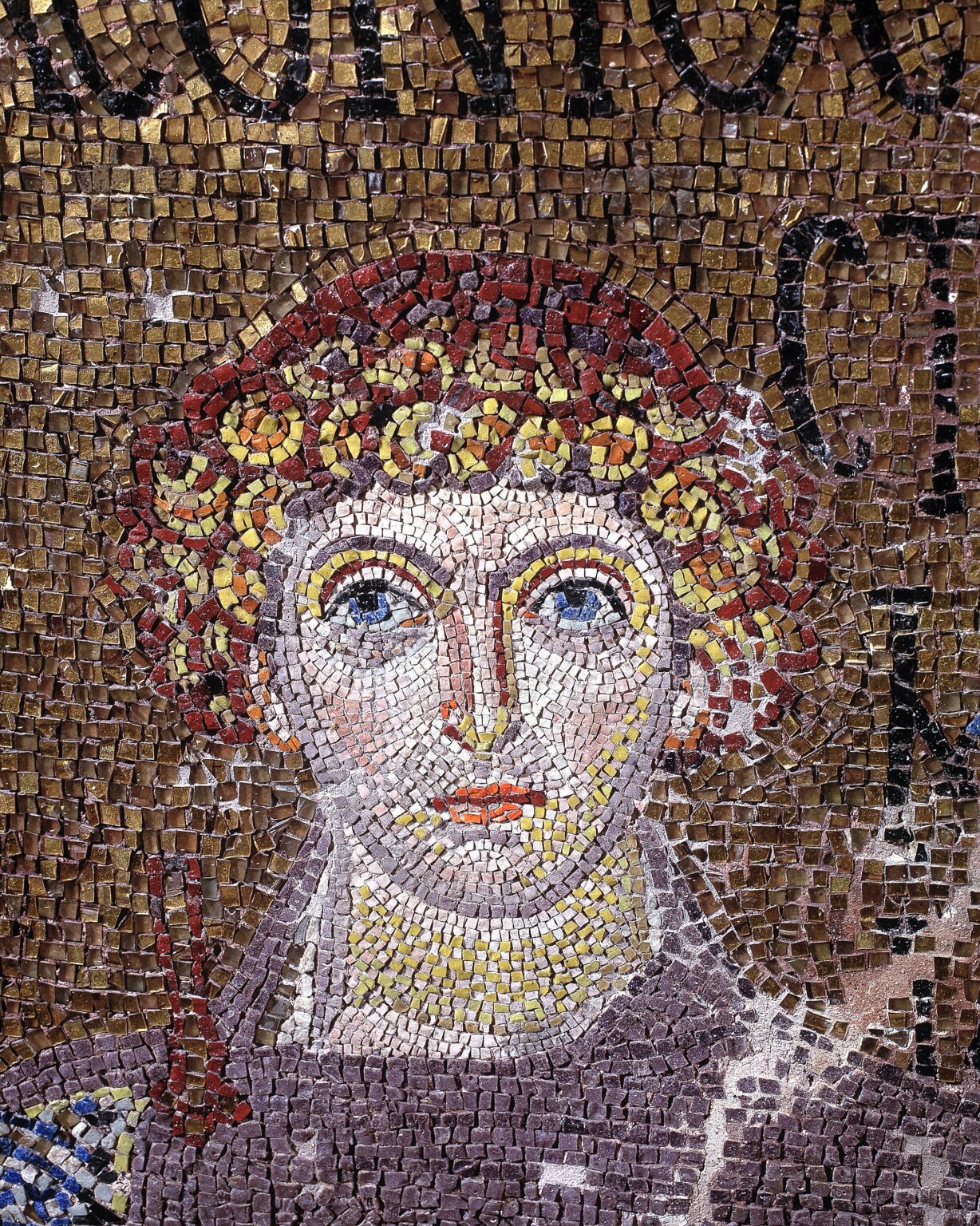
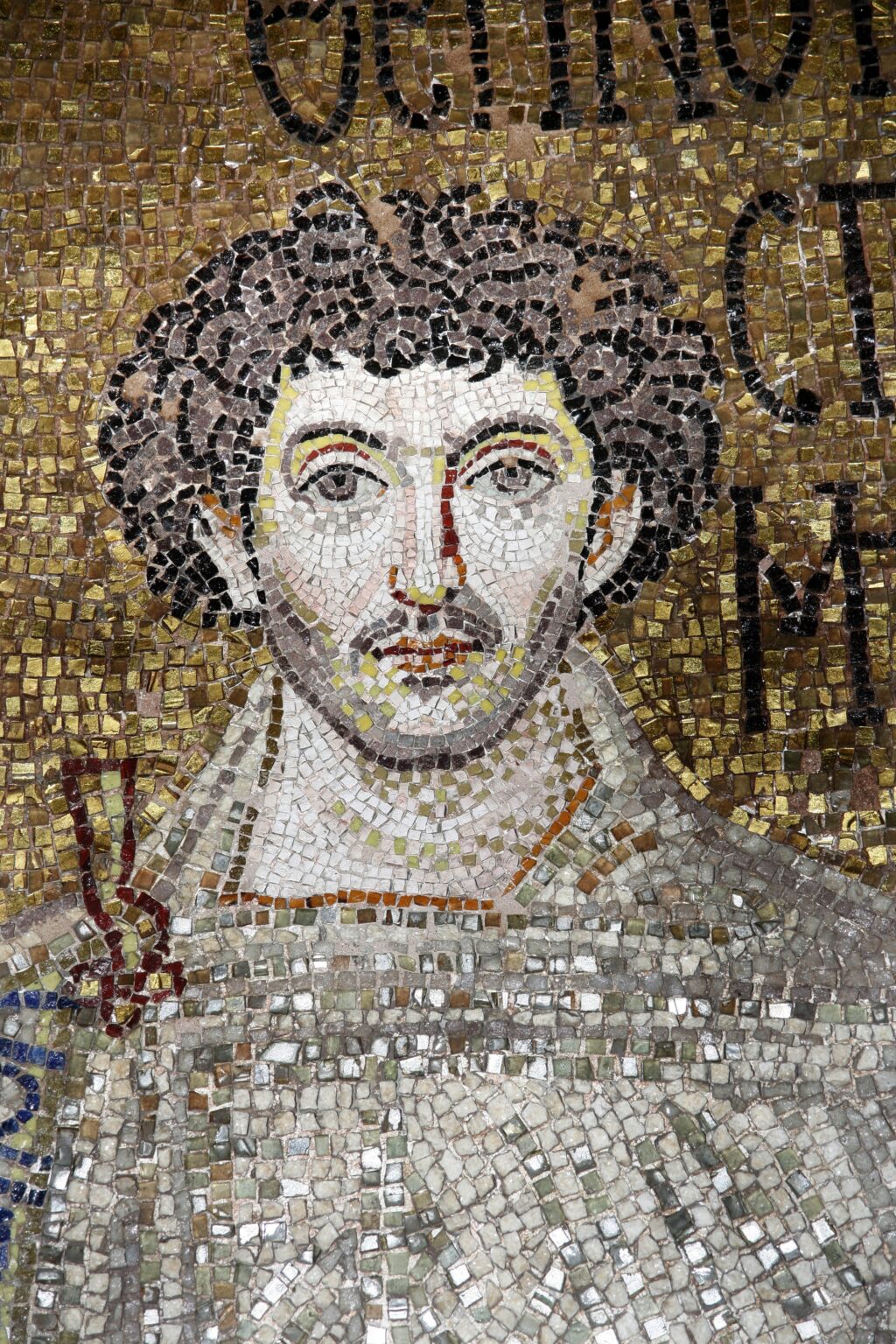
On the uppermost point of the dome, where the mosaic has been completely destroyed, one can still make out an early sketch of a male figure, drawn in charcoal. It most likely depicted Christ Triumphant within a medallion of glory, encircled by a large wreath of leaves and fruits, seemingly held aloft by four angels. Fragments of their heads still survive. In a broader iconographic zone, male figures – probably Christian martyrs – are depicted standing before imaginary architectural settings lavished with rich decorative detail. The mosaics of the Rotunda are rendered in gold and vividly colored tiles, considered to be masterpieces of the Early Byzantine period.
In 1912, with the liberation of Thessaloniki from the Turks, the Rotunda was renamed “Church of Saint George”, possibly after a small Christian temple nearby.
Directions
5 Agiou Georgiou Square
54635, Thessaloniki
On foot
18 minutes from Aristotelous Square
By metro
Line 1, exit at “Sintrivani” station
By car
9 minutes from Aristotelous Square
Opening hours
Summer hours
April 1 – October 31
Mon: 08:00–20:00
Tue: closed
Wed: 08:00–20:00
Thu: 08:00–20:00
Fri: 08:00–20:00
Sat: 08:00–20:00
Sun: 08:00–20:00
Winter hours
November 1 – March 31
Mon: 08:30–15:30
Tue: closed
Wed: 08:30–15:30
Thu: 08:30–15:30
Fri: 08:30–15:30
Sat: 08:30–15:30
Sun: 08:30–15:30
Last admission: 20 minutes before closing time
The site remains closed on the following dates and public holidays: January 1, March 25, May 1, Easter Sunday, December 25 & 26.
The site remains closed on the following dates and public holidays: January 1, March 25, May 1, Easter Sunday, December 25 & 26.
Tickets
Full: €10.00
Reduced: €5.00
dmission is free on March 6, April 18, May 18, the last weekend of September, on October 28, as well as on the first and third Sunday of each month between November 1 and March 31.
Amenities
WC
Accessibility
Contact
Ephorate of Antiquities of the City of Thessaloniki
Τ: +30 2310 204868
Ε: efapoth@culture.gr