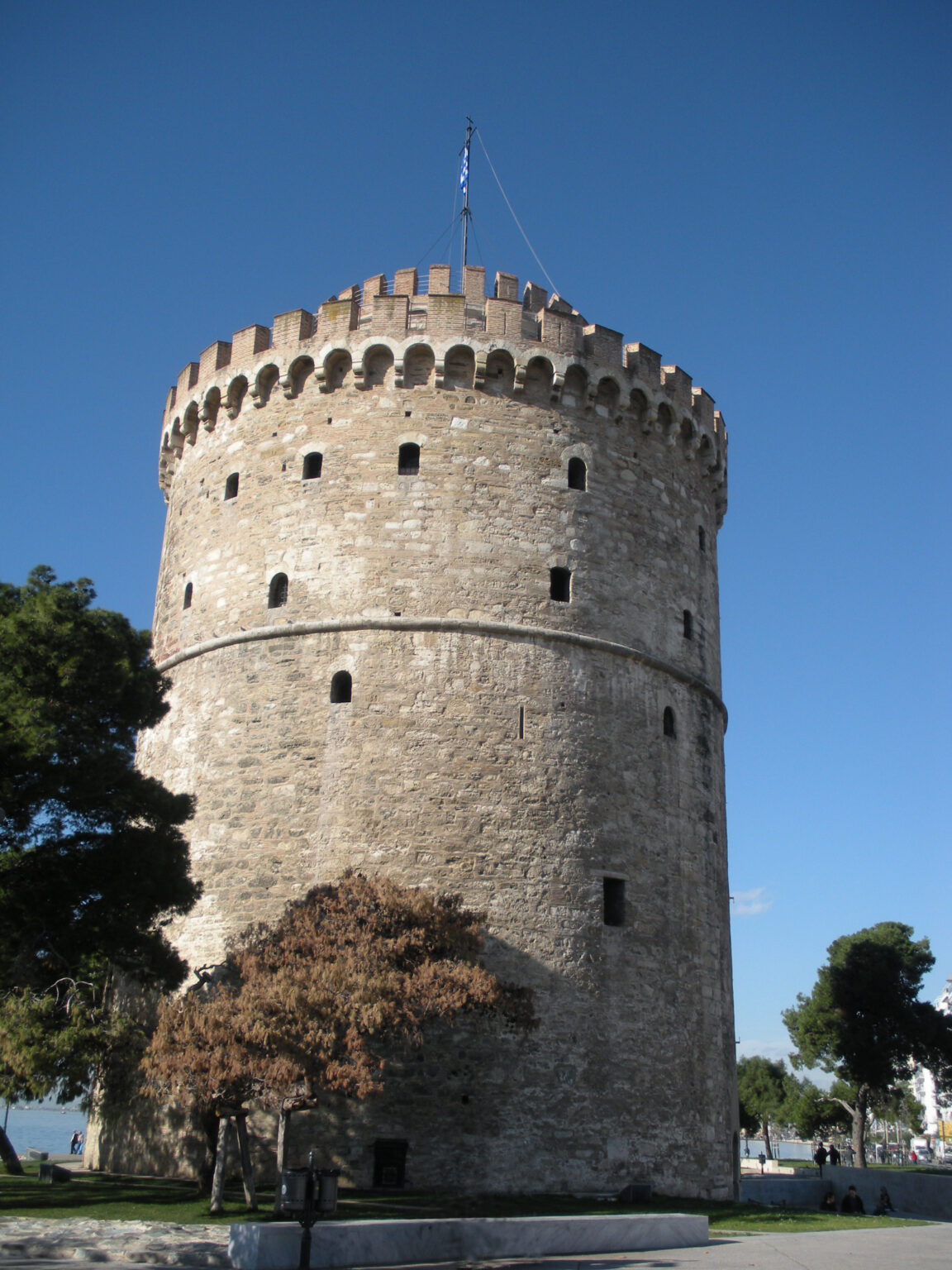
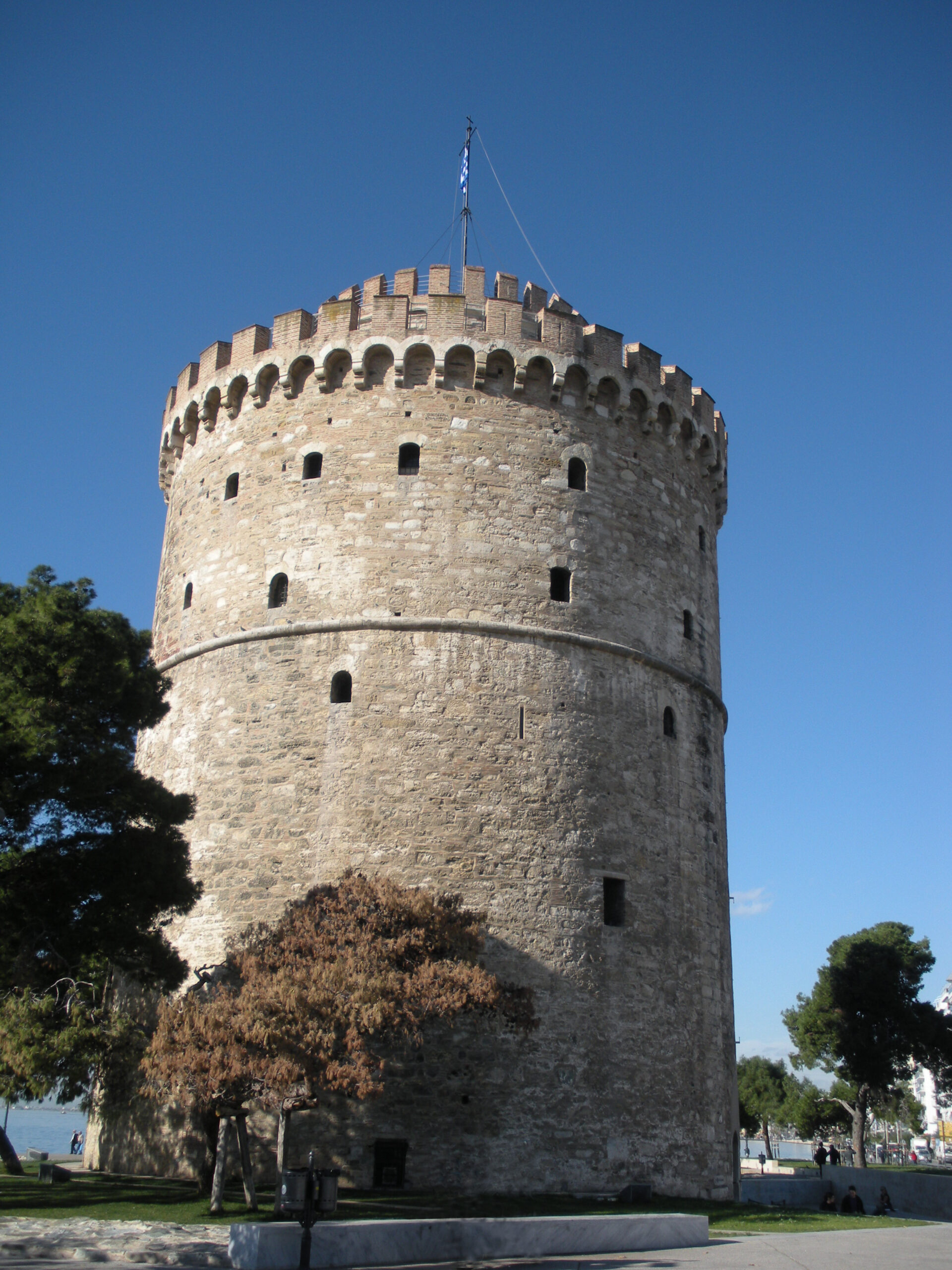


Built on the exact point where the coastal and the eastern land walls intersected, the White Tower, in its present-day form, is a 15th century edifice that replaced an earlier Byzantine structure.
It is circular (height: 33.90 m., diameter: 21.70 m.) and consists of six storeys and a ground floor. It was originally enclosed by a low octagonal chemise wall, whose outline is still in evidence in the area that surrounds the monument, enhanced by three octagonal turrets on three corners. The exemplary restoration of the monument, implemented in 1985 by the Ephorate of Antiquities, was awarded with the Europa Nostra Prize in 1988.
It has had various names, such as ‶Lion Tower″ in the 16th century, and ‶Fortress of Kalamaria″ in the 18th century. Its current designation as the ‶White Tower″ was given in 1883 when it was whitewashed by order of Sultan Abdul Hamid II. Its former name, ‶Blood Tower″, was reminiscent of its most recent 19th century function as a prison and execution place, which was inconsistent with the reformist spirit of the times.
It has had various names, such as ‶Lion Tower″ in the 16th century, and ‶Fortress of Kalamaria″ in the 18th century. Its current designation as the ‶White Tower″ was given in 1883 when it was whitewashed by order of Sultan Abdul Hamid II. Its former name, ‶Blood Tower″, was reminiscent of its most recent 19th century function as a prison and execution place, which was inconsistent with the reformist spirit of the times.
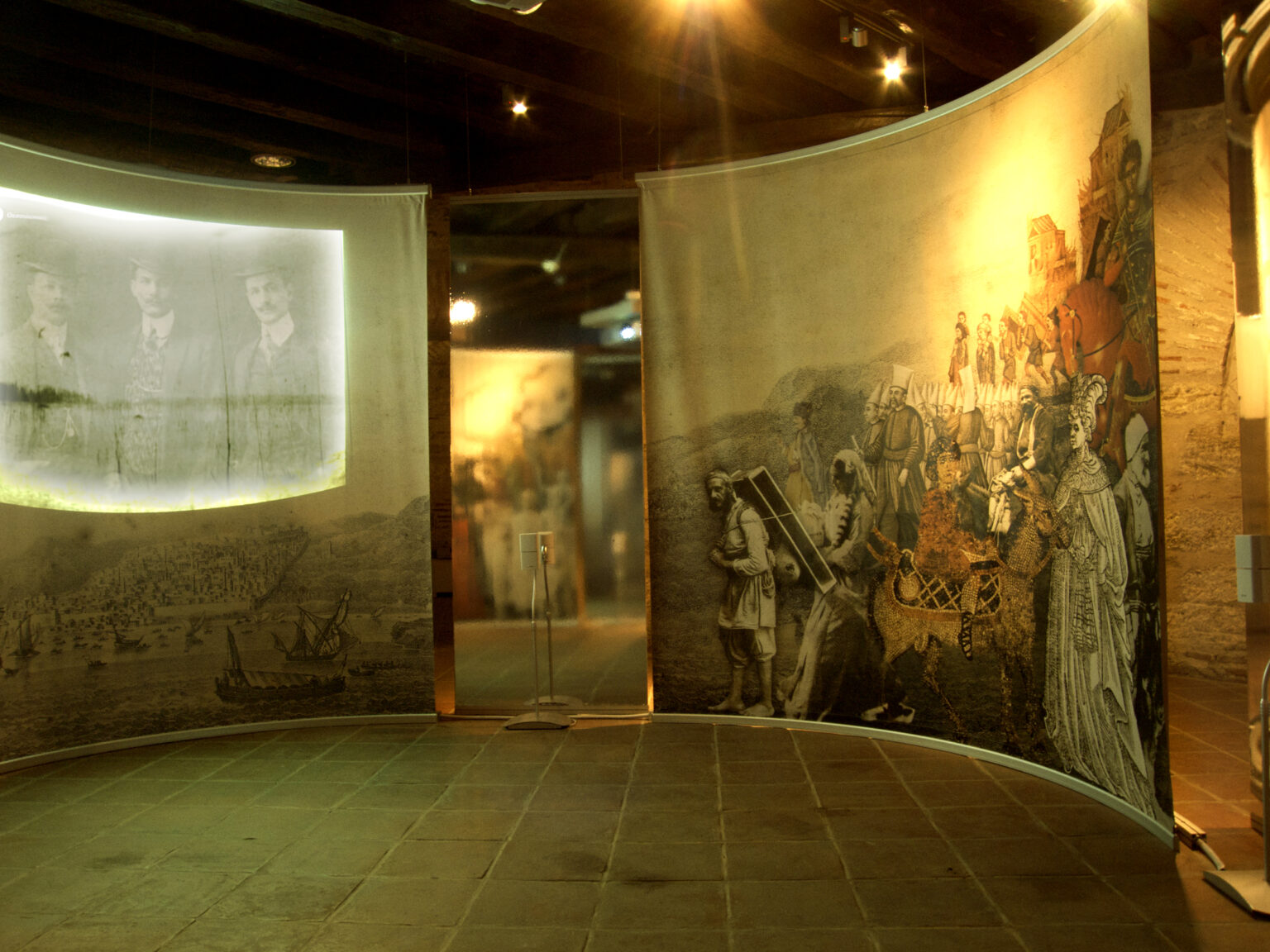
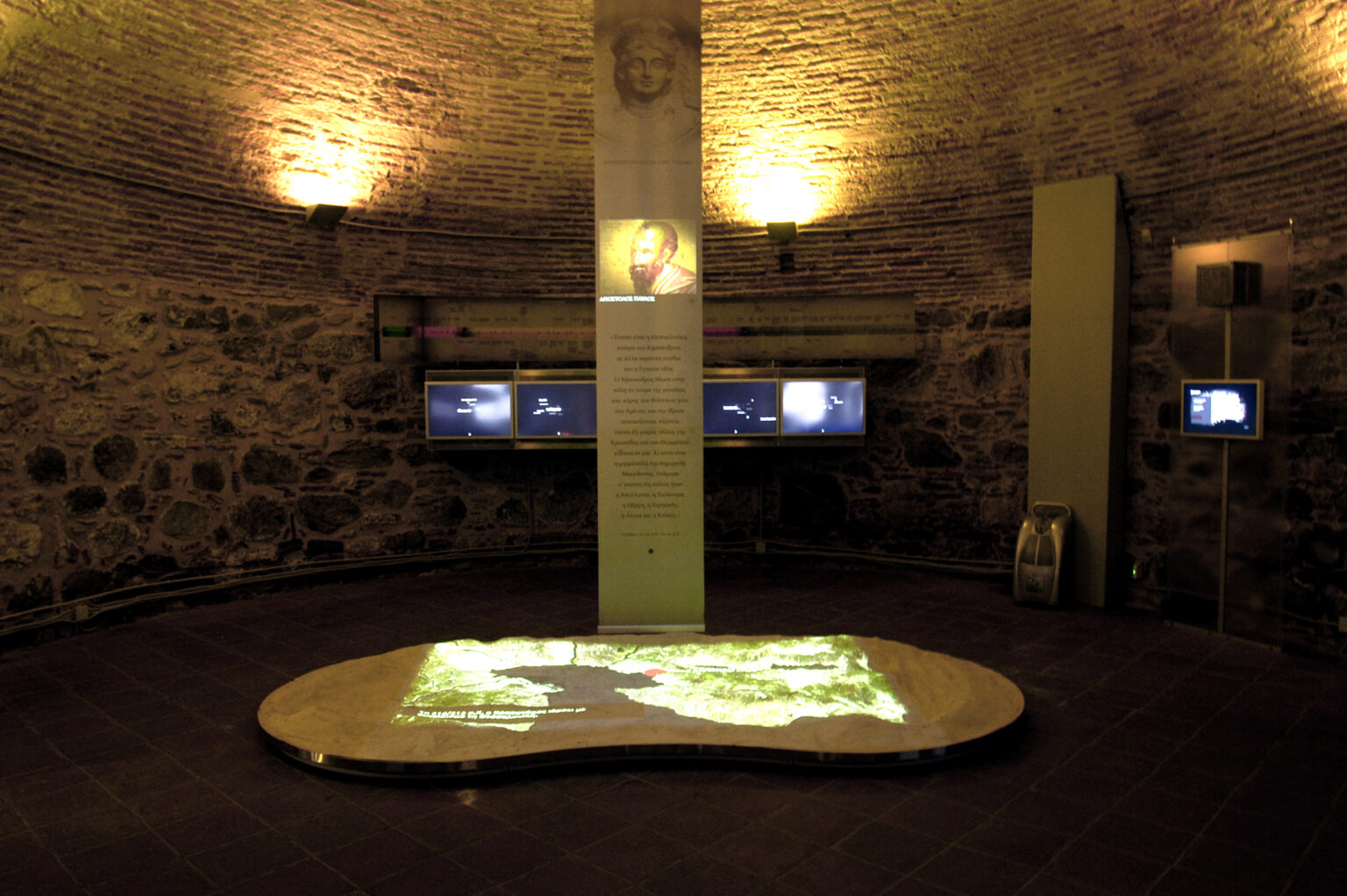
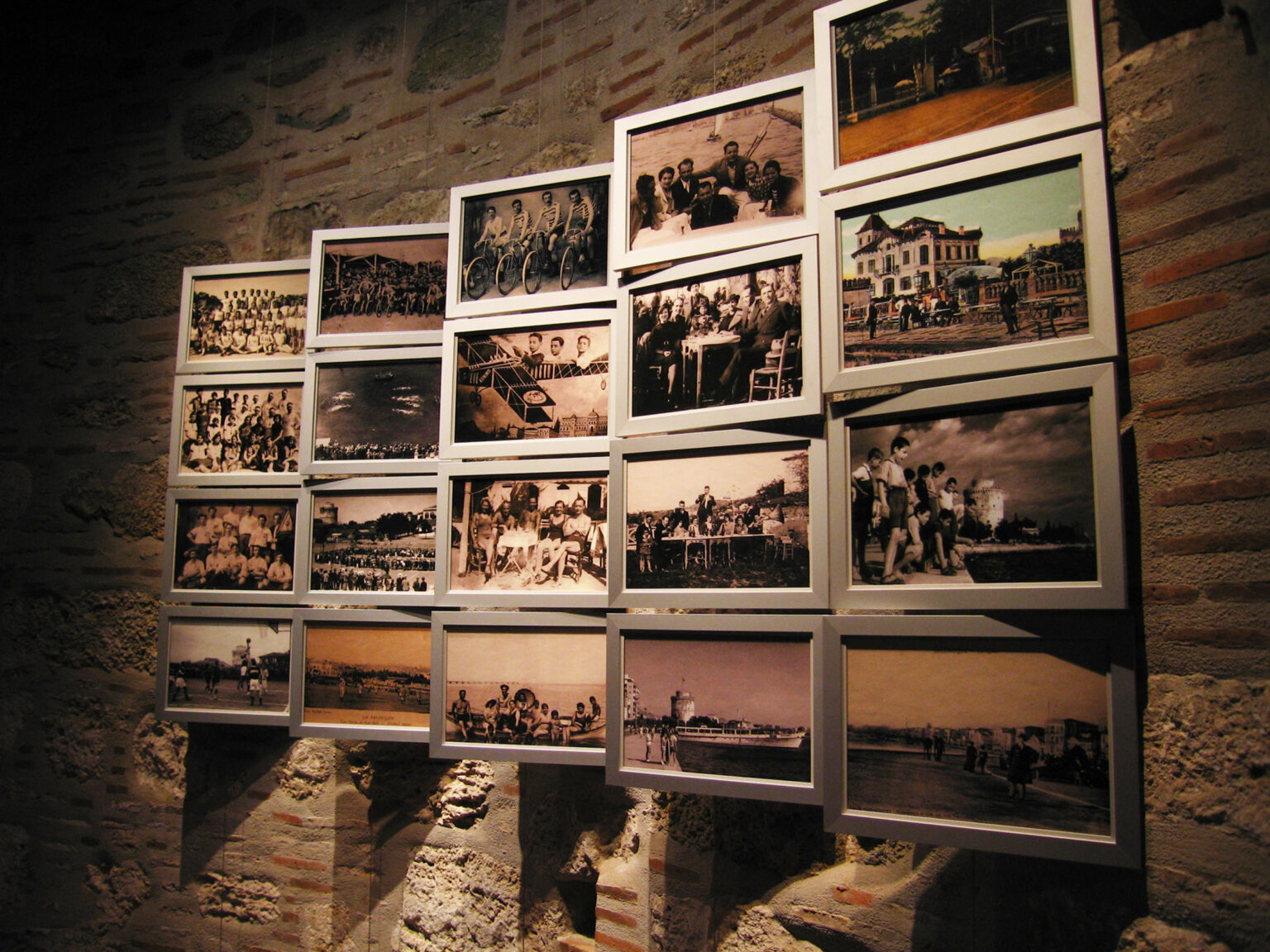
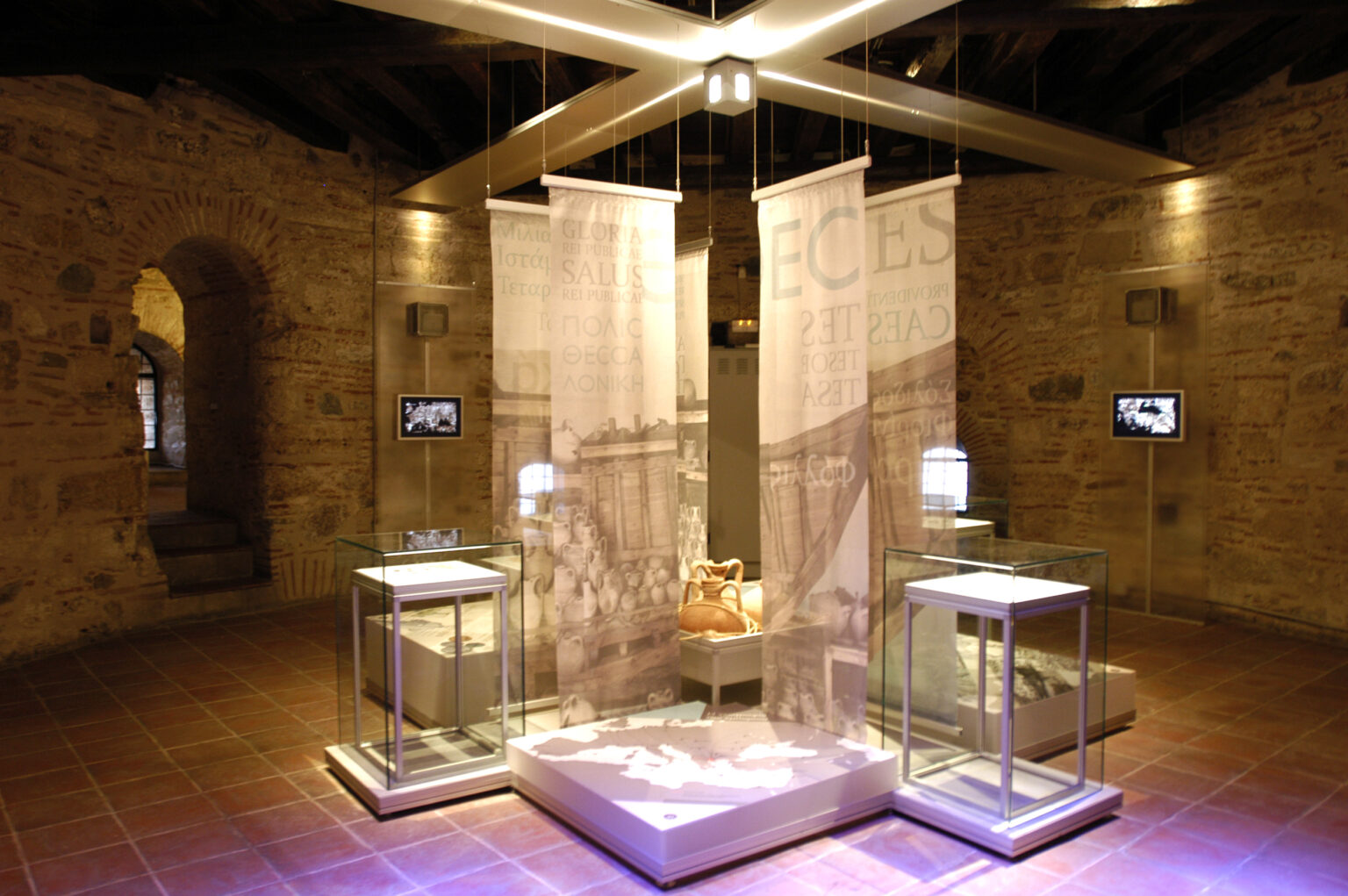
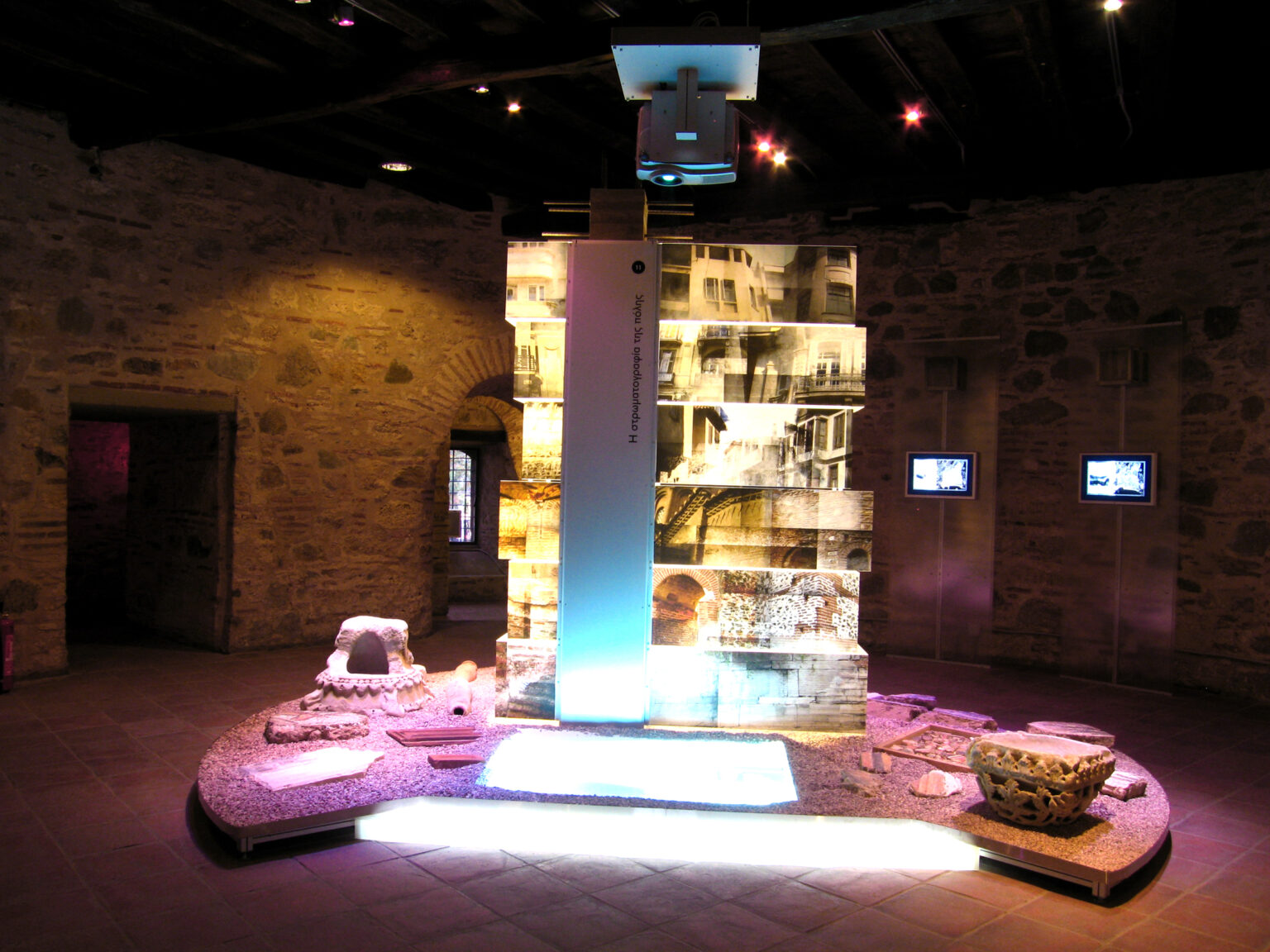
The need to exhibit a large amount of information within the relatively limited space of the monument favored the use of multimedia, in conjunction with printed graphics, whereas the display of archaeological material was kept to a minimum. The aim of the exhibition is to introduce visitors to Thessaloniki through the ages and to encourage them to continue their exploration of the city’s specialist museums, its monuments and archaeological sites. The exhibition is thematically arranged on each floor with a brief presentation of the subject in the central space, followed by a more detailed narrative articulated in the surrounding rooms.
On the ground floor, themes such as the foundation of the city, time, space, the environment and its history are brought into focus through projections and interactive touch screens. Info points featuring a virtual tour of the exhibition are available to visitors with mobility impairment.
Directions
Nikis Ave
54013, Thessaloniki
13 minutes from Aristotelous Square
Line 1, exit at “Sintrivani” station
From Pavlou Mela St: Lines 03K, 05, 05A, 06, 15, 33, 39, 39A, 45Y, get off at “Lefkos Pyrgos” stop
From Ethnikis Aminis St: Lines 11, 11B, get off at “Ethnikis Aminis” stop
From Nikis Ave: Line 50, get off at “Lefkos Pyrgos” stop
From Nik. Germanou St: Lines 11, 11B, 12, 15, 39, 39A, get off at “Etaireia Makedonikon Spoudon” stop
3 minutes from Aristotelous Square
Opening hours
April 1 – October 31
Mon: 08:00–20:00
Tue: 13:00–20:00
Wed: 08:00–20:00
Thu: 08:00–20:00
Fri: 08:00–20:00
Sat: 08:00–20:00
Sun: 08:00–20:00
November 1 – March 31
Daily: 08:30–15:30
The site remains closed on the following dates and public holidays: January 1, March 25, May 1, Easter Sunday, December 25 & 26.
Tickets
Full: €6.00
Reduced: €3.00
Amenities
Contact
The White Tower
T: +30 2310 267832
Museum of Byzantine Culture of Thessaloniki
T: +30 2313 306400
E: mbp@culture.gr