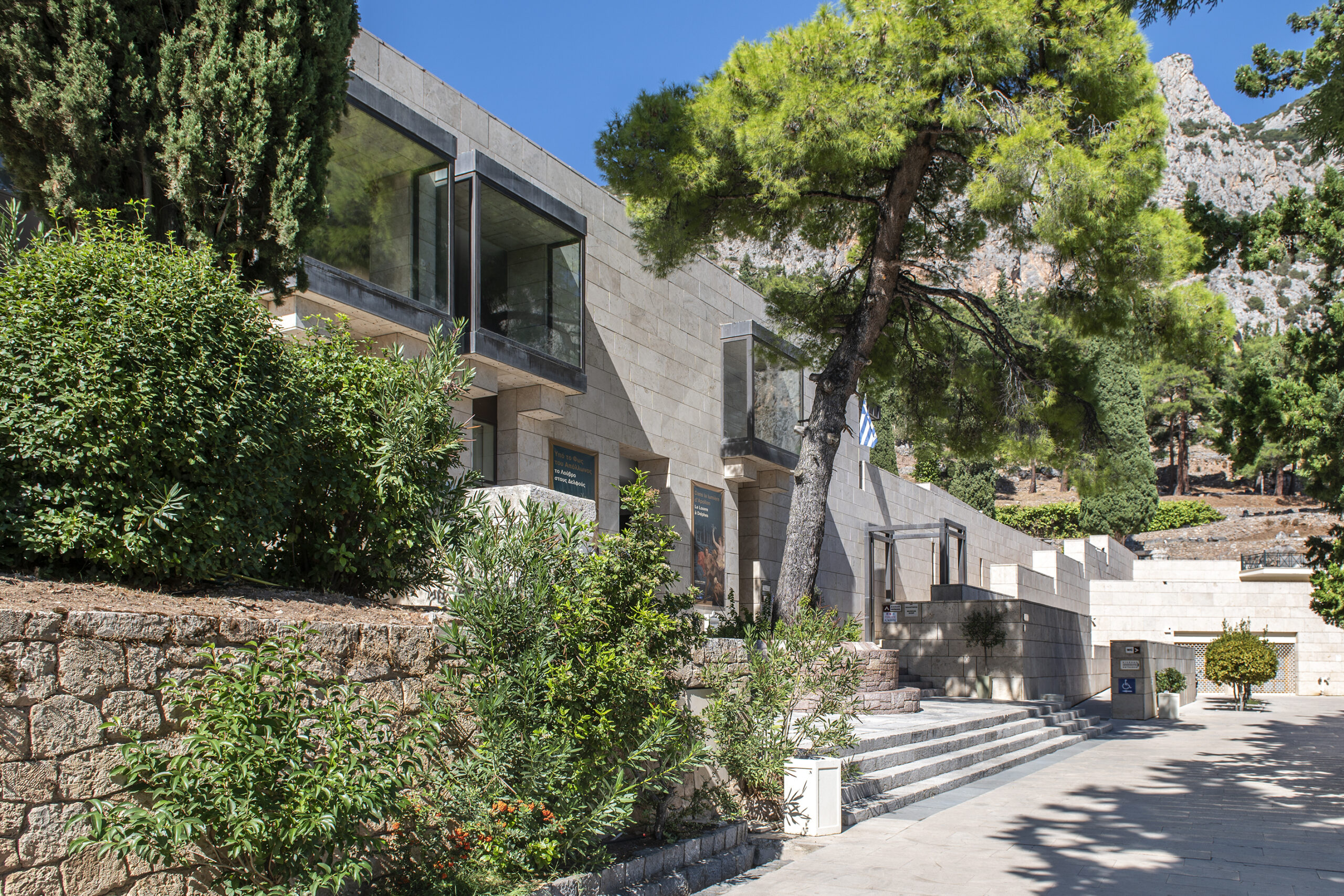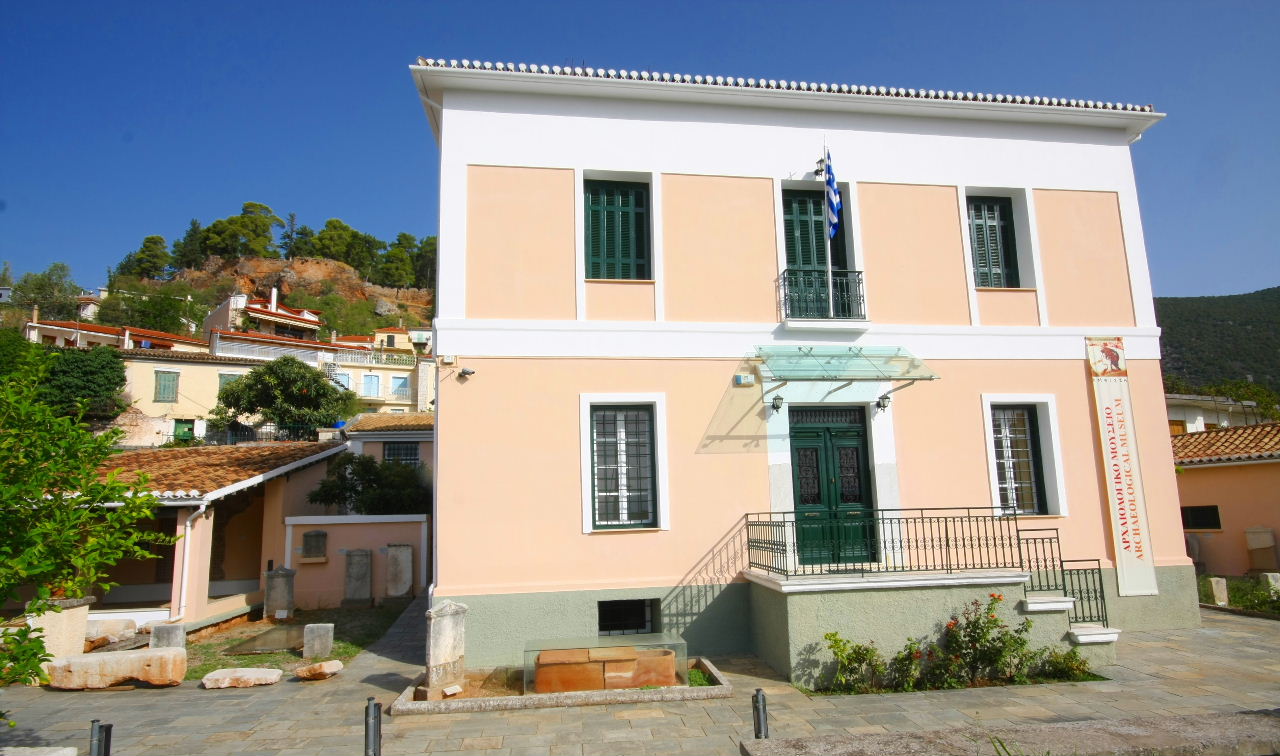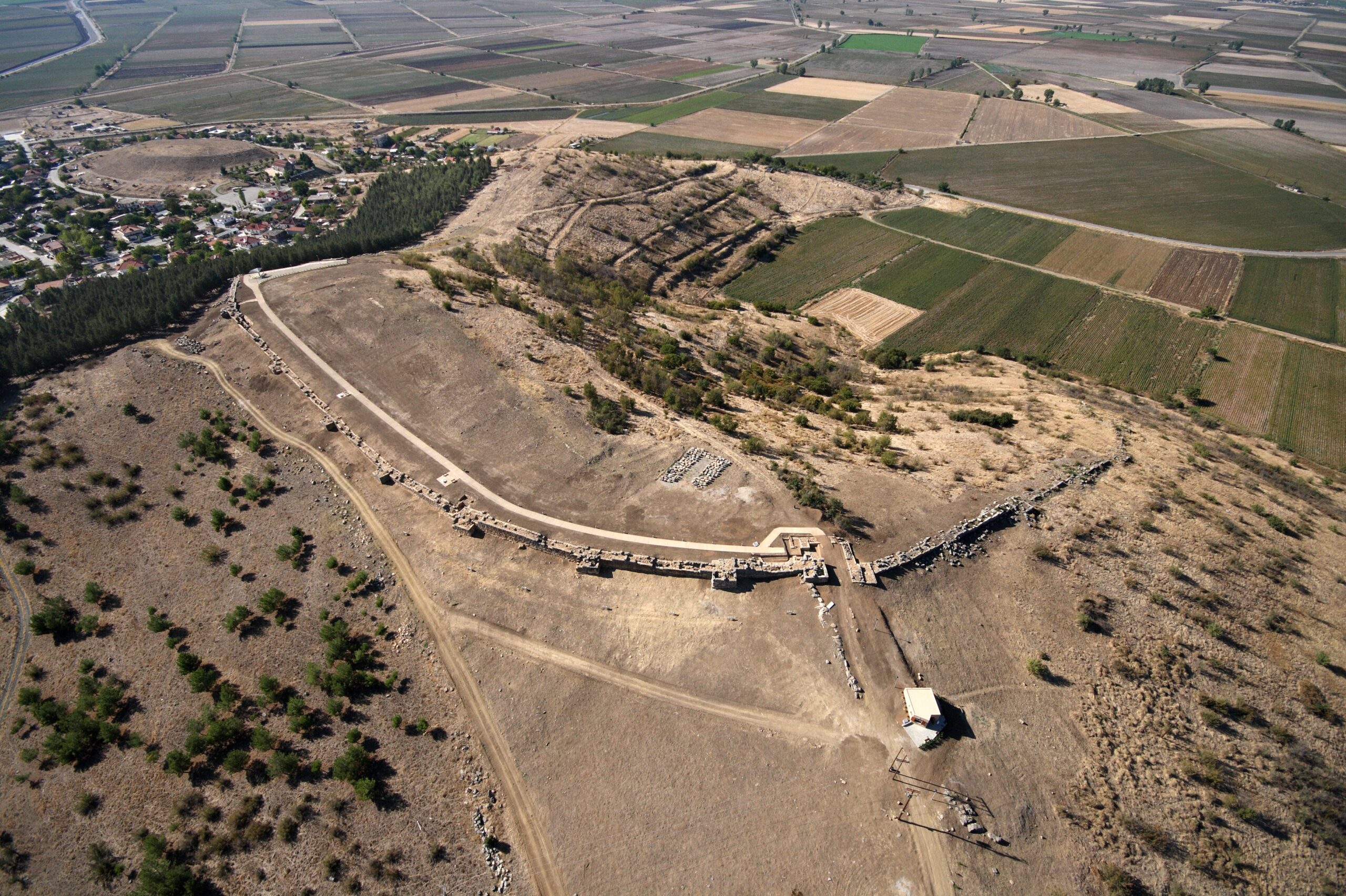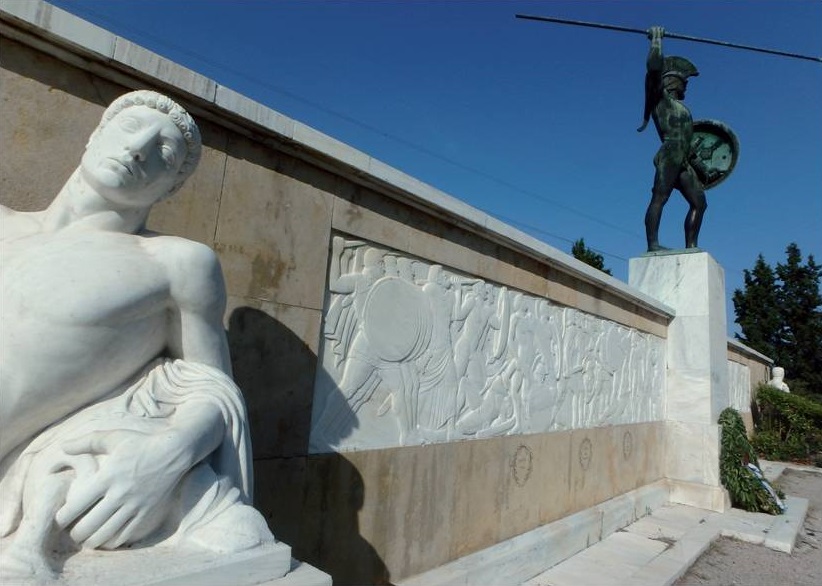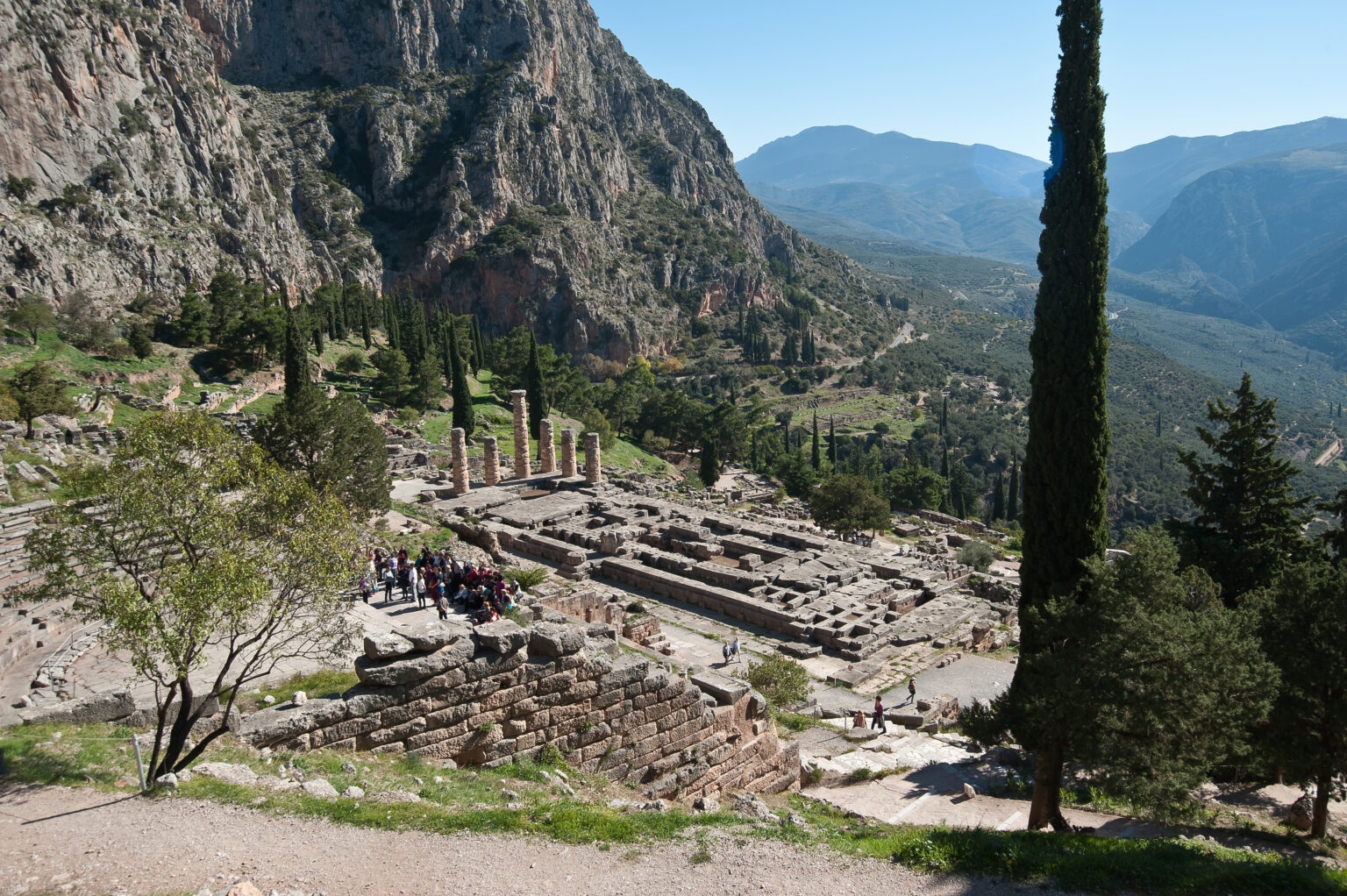
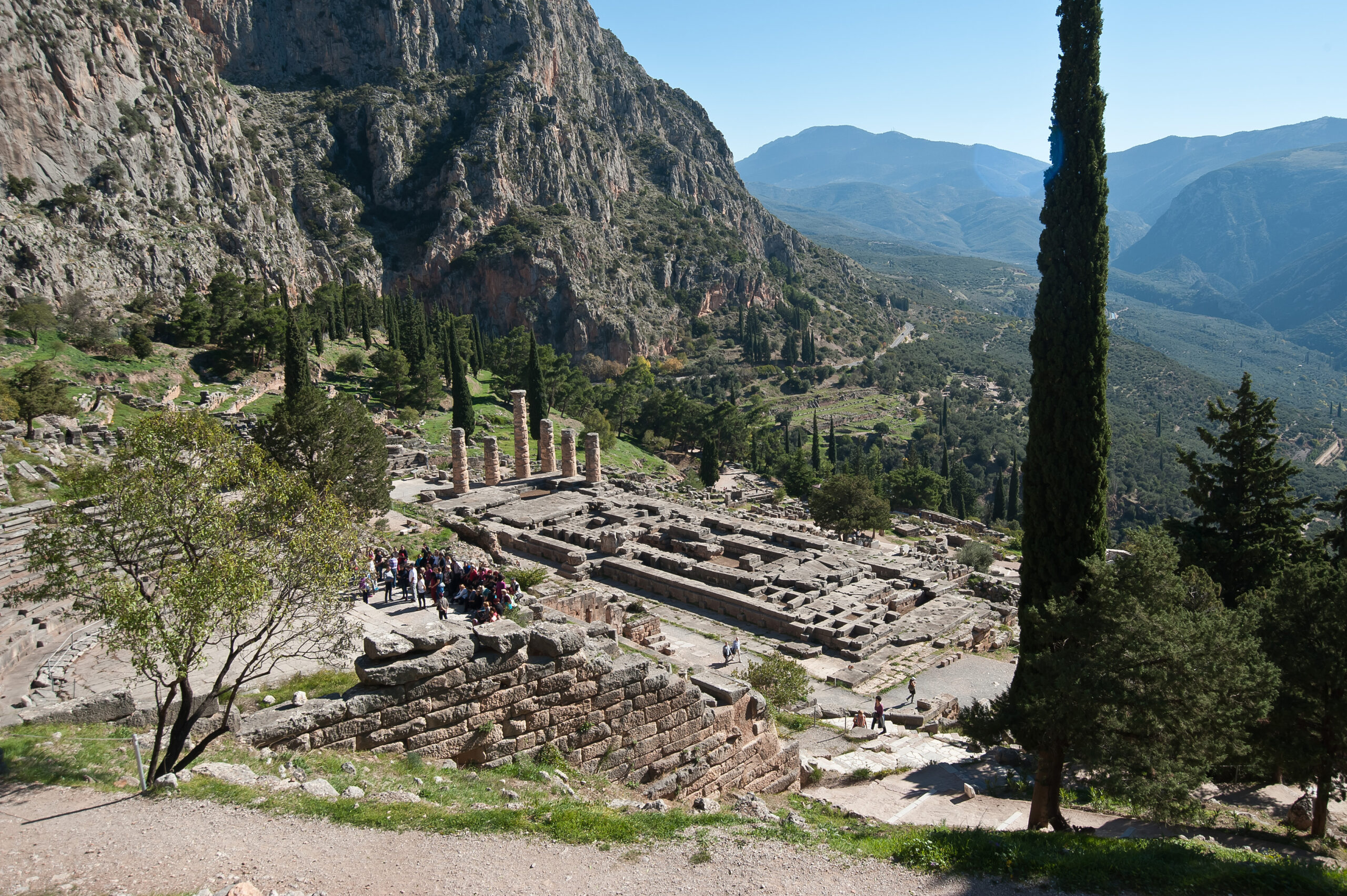


Delphi was not randomly chosen for the construction of the temple and the operation of Apollo’s oracle.
The location, between two majestic cliffs in the shadow of Parnassus, the Sacred Mountain of the ancient Greeks, occupies a fortified location which is said to exhibit a strong energetic charge.
According to mythology, it was the point where the two eagles sent by Zeus from the far ends of the universe, one from the East and the other from the West, met to mark Delphi as the “navel of the Earth”.
Before becoming a place of worship of Apollo, tradition has it that Gaia was the dominant deity in the area, but she did not manage to take root because of Python, a terrible monster with the body of a snake who terrorized the area. When Apollo killed him, he began being worshipped as “Pythios”, while his priestess was named “Pythia”.
The earliest findings in the area of Delphi date back to the Neolithic period (4000 B.C.) and come from the Corycian Cave, a grotto on Mount Parnassus where the first cults were practiced. Toward the end of the 7th century B.C., the first stone temples were built, one dedicated to Apollo and the other to Athena. According to historical accounts and archaeological evidence, other deities were also worshipped at Delphi, including Artemis, Poseidon, Dionysus, Hermes, Zeus and others.
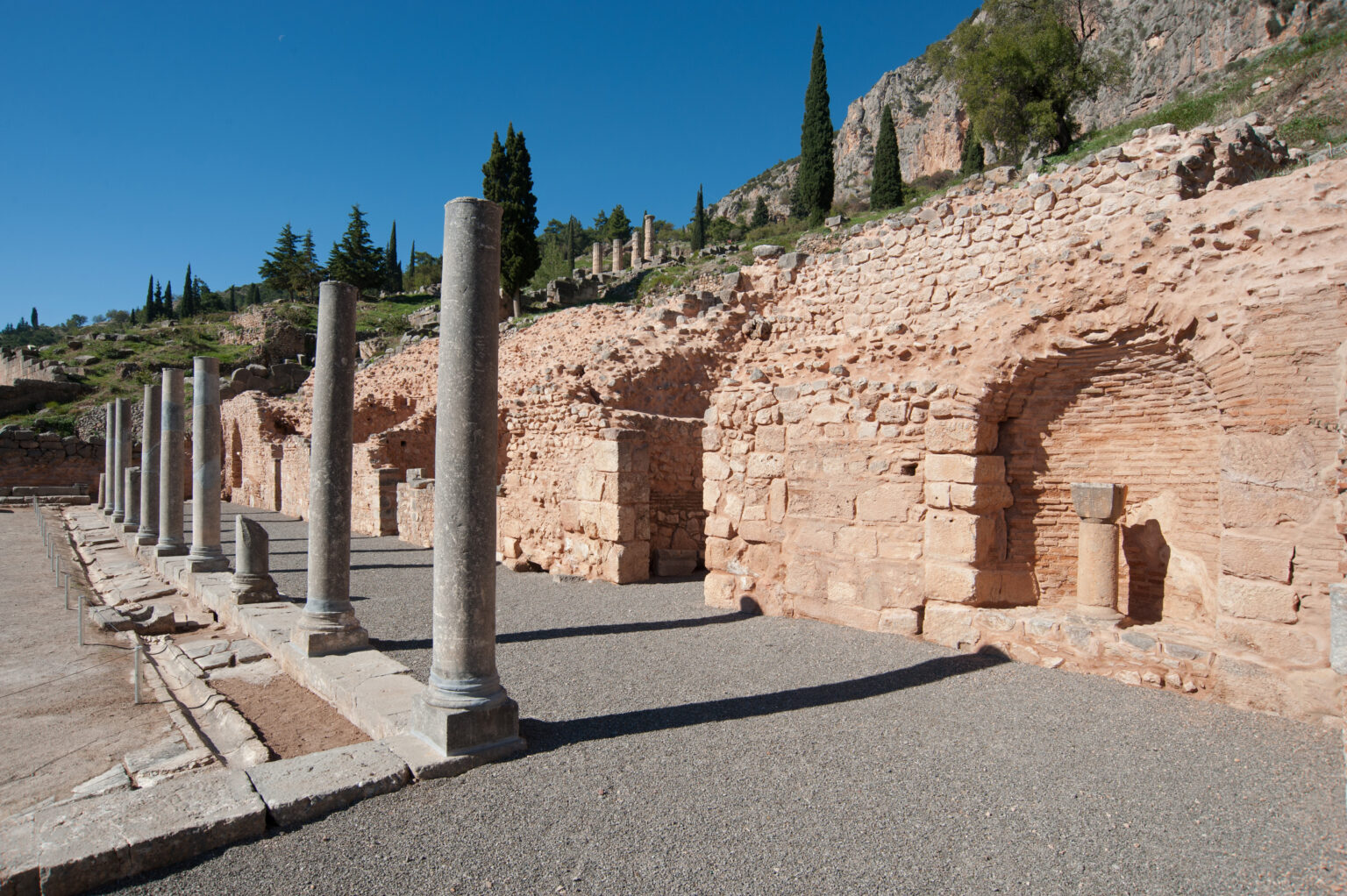
The Oracle of Delphi flourished in the late Archaic and early Classical period, and was centered around the Doric temple of Apollo, whose ruins are still visible today. The oracles of the sanctuary were considered the most reliable. They were delivered by Pythia, the priestess of the oracle, and interpreted by the priests of Apollo. The institution of the Amphictyony is also connected to the sanctuary – originally a religious alliance – which later acquired political significance as well.
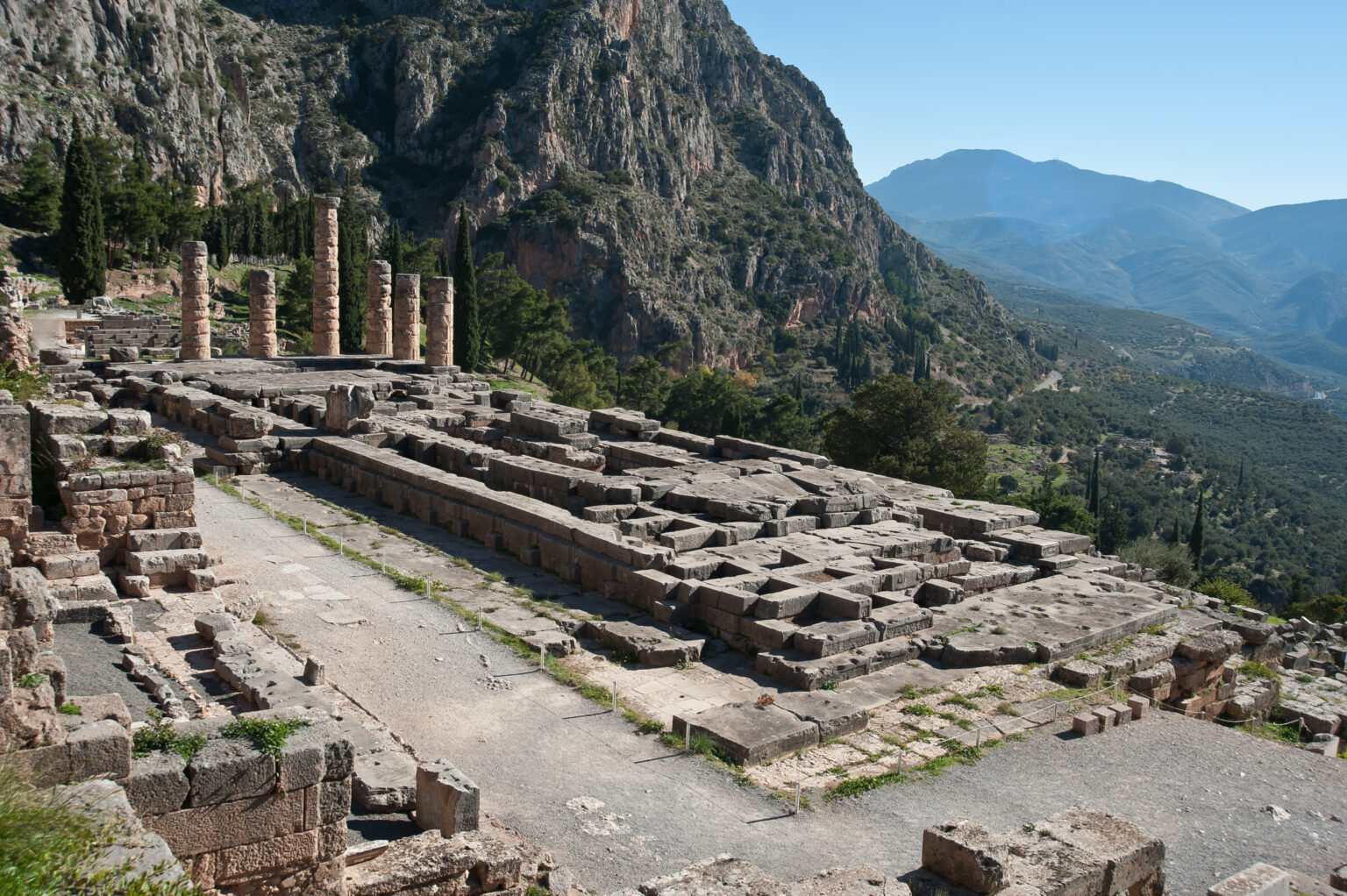
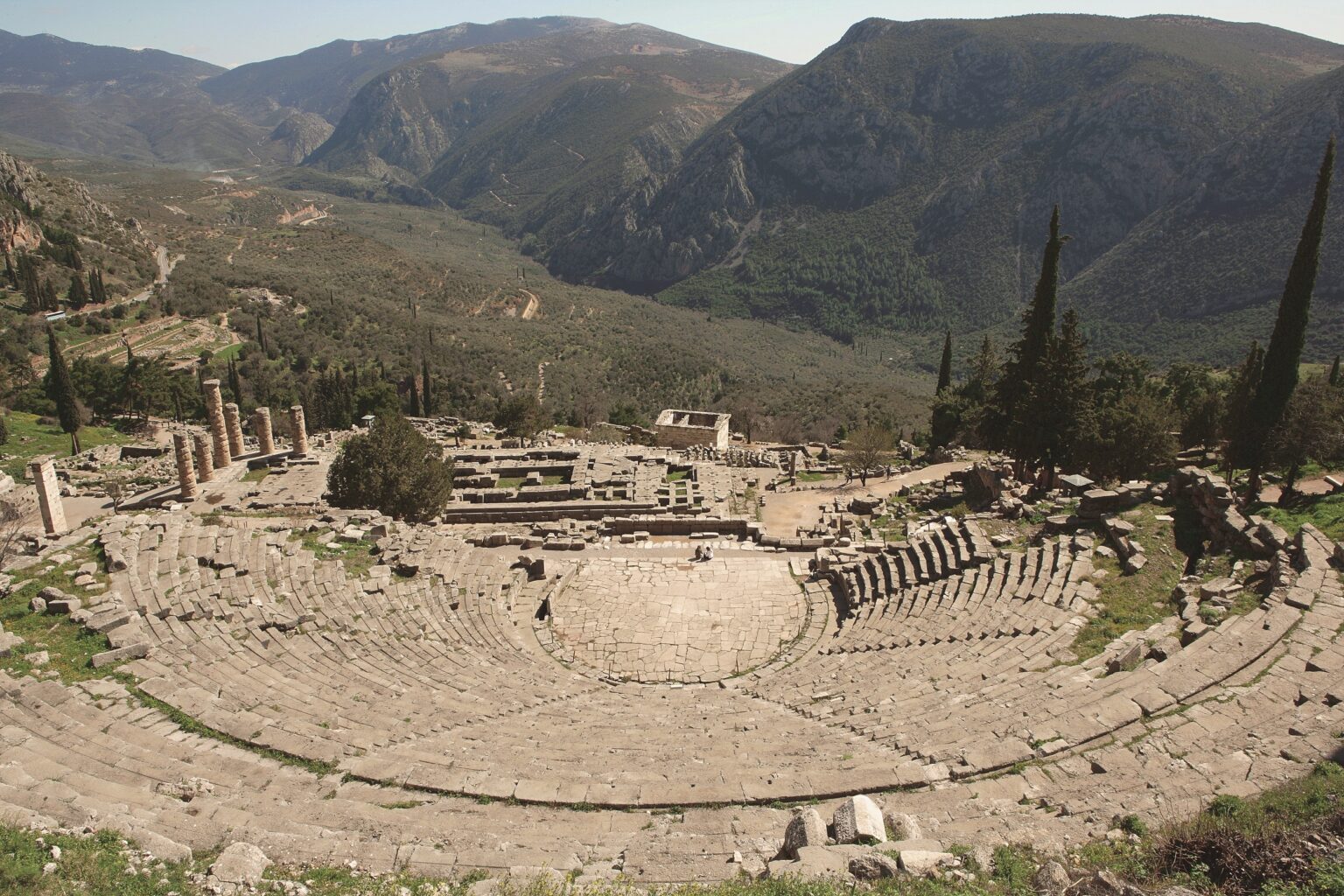
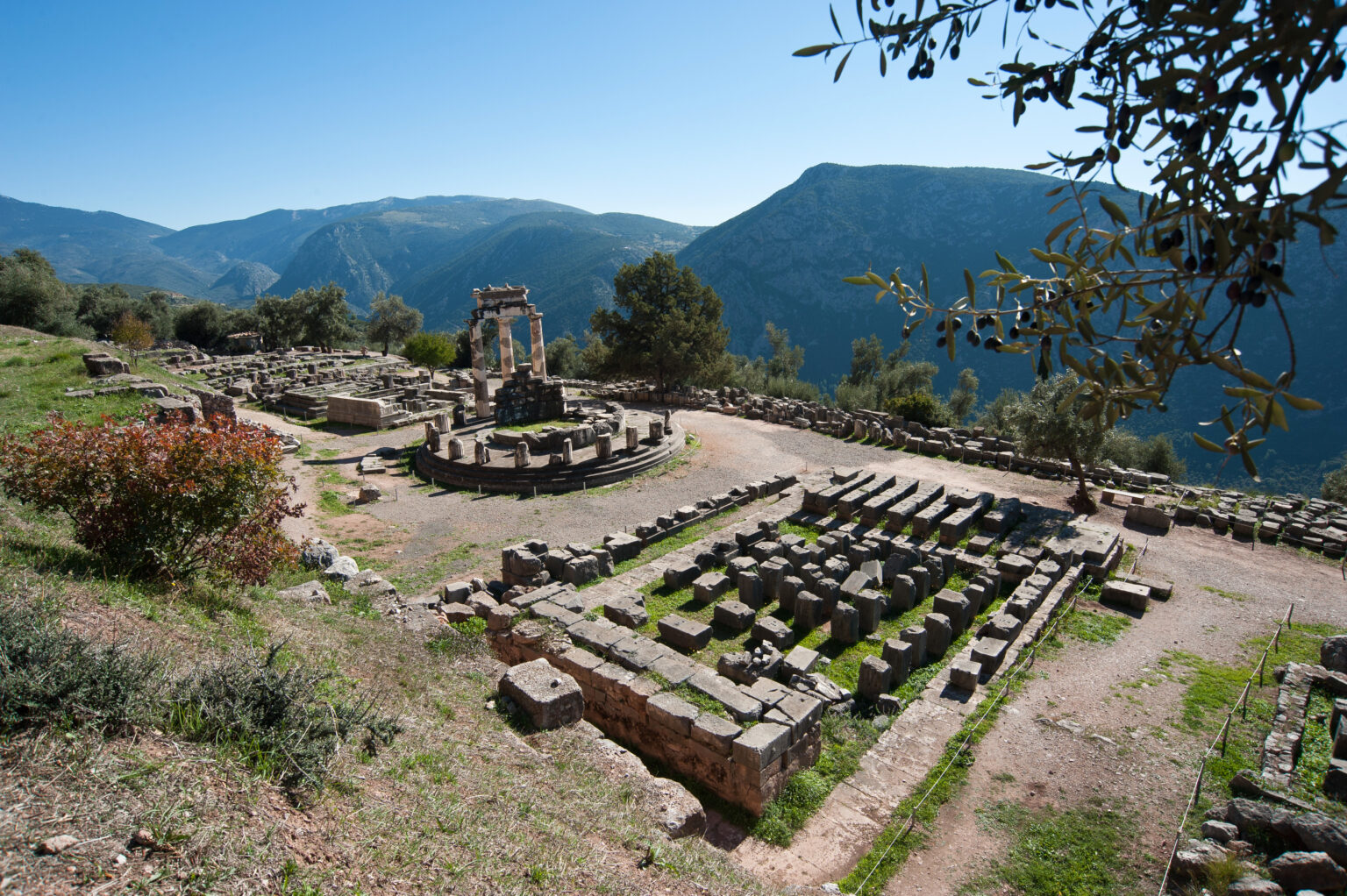
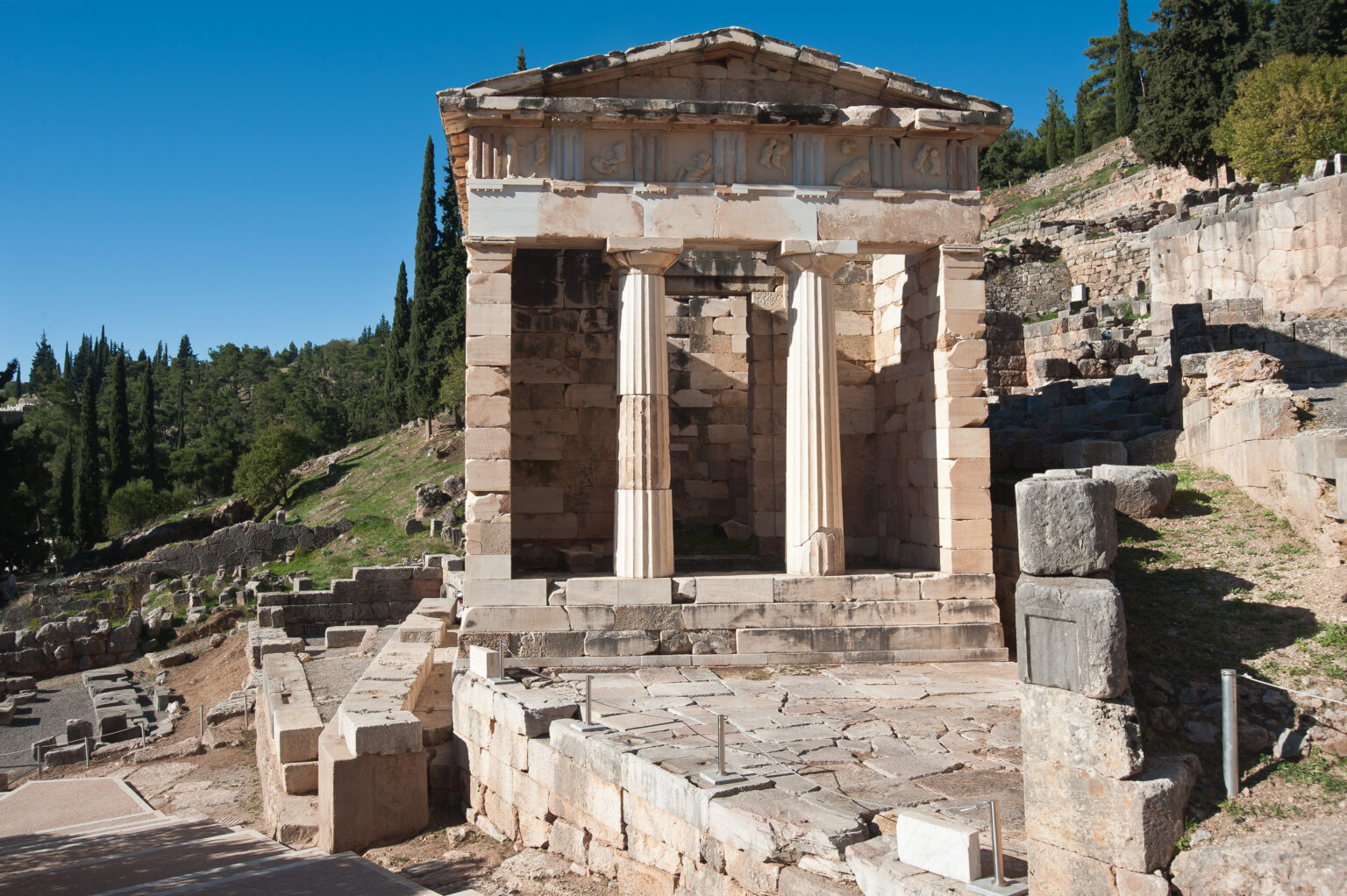
The Sanctuary of Delphi was discovered during the “great excavation”, which took place between 1860 and 1903, and expropriated the village of Kastri that had been built over its ruins. The altar of the Chians, the Treasury of the Athenians, the Tholos, the Stadium, the Gymnasium and the numerous votive offerings confirm that Delphi was not only a spiritual and religious centre, but also a symbol of the ancient Greek world’s unity.
In 394 A.D., the operation of the oracle was definitively brought to an end by a decree of the Byzantine Emperor Theodosius I. With the rise of Christianity, Delphi became the seat of a bishopric, but was abandoned in the early 7th century A.D., during the Slavic invasions. In more recent times, the site of Delphi became associated with the revival of the Delphic ideal by Angelos and Eva Sikelianos, who sought to create a new spiritual and cultural center.
Directions
33054, Delphi
15 minutes from the settlement of Delphi
By the Phocis KTEL bus from Athens or Patras
5 minutes from the settlement of Delphi
2 hours from Patras
3 hours from Athens
Opening hours
April 1 – August 31
Daily: 08:00–20:00
September 1–15
Daily: 08:00–19:30
September 16–30
Daily: 08:00–19:00
October 1–15
Daily: 08:00–18:30
October 16–31
Daily: 08:00–18:00
November 1 – March 31
Daily: 08:30–15:30
The site remains closed on the following dates and public holidays: January 1, March 25, May 1, Easter Sunday, December 25 & 26.
Tickets
Full: €20.00
Reduced: €10.00
Includes access to: the Archaeological Site of Delphi and the Archaeological Museum of Delphi
Amenities
Contact
Archaeological Museum of Delphi
T: +30 22650 82312
Ephorate of Antiquities of Phocis
T: +30 22650 82313, +30 22650 82346
E: efafok@culture.gr