
Opening hours
View Hours

Maroneia, GR
Get Directions
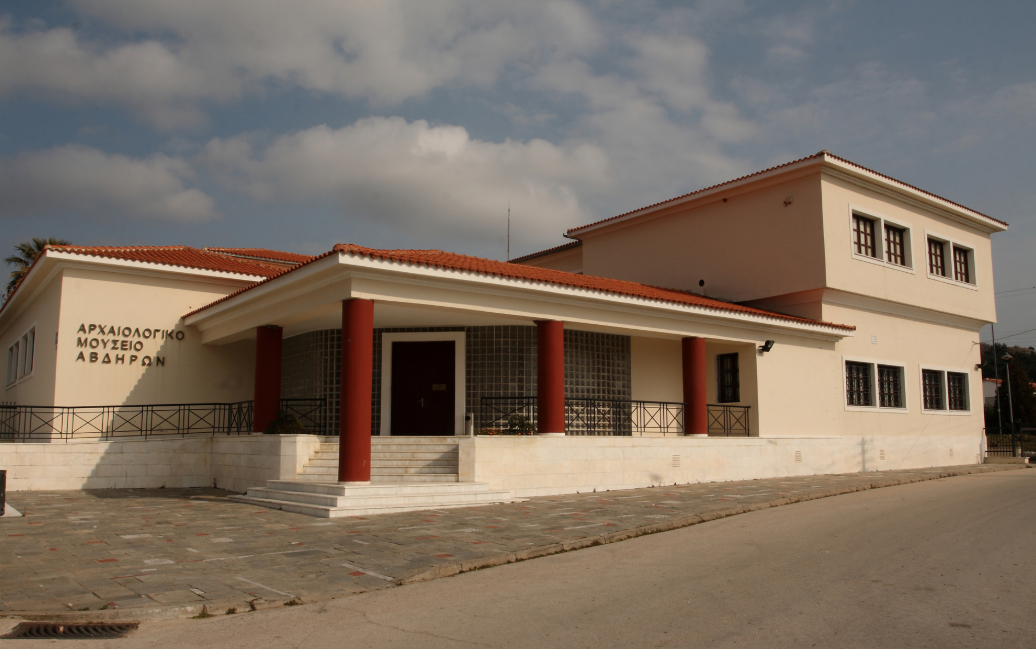
The ancient city of Maroneia, the wealthy Thracian city of the Cicones, was visited both by Odysseus and Emperor Hadrian, and – according to local legend – was also home to mythical beings, for it was in a cave here that the Cyclops Polyphemus is said to have lived.
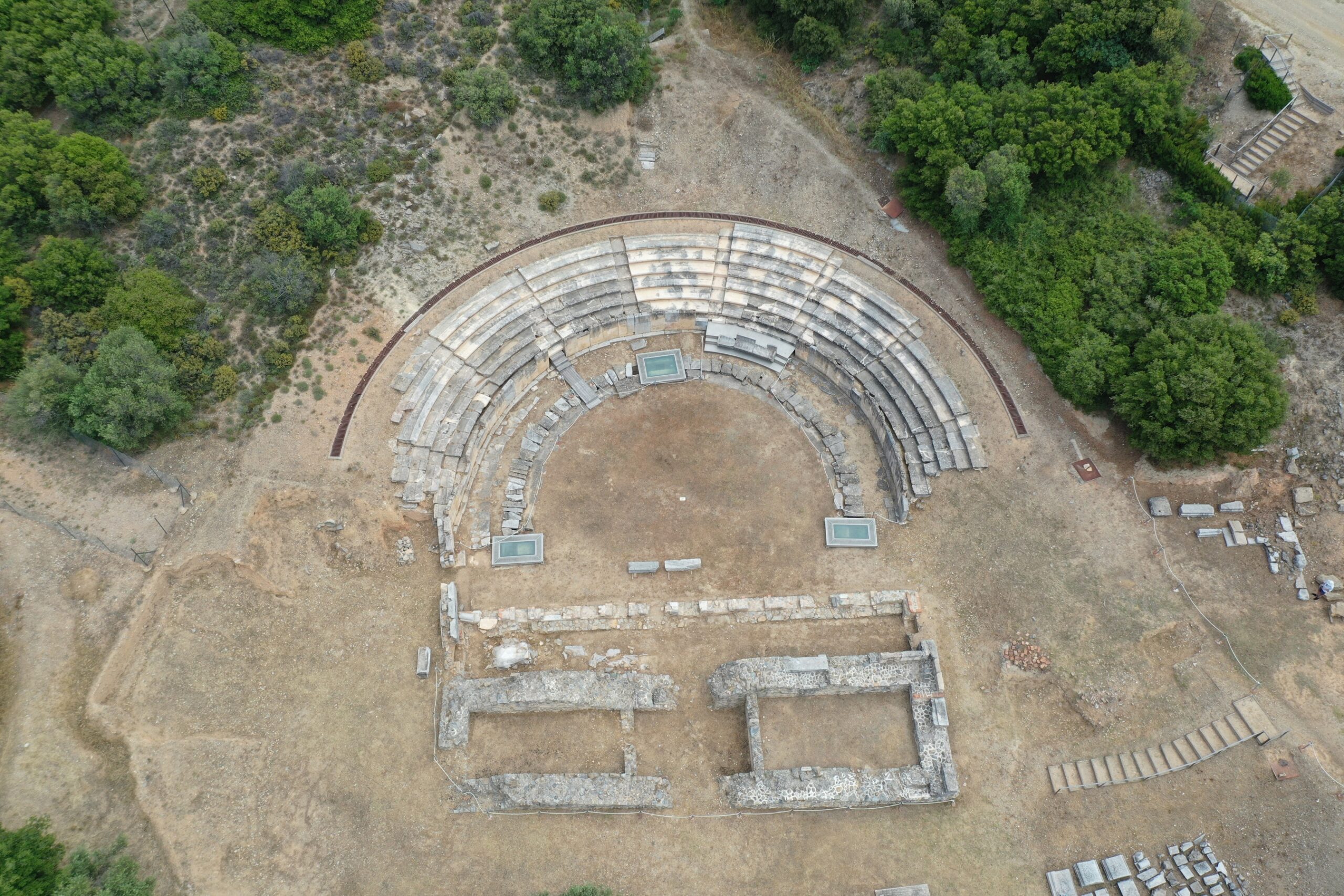
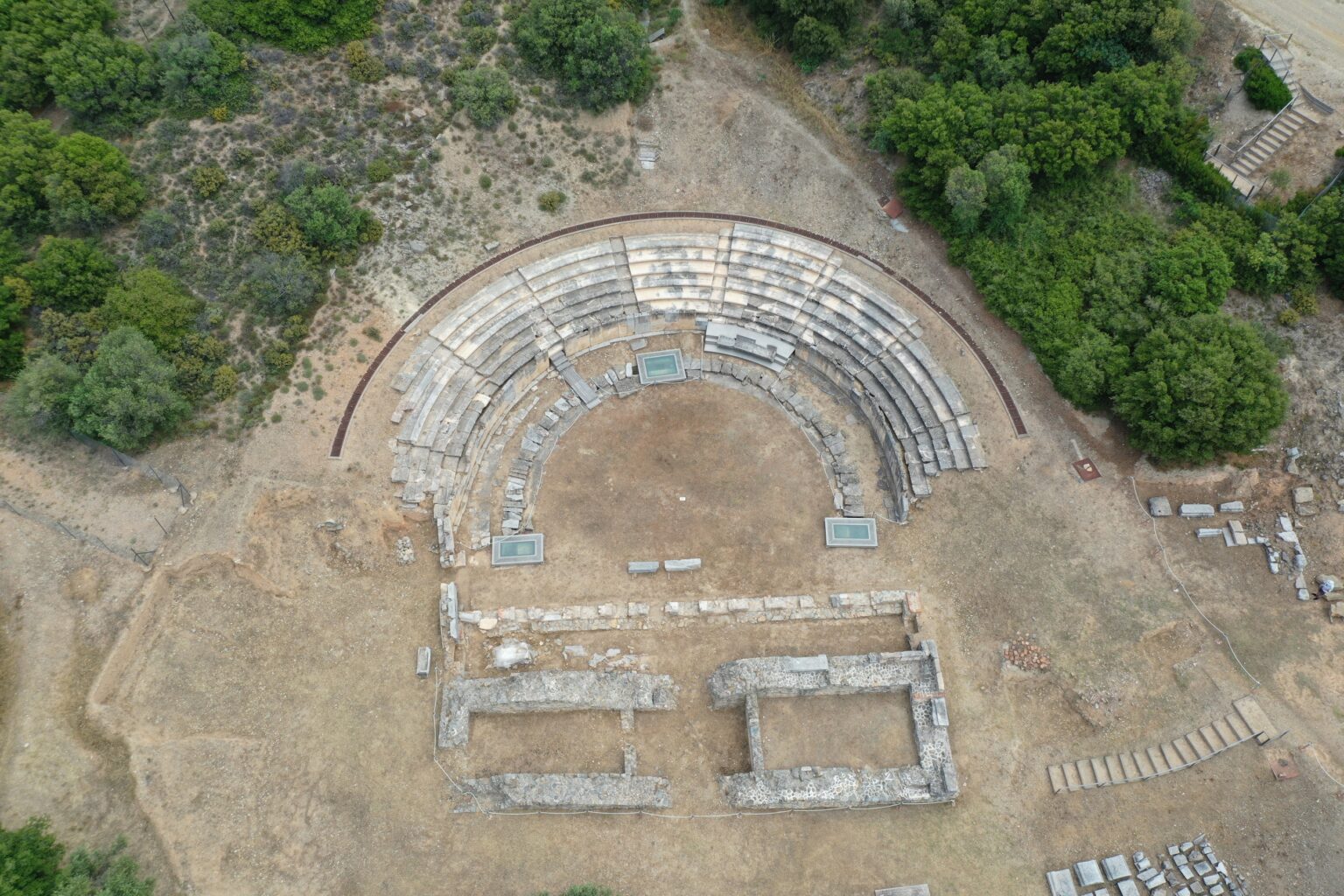
Maroneia grew into a powerful city-state, fortified by walls stretching over 10 kilometers, with its territory perhaps extending as far as the plain of modern Komotini. It flourished particularly during the Hellenistic and Roman periods, when its theater was converted into an arena for gladiatorial games. In Byzantine times, Maroneia maintained its prosperity and became the seat of a bishop.
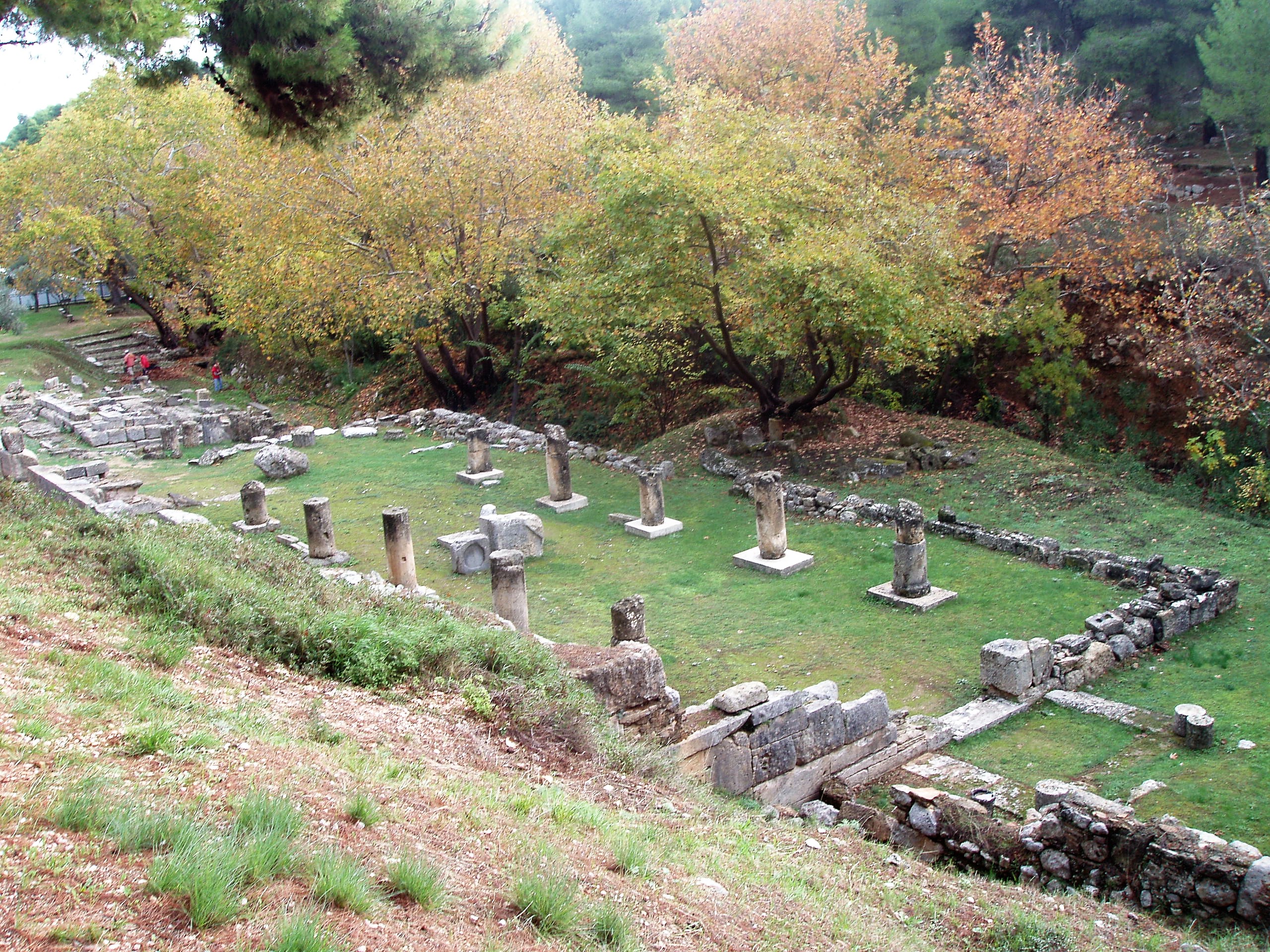
The ruins of the ancient city cover a vast area and include several signposted monuments (the theater, the sanctuary of Dionysus, the propylon, and an Early Christian basilica), while others are scattered among the olive groves and rugged landscapes of Mount Ismaros.
Directions
Archaeological Site of Maroneia
69400, Maroneia
By car
8 minutes from the settlement of Maroneia
35 minutes from Komotini
50 minutes from Alexandroupoli
Opening hours
Summer hours
April 1 – October 31
Mon: 08:30 – 15:30
Tue: Closed
Wed: 08:30 – 15:30
Thu: 08:30 – 15:30
Fri: 08:30 – 15:30
Sat: 08:30 – 15:30
Sun: 08:30 – 15:30
Winter hours
November 1 – March 31
Mon: 08:30 – 15:30
Tue: Closed
Wed: 08:30 – 15:30
Thu: 08:30 – 15:30
Fri: 08:30 – 15:30
Sat: 08:30 – 15:30
Sun: 08:30 – 15:30
Last admission: 20 minutes before closing time
The site remains closed on the following dates and public holidays: January 1, March 25, May 1, Easter Sunday, December 25 & 26.
The site remains closed on the following dates and public holidays: January 1, March 25, May 1, Easter Sunday, December 25 & 26.
Tickets
Full: €5.00
Reduced: €3.00
Admission is free on March 6, April 18, May 18, the last weekend of September, on October 28, as well as on the first and third Sunday of each month between November 1 and March 31.
Amenities
WC
Parking
Contact
Ephorate of Antiquities of Rhodope
T: +30 25310 22411
E: efarod@culture.gr