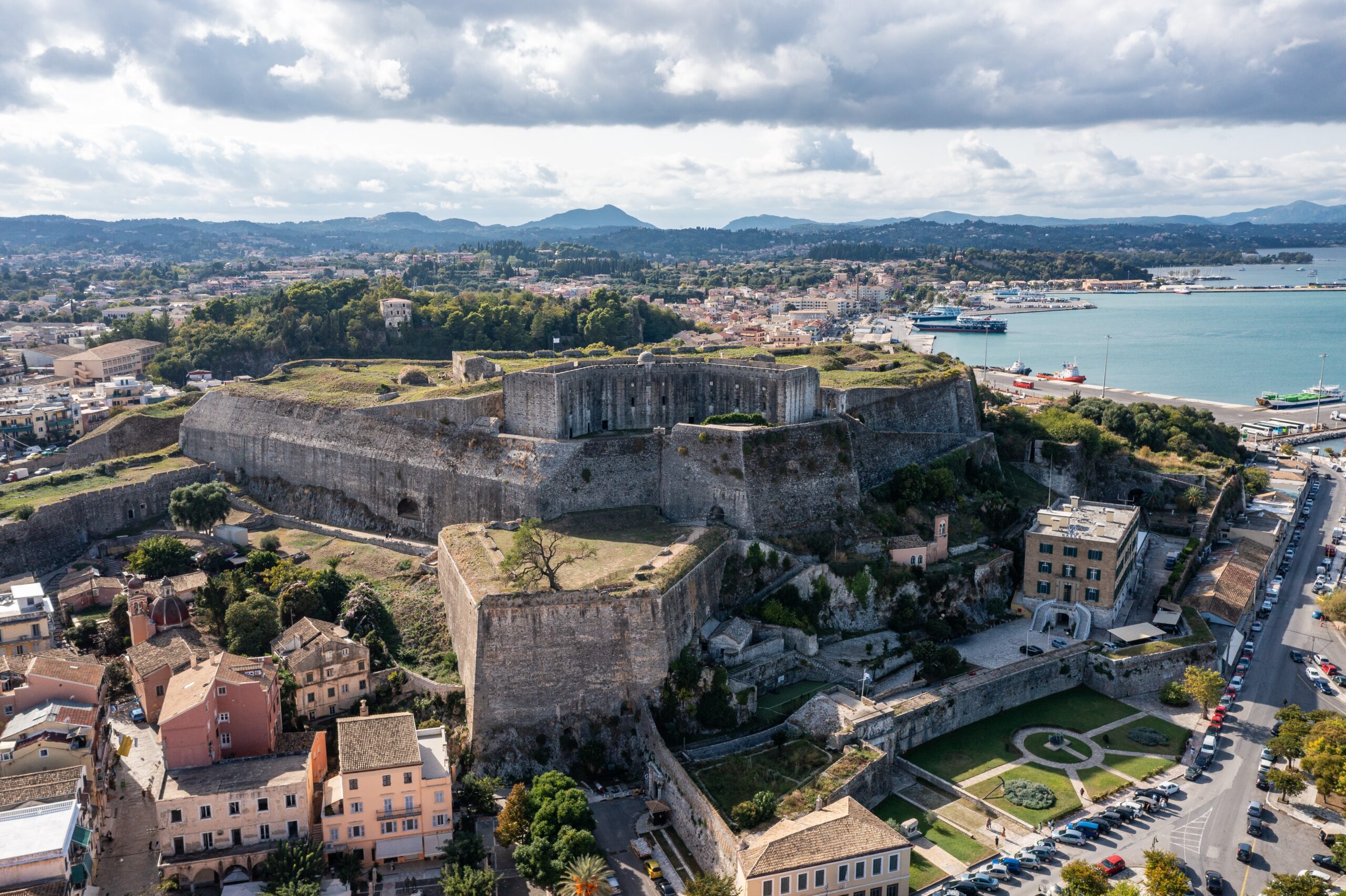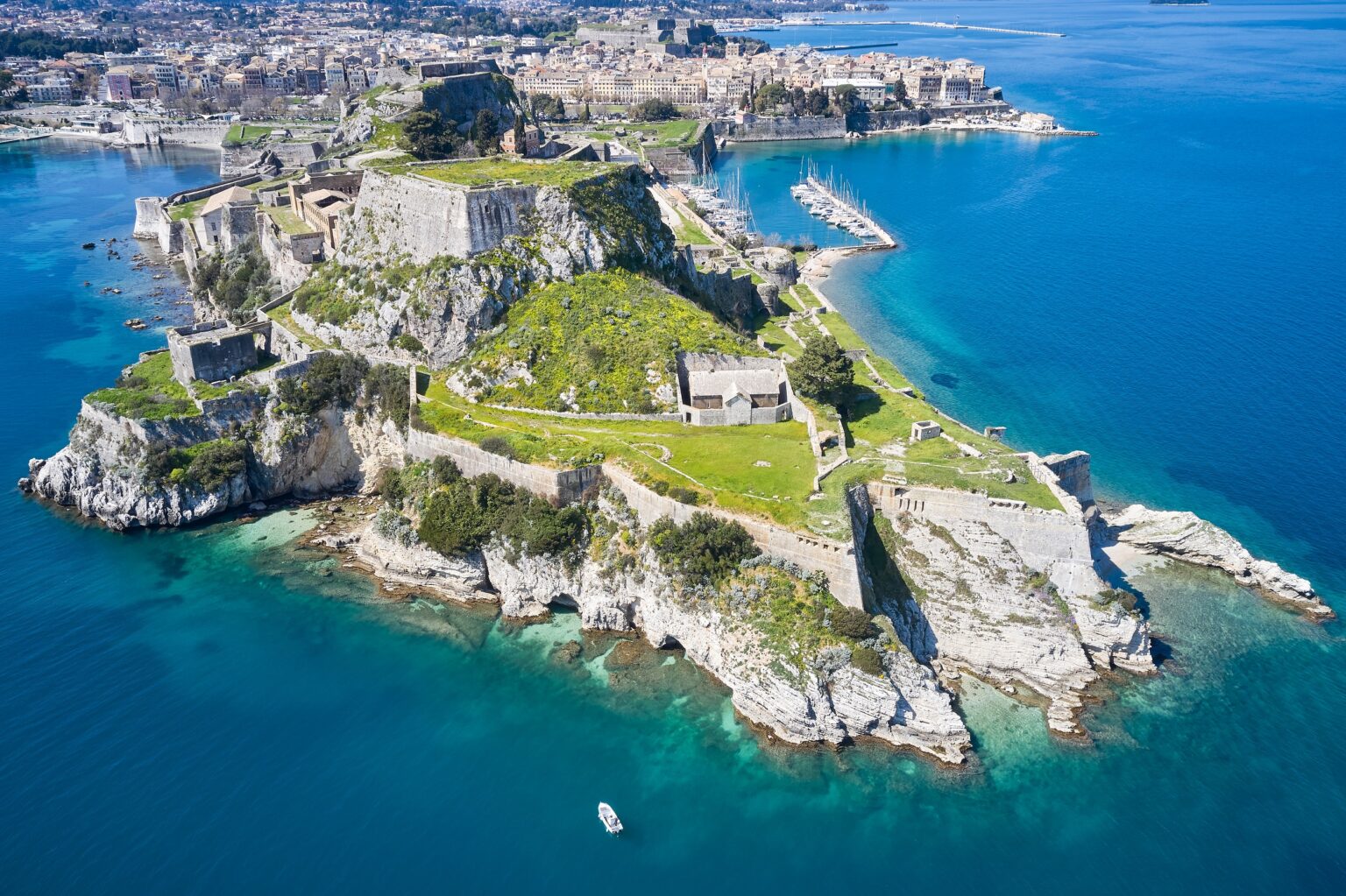
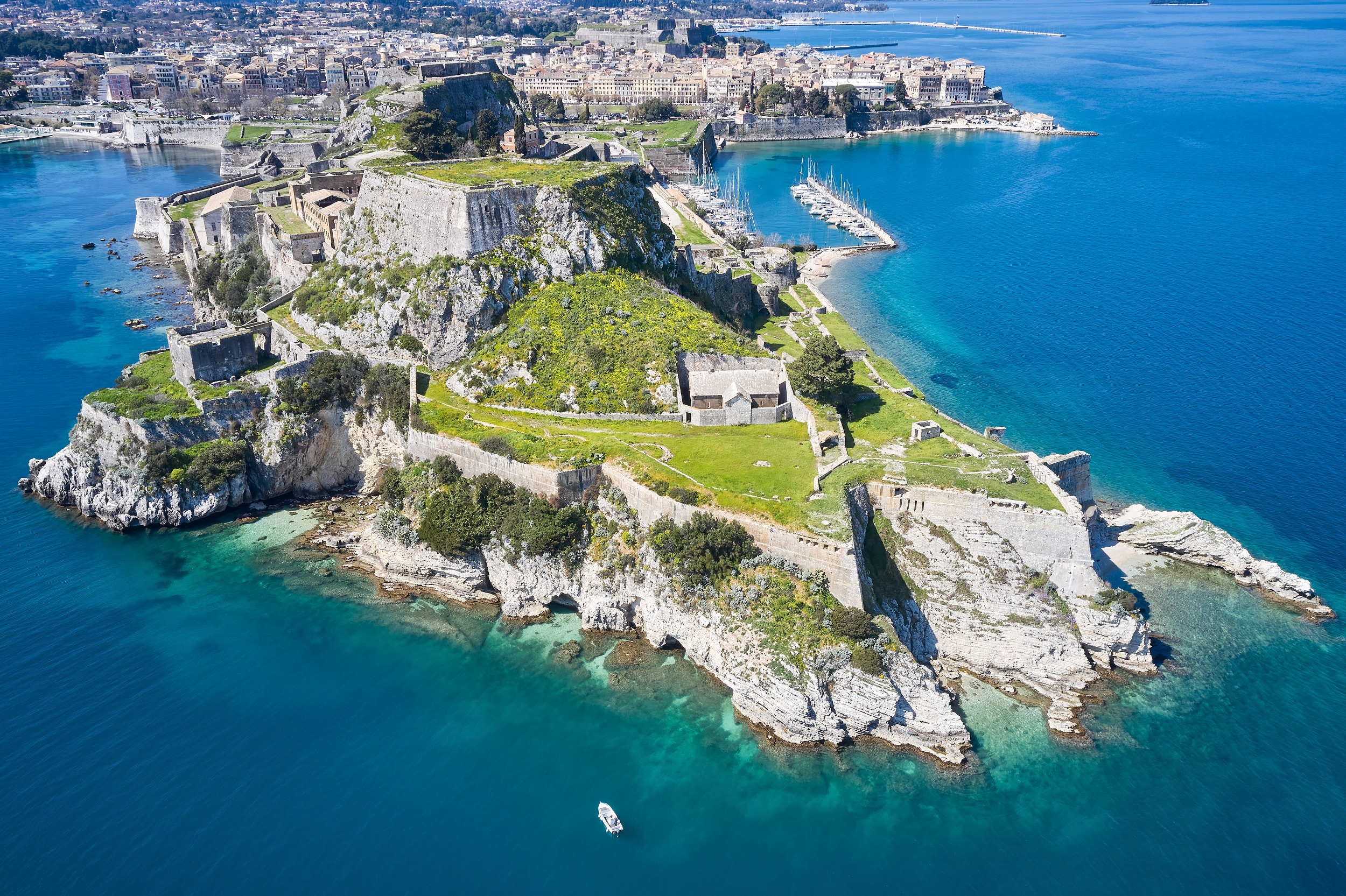


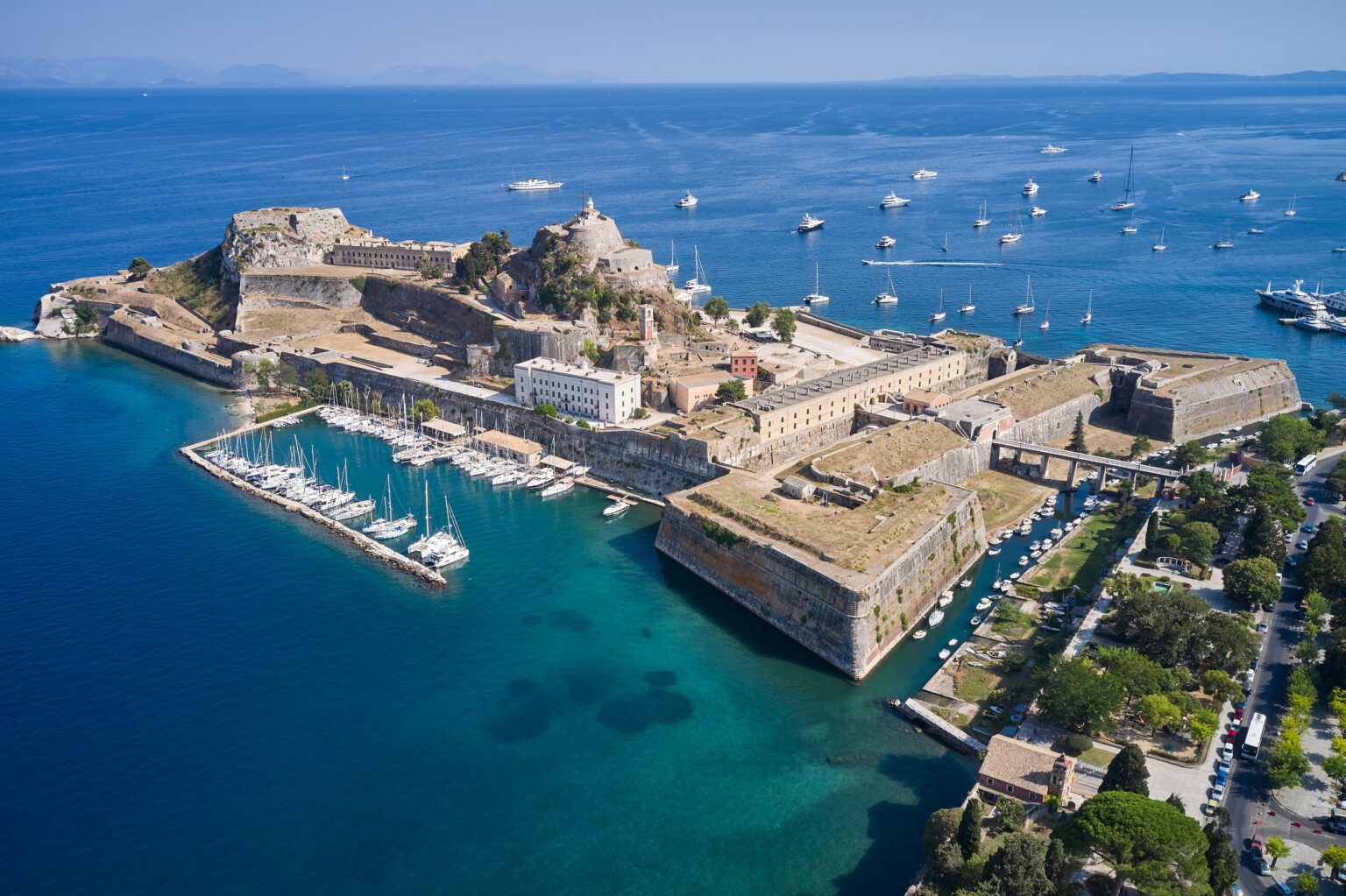
Arguably the most iconic monument of Corfu, the Old Fortress is a true masterpiece of defensive architecture.
The first fortifications in the area were constructed during the Middle Byzantine period, when the Byzantine town of Corfu was established on this naturally fortified peninsula with its two rocky peaks. These two peaks were to lend the town its name, “Koryfo” (“koryfi” in Greek means peak), from which “Corfu” derives.
The Byzantines would initially fortify the eastern peak (Sea Tower or Old Castle), but the most important fortifications would be erected after the 15th century by the Venetians, for whom Corfu gained enormous commercial and strategic importance. They were the ones who constructed the moat that would essentially turn the peninsula into an artificial island and fortify the western hill (Land Tower or New Castle), while they would later reinforce the entire fortress.
The effectiveness of the Venetian fortifications was amply demonstrated when the Fortress withstood three relentless Ottoman sieges that had disastrous consequences for the entire island. Tragically, the greatest destruction that the Fortress suffered was not caused by the Ottomans, but by an explosion in the powder magazine of the Old Castle, in 1718, which caused hundreds of deaths and the destruction of most of the buildings.
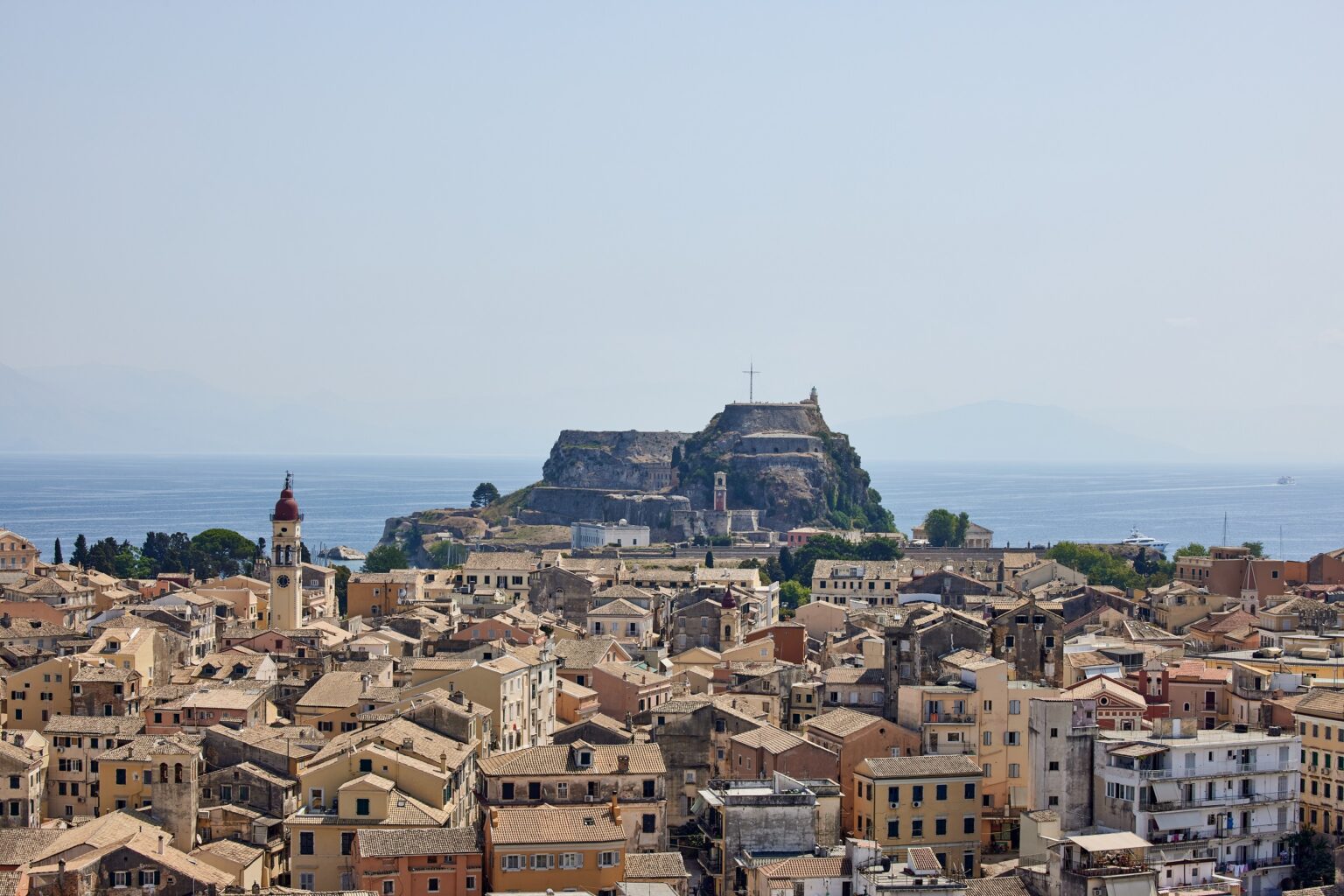
The history of the Old Fortress does not, of course, end here. Although it was never captured, it consecutively passed into the hands of the French, the Russians, the British, the Italians and the Germans, resulting in new modifications and additions to its architectural components and the buildings within. Accordingly, its premises were used for various purposes, for example the resettlement of refugee families following the Asia Minor Catastrophe.
This is exactly what makes a tour of the Old Fortress irresistible today – a sense that everyone who has been here has left their own mark on history. Completing one’s walk in the imposing Spianada square, and before entering the Fortress, one cannot help but stand in front of the robust statue of Count Von Der Schulenburg, the work of the Italian sculptor Antonio Corradini, who heroically defended Corfu in 1716, the final victory of the Venetians against the Ottomans. Crossing the bridge across the sea moat and passing through the main gate of the Fortress seems to mark the transition to an independent world surrounded by the sea, where it is easy to forget about the present and the mundane reality.
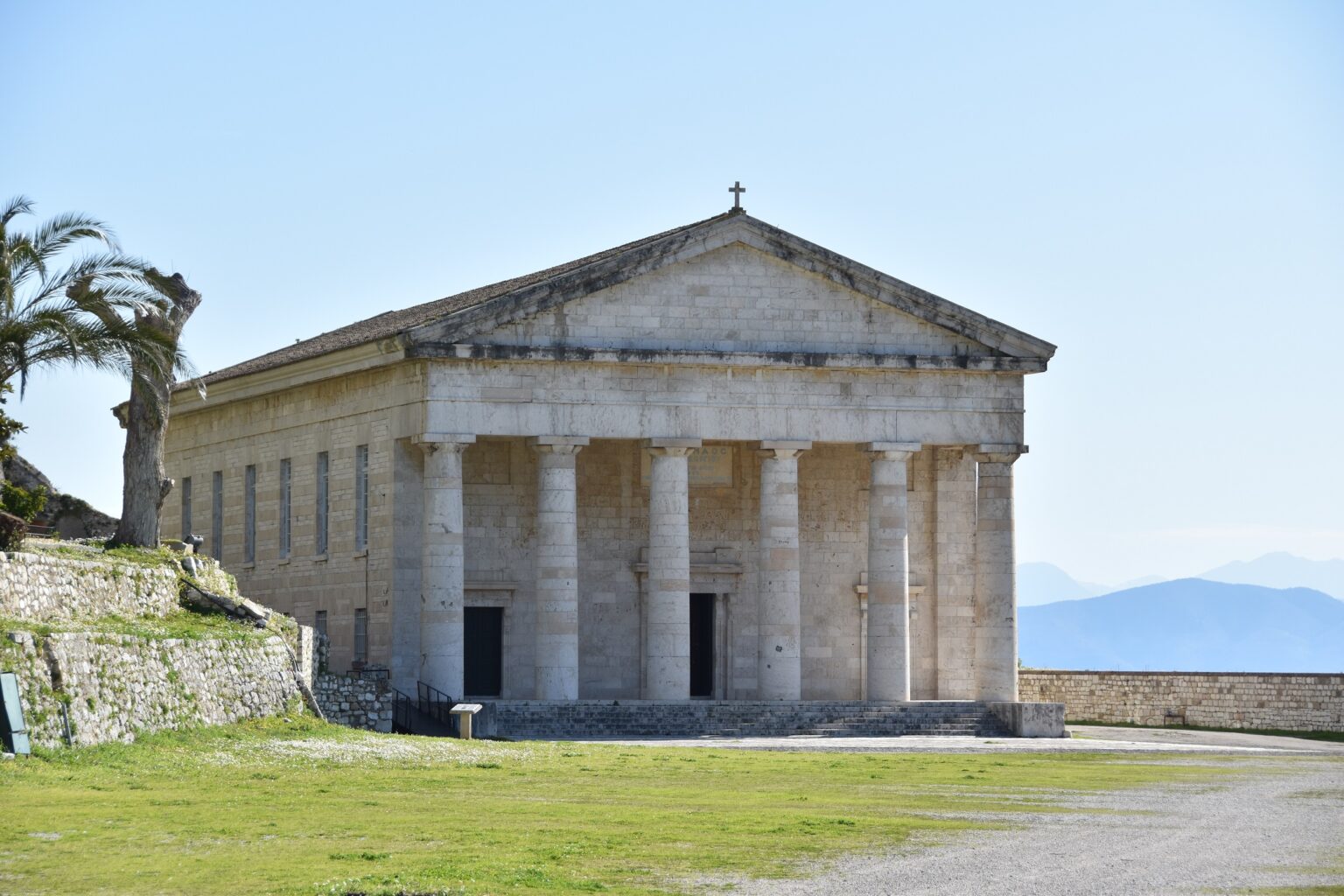
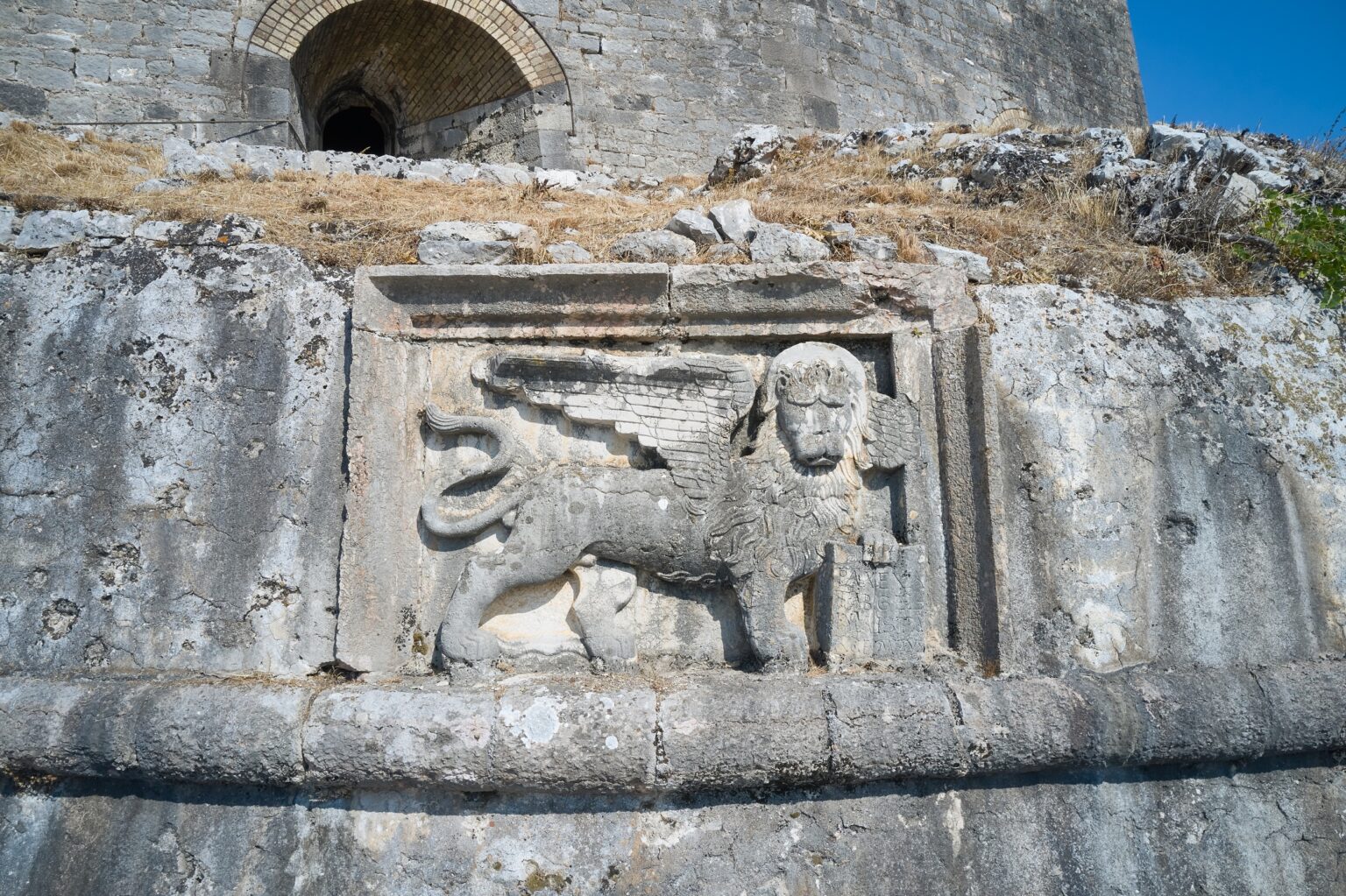
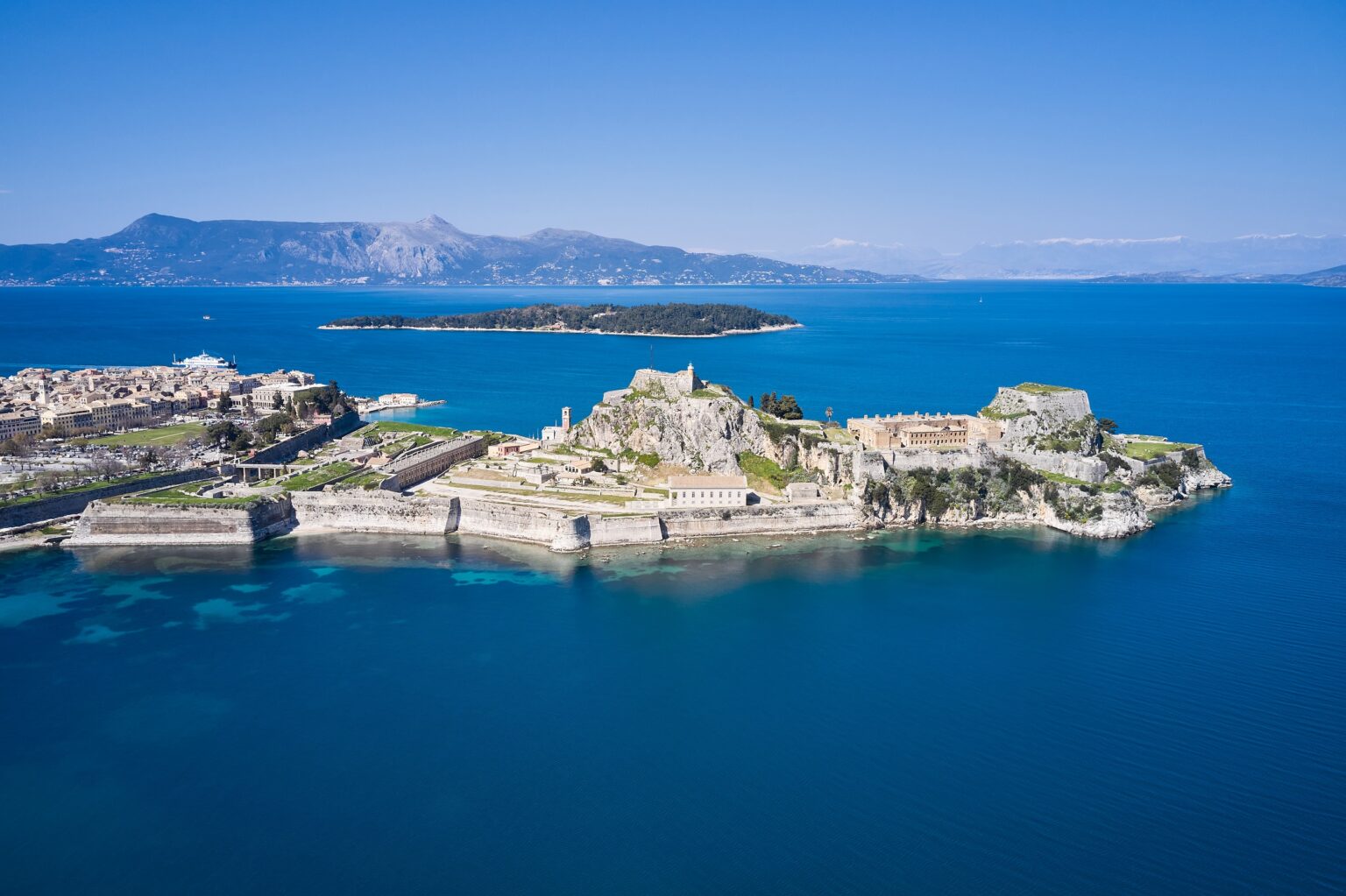
Inside the Fortress, stand out the British barracks and the Venetian prisons, the Latin Chapel of Our Lady of the Carmelites, erected at the beginning of the 17th century, and especially the imposing church of Saint George, built in Georgian style in 1840, during the British occupation. After the British left, the church was made orthodox and decorated with an altarpiece from the church of Saint Spyridon in the old town of Corfu.
Of course, one should not miss to climb to the highest point of the Fortress, where a magnificent panoramic view awaits, on one side towards the deep blue Ionian sea and on the other the aristocratic old town.
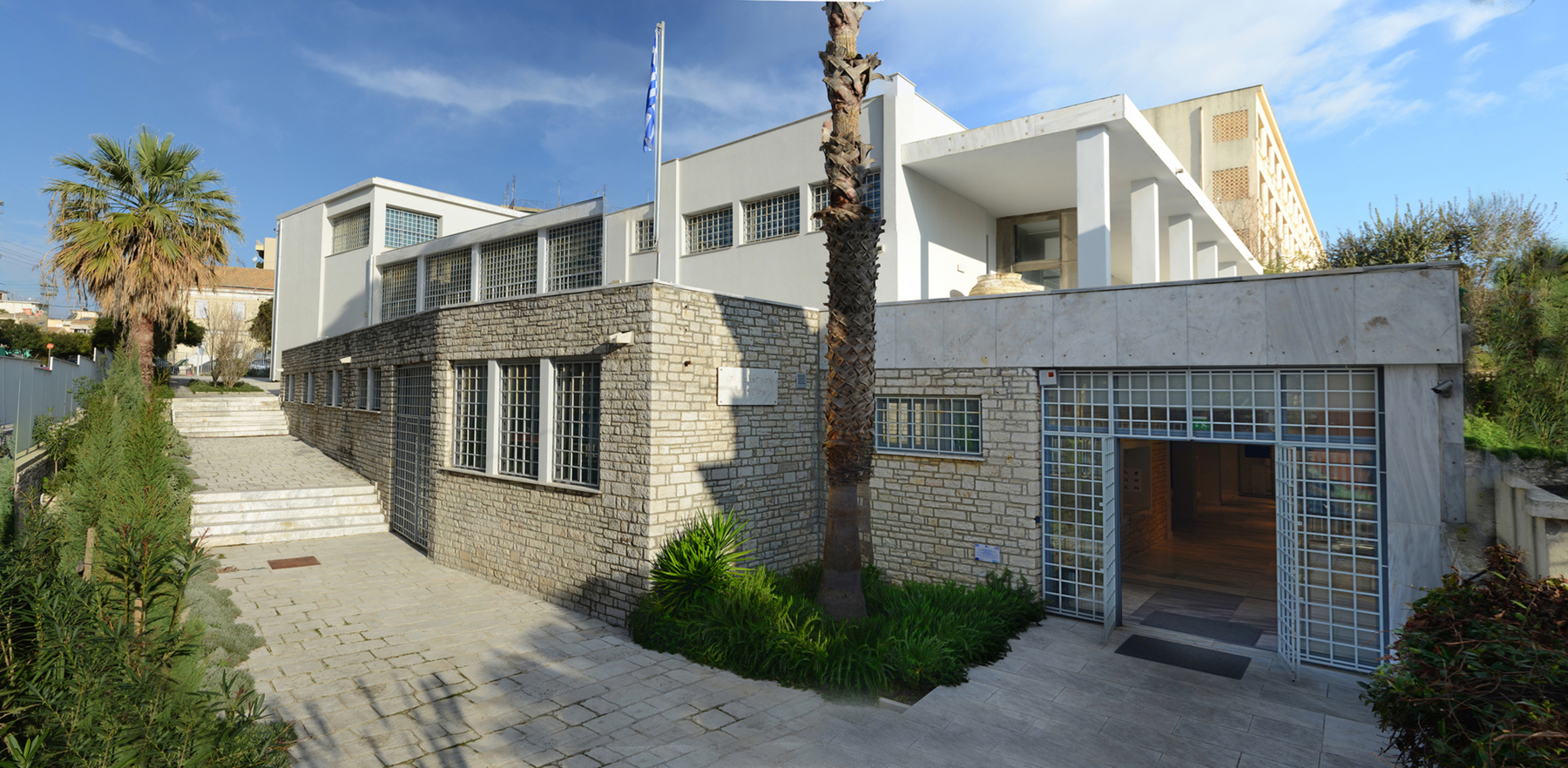
If at any time you think you are listening to strange music, don’t worry, you are not imagining things. It is played by students of the Ionian University, as the old Barracks of the British Officers accommodates the Music Studies Department of the Ionian University. Other buildings accommodate the Historical Archive of Corfu, the Public Library and the Corfu Byzantine Collection, which are also worth visiting.
Directions
Old Fortress of Corfu
49131, Old Town of Corfu
On foot
5 minutes from Spianada Square
By bus
Line 2A, disembark at the “Platia – Liston” stop
By car
10 minutes from the airport
10 minutes from the port
Opening hours
Summer hours
April 1 – August 31
Daily: 08:00 – 20:00
September 1 – 15
Daily: 08:00 – 19:30
September 16 – 30
Daily: 08:00 – 19:00
October 1- 15
Daily: 08:00 – 18:30
October 16 – 31
Daily: 08:00 – 18:00
Winter hours
November 1 – March 31
Daily: 08:30 – 15:30
Last admission: 20 minutes before closing time
The site remains closed on the following dates and public holidays: January 1, March 25, May 1, Easter Sunday, December 25 & 26.
The site remains closed on the following dates and public holidays: January 1, March 25, May 1, Easter Sunday, December 25 & 26.
Tickets
Full: €10.00
Reduced: €5.00
Admission is free on March 6, April 18, May 18, the last weekend of September, on October 28, as well as on the first and third Sunday of each month between November 1 and March 31.
Amenities
WC
Accessibility
Contact
Old Fortress of Corfu
T: +30 26610 27935
Ephorate of Antiquities of Corfu
T: +30 26610 48120
E: efaker@culture.gr